
Welcome to myentrance.in, your definitive gateway to comprehensive preparation for prestigious government examinations like UPSC, SSC, PSC, NID, NIFT, and many others. This exploration delves into two seemingly disparate yet equally crucial topics for UPSC Mains General Studies Paper 1: the profound global journey of Indian philosophy, specifically Vedanta, and the emerging understanding of offshore aquifers – both demanding a nuanced, interdisciplinary approach for analytical answer writing. Our aim is to equip you not just with knowledge, but with the strategic insights necessary to excel in these challenging papers.
The Global Resonance of Indian Philosophy: Vedanta’s Journey Westward
The enduring legacy of Indian philosophical thought, particularly Vedanta, has transcended geographical boundaries, leaving an indelible mark on Western intellectual and spiritual landscapes. Rooted in the Upanishads, Vedanta expounds on the ultimate nature of reality (Brahman) and the individual soul (Atman), emphasizing their non-dualistic unity and the path to liberation (Moksha) from the cycle of rebirth (Samsara) through true knowledge. This profound system, with its emphasis on self-realization, cosmic consciousness, and ethical living, found fertile ground in the West, particularly from the 19th century onwards.
Influential Western thinkers and movements, from the American Transcendentalists like Ralph Waldo Emerson and Henry David Thoreau, who advocated for individualism and spiritual intuition, to German idealists such as Arthur Schopenhauer, found deep resonance in Vedanta’s insights. Schopenhauer, for instance, openly acknowledged the Upanishads as the “most profitable and elevating reading possible in the world.” Later, figures like Aldous Huxley and Carl Jung drew parallels between Vedantic concepts and their psychological and spiritual explorations, contributing to the rise of New Age movements and broader philosophical inquiries into consciousness and existence. Understanding this cultural exchange is vital for UPSC Mains GS 1, as it covers aspects of Art and Culture, the History of Modern India (its global impact), and World History through the lens of intellectual movements and their cross-cultural fertilization. A well-rounded answer would necessitate discussing not just the tenets of Vedanta but also its specific influences, providing concrete examples of thinkers and movements shaped by its wisdom. Myentrance.in’s static general knowledge and daily news quiz sections often feature questions that test your understanding of such historical and cultural linkages, urging you to connect the dots across disciplines.
Offshore Aquifers: Earth’s Submarine Freshwater Troves
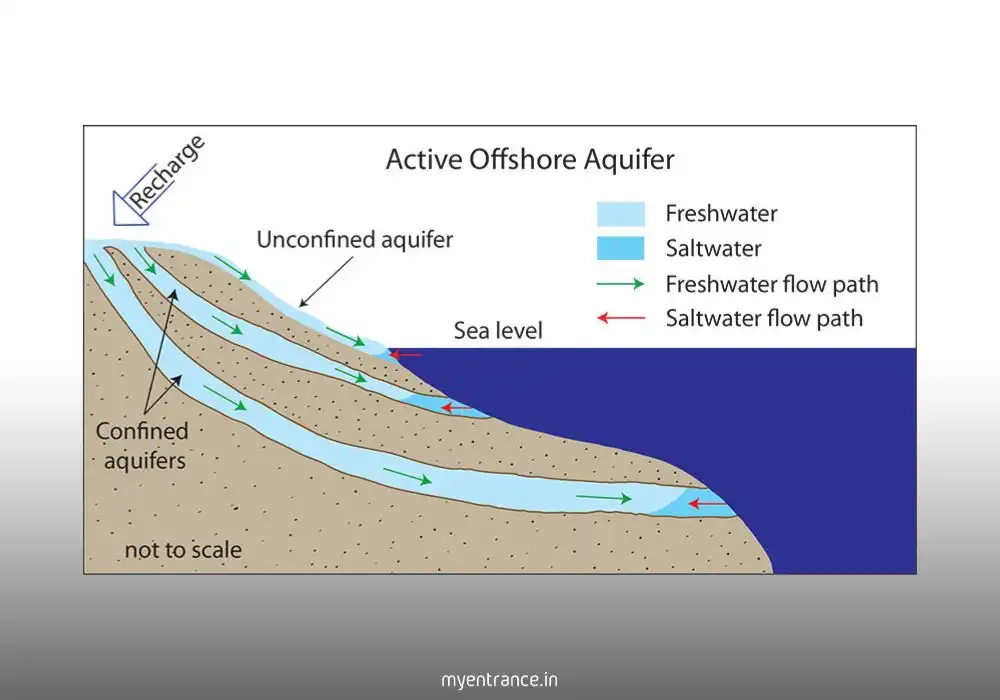
Moving from ancient wisdom to contemporary environmental geography, the concept of offshore aquifers presents another fascinating and critically important area for UPSC Mains GS 1 preparation. These are vast reservoirs of freshwater, often lying beneath the seabed, trapped in porous rock formations. Unlike traditional coastal aquifers which are recharged by land-based precipitation, many known offshore aquifers are ‘relict’ – remnants of freshwater lenses formed during past glacial periods when sea levels were significantly lower, exposing continental shelves to rainfall. As ice sheets melted and sea levels rose, these freshwater pockets became submerged, encapsulated by overlying saltwater.
The significance of offshore aquifers cannot be overstated in an era grappling with escalating global water scarcity. They represent a potential colossal, untapped source of freshwater, offering a glimmer of hope for drought-stricken regions and rapidly urbanizing coastal areas. However, harnessing these hidden resources comes with substantial challenges, including the high cost and technical complexity of exploration and extraction, the risk of saltwater intrusion, and potential ecological impacts on marine environments. For UPSC GS 1, this topic intersects directly with Physical Geography (geomorphology, oceanography, hydrological cycle), Environmental Geography (resource management, sustainability), and even elements of current affairs as new discoveries and technological advancements are made. A deep understanding involves grasping their formation mechanisms, geographical distribution, the technologies for their identification and extraction, and the associated environmental and economic considerations. Myentrance.in’s interactive examinations frequently challenge students to analyze such complex issues, requiring them to synthesize information from various fields to present a holistic answer.
Sample Questions & Answers for UPSC Mains GS 1 Practice
Mastering these topics for examinations demands not just recall, but analytical depth and the ability to articulate well-structured answers. Here are five sample questions, along with concise answers, reflecting the type of critical engagement expected in the UPSC Mains.
Question 1: Discuss the major tenets of Vedanta philosophy and briefly explain its influence on Western Transcendentalism.
Answer 1: Vedanta, rooted in the Upanishads, posits the ultimate reality (Brahman) as non-dual and identical with the individual soul (Atman). It advocates for self-realization, knowledge (Jnana Yoga), devotion (Bhakti Yoga), and action (Karma Yoga) as paths to liberation (Moksha) from the cycle of rebirth. Western Transcendentalism, flourishing in 19th-century America with figures like Emerson and Thoreau, was significantly influenced by Vedanta. They adopted its emphasis on intuitive spiritual experience over empirical observation, the inherent divinity within all beings, the unity of creation, and a deep reverence for nature. This philosophical cross-pollination encouraged individualism, self-reliance, and a non-conformist approach to spiritual truths, echoing Vedantic principles.
Question 2: Define offshore aquifers and explain their potential significance in addressing global water scarcity.
Answer 2: Offshore aquifers are subterranean freshwater reserves located beneath the seabed within porous rock or sediment formations. Many are ‘relict’ aquifers, formed during periods of lower sea levels when continental shelves were exposed to precipitation, subsequently submerged and sealed by rising ocean waters. Their potential significance lies in offering an immense, largely untapped source of freshwater, crucial for mitigating global water scarcity. They could supplement or replace over-exploited land-based aquifers, provide emergency water supplies, and support the growing water demands of coastal populations and industries, particularly in regions facing acute hydrological stress.
Question 3: How did Vedantic thought contribute to the intellectual debates surrounding existentialism in 20th-century Western philosophy?
Answer 3: While not a direct precursor, Vedantic thought implicitly contributed to intellectual debates surrounding existentialism by offering an alternative framework for understanding existence, consciousness, and freedom. Existentialism grapples with human freedom, responsibility, and the search for meaning in a seemingly absurd world. Vedantic concepts of Maya (illusion), the non-dualistic nature of reality, and the quest for self-realization resonate with existential inquiries into the nature of reality and the authentic self. It provided a spiritual and ontological perspective that transcended the Western dualistic traditions, implicitly enriching discussions on human consciousness, the nature of suffering, and paths to inner freedom, influencing thinkers who sought deeper spiritual dimensions beyond traditional Western existentialist atheism.
Question 4: What are the primary challenges associated with the exploration and sustainable utilization of offshore aquifers?
Answer 4: The exploration and sustainable utilization of offshore aquifers face several significant challenges. Firstly, the high cost and technical complexity of accurately mapping these deep-sea reservoirs and drilling into them pose major economic hurdles. Secondly, the risk of saltwater intrusion during extraction is substantial; improper management can contaminate the freshwater supply, rendering it unusable. Thirdly, the potential environmental impact on delicate marine ecosystems from drilling operations and infrastructure development needs careful assessment. Finally, legal and geopolitical complexities regarding ownership and access to transboundary offshore water resources could arise, demanding international cooperation and robust regulatory frameworks for equitable and sustainable management.
Question 5: Analyze the interrelationship between cultural exchange, philosophical developments, and geographical resource management as distinct yet interconnected themes relevant for UPSC GS 1.
Answer 5: UPSC GS 1 demands an interdisciplinary understanding, where seemingly distinct themes are deeply interconnected. Cultural exchange, as seen in Vedanta’s journey westward, shapes philosophical developments, influencing societal values, ethical frameworks, and approaches to knowledge itself. These philosophical underpinnings, often emphasizing harmony with nature or human dominance over it, can indirectly influence how societies perceive and manage their geographical resources. For example, a philosophy promoting environmental stewardship might lead to sustainable resource management practices, including innovative solutions for water scarcity like exploring offshore aquifers. Conversely, resource availability and geographical features can impact cultural evolution and philosophical thought. Thus, a comprehensive GS 1 answer integrates historical context, cultural impact, philosophical underpinnings, and their tangible effects on environmental and geographical realities, demonstrating a holistic grasp of the subject matter.
These questions underscore the necessity for deep analytical thinking, connecting diverse concepts, and presenting well-reasoned arguments – skills rigorously developed through myentrance.in’s daily news quizzes, interactive examinations, and structured mains answer practice. They highlight the importance of not just knowing facts, but understanding their implications across various domains, enabling you to construct compelling and high-scoring answers in your UPSC examinations.





