
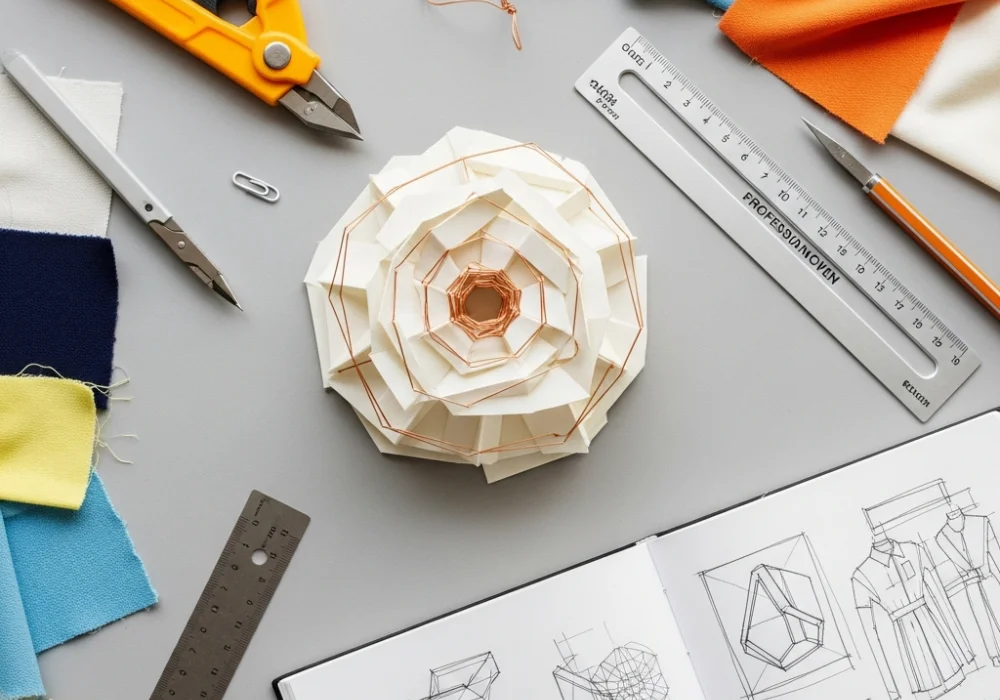
The Crucial Phase: Understanding the NIFT Situation Test
Passing the initial NIFT entrance rounds is a massive achievement, but the journey to a premier design institute like NIFT is only halfway through. The second stage, known as the Situation Test, is a hands-on evaluation designed to test a candidate’s innovative skills, material handling capabilities, and, most importantly, their design logic. In the latest pattern of the exam, the emphasis has shifted from mere craft-making to solving real-world problems through three-dimensional models. This blog explores how to master the integrated design logic and sketching drills required to excel in the upcoming exams.
Defining Integrated Design Logic
Integrated Design Logic refers to the ability to merge functionality with aesthetics while ensuring the structural integrity of a model. It is not enough to make something that looks beautiful; it must serve a purpose and solve the problem statement provided in the question. For example, if asked to design a workspace for a digital nomad, your model must account for ergonomics, storage, and portability. Design logic is the ‘why’ behind every fold, cut, and joint you create. It requires a candidate to think about the user experience before even touching the materials.
Essential Sketching Drills for Visualization
Before you begin building with materials, your mind must be able to visualize the final product in 3D. This is where sketching drills become indispensable. Even though the Situation Test is a model-making round, sketching helps in rapid ideation. Spend 10 to 15 minutes at the start of your test sketching at least three different concepts. Drills should focus on:
- Perspective Drawing: Helping you understand how your model will look from different angles.
- Exploded Views: Sketching the individual components of your design before assembly.
- Thumbnail Sketching: Rapidly iterating through concepts to find the most innovative solution.
Common Materials and Their Strategic Usage
The NIFT Situation Test provides a limited set of materials. Knowing how to manipulate them effectively is key to a high score. Below is a comparison of common materials and their best use cases in the latest pattern:
| Material Type | Primary Characteristics | Best Used For |
|---|---|---|
| Cardboard/Ivory Sheet | Rigid, sturdy, provides structure | Base foundations, walls, and load-bearing elements. |
| Copper/Aluminum Wire | Flexible, ductile, holds shape | Outlines, structural frames, and decorative detailing. |
| Tracing/Gateway Paper | Translucent, fragile, delicate | Windows, light fixtures, and adding texture. |
| Clay/Plasticine | Malleable, heavy, dense | Organic shapes, figurines, and weighted bases. |
| Fabric/Ribbons | Soft, flowing, colorful | Upholstery, drapery, and adding aesthetic softness. |
Top Strategies for Material Handling
Handling materials with precision can set your model apart from hundreds of others. Avoid excessive use of adhesives; visible glue marks can lead to negative marking. Instead, focus on mechanical joins such as interlocking tabs, slots, and hinges. These techniques demonstrate a higher level of design maturity. Furthermore, cleanliness is paramount. A simple, neat model usually scores higher than a complex, messy one. Always plan your material usage so that you do not run out of essential items halfway through the test.
The Power of the Write-Up
Many students focus solely on the model and ignore the written explanation. The write-up is your chance to explain your design logic to the evaluators. Use professional design terminology. Explain how your model addresses the problem, the choice of materials, and the creative inspiration behind it. Keep it concise but impactful, ensuring it connects directly to the visual elements of your prototype.
Sharpening Skills with Practice
Consistent practice is the only way to build speed and confidence. Aspiring designers should simulate exam conditions at home, giving themselves exactly two hours to complete a model and a write-up. To ensure your foundational knowledge in design theory and general ability is up to mark, utilize the resources available at myentrance.in. Our platform offers specialized mock tests for NIFT and other design entrances that help you refine your time management and analytical thinking, which are crucial for the current syllabus.
NIFT Situation Test Preparation Checklist
- Practice folding and scoring techniques on different paper GSMs.
- Develop a signature style for your write-ups.
- Learn to create 3D forms like cones, cylinders, and polyhedrons without using excessive tape.
- Keep updated with social and environmental themes as they often form the basis of the question paper.
Frequently Asked Questions (FAQ)
What is the duration of the NIFT Situation Test?
The test typically lasts for two hours, during which students must design and build a 3D model and complete a written explanation of their concept.
Are students allowed to bring their own materials?
No, students must only use the materials provided by the center. Bringing outside materials can lead to disqualification. You are usually only allowed to bring basic stationery like a pencil, eraser, sharpener, and a pair of scissors.
How much weightage does the Situation Test carry?
For the B.Des program, the Situation Test generally carries a weightage of 20%, making it a critical component for determining your final rank and campus allocation.
Can I use colors in my model?
You can only use colors if colored papers or materials are provided in the kit. Using your own pens or paints on the model is strictly prohibited unless specified in the instructions.
Where can I find mock tests for design entrance exams?
You can access a wide range of practice materials and mock tests at myentrance.in, which are designed to help you prepare for the latest pattern of various entrance exams including NIFT and NID.





