
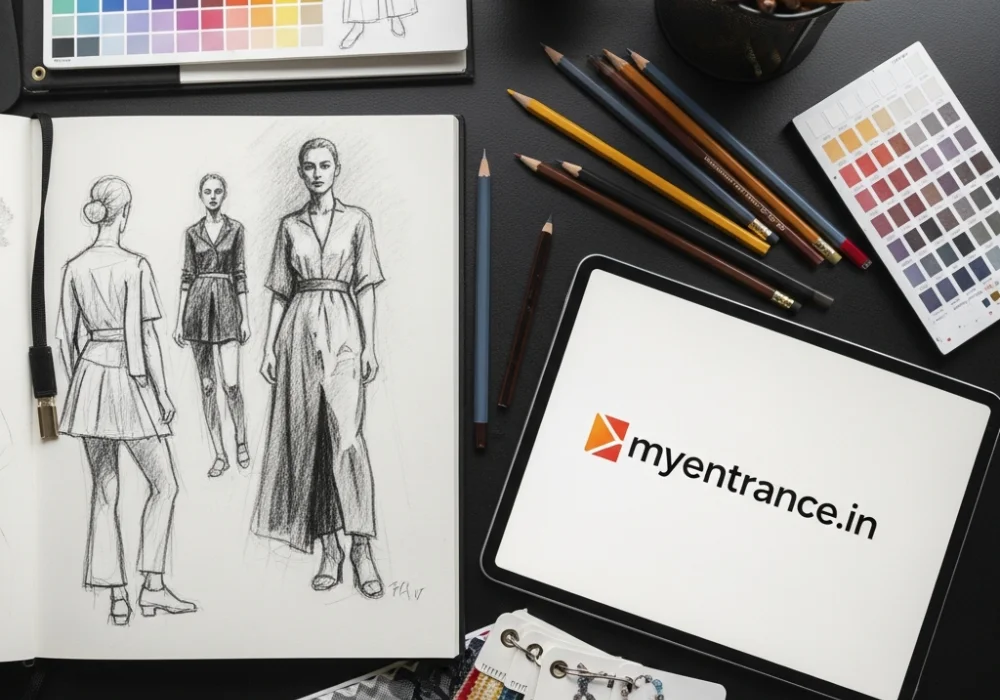
Introduction to NIFT Entrance Exam Self-Study
Cracking the National Institute of Fashion Technology (NIFT) entrance exam is the dream of thousands of aspiring designers. While the competition is fierce, a common misconception is that success is only possible through expensive coaching classes. In reality, with the right resources, a disciplined schedule, and high-quality mock tests from platforms like myentrance.in, you can secure a top rank through self-study. This guide provides a comprehensive roadmap for students aiming to conquer the latest pattern of the NIFT entrance exam independently.
Understanding the NIFT Exam Structure
The first step in your preparation journey is to understand the two primary components of the written examination: the Creative Ability Test (CAT) and the General Ability Test (GAT). For B.Des candidates, both are mandatory, while B.F.Tech candidates focus primarily on the GAT. Self-study requires a clear understanding of the weightage and syllabus of these sections.
The Creative Ability Test (CAT)
CAT evaluates your intuition, power of observation, and design ability. It tests how creatively you can use color and illustration to present a concept. Key areas to focus on include:
- Design Theory: Understanding color wheels, psychology of colors, and design principles.
- Sketching Skills: Perspective drawing (1-point, 2-point, and 3-point), human anatomy, and object drawing.
- Innovative Thinking: Ability to visualize everyday objects from different angles or reinvent existing products.
- Visual Communication: Poster design, logo creation, and storyboarding.
The General Ability Test (GAT)
GAT is a time-bound test that assesses your analytical and linguistic skills. It is highly objective and requires consistent practice. The sections typically include Quantitative Ability, Communication Ability, English Comprehension, Analytical Ability, and General Knowledge and Current Affairs.
Self-Study vs. Coaching: A Comparison
Deciding between self-study and coaching depends on your learning style. However, self-study offers flexibility and encourages original thinking, which is vital for a design career. Below is a comparison to help you understand the advantages of preparing on your own.
| Feature | Self-Study Approach | Coaching Center Approach |
|---|---|---|
| Cost | Highly affordable; investment is mainly in books and mock tests. | Often expensive, ranging from thousands to lakhs of rupees. |
| Flexibility | You set your own pace and focus on your specific weaknesses. | Fixed schedules that may not align with your school or college timings. |
| Originality | Encourages unique sketching styles and creative problem-solving. | Often promotes a ‘formulaic’ approach to design and sketching. |
| Practice Tools | Access to diverse online platforms like myentrance.in. | Limited to the materials provided by that specific institute. |
Step-by-Step Preparation Strategy
1. Start with the Fundamentals of Drawing
Since you aren’t attending coaching, you must be your own critic. Start by practicing basic shapes and lines. Moving from 2D to 3D forms is essential. Dedicate at least two hours daily to sketching. Focus on light and shadow, as these add depth to your drawings. Utilize online tutorials to master human figures and proportions, as these are frequently tested in the CAT section.
2. Master the GAT Sections
The GAT section can be a scoring opportunity if approached systematically. For Quantitative Ability, revisit your Class 10 mathematics—focusing on percentages, profit and loss, and ratios. For English, read newspapers daily to improve vocabulary and comprehension skills. Analytical ability requires solving puzzles and logical reasoning questions regularly.
3. Stay Updated with General Knowledge
Design doesn’t exist in a vacuum. You should be aware of the latest happenings in the fashion industry, famous designers, traditional Indian textiles, and global current affairs. Follow design blogs and news portals to stay informed about the latest trends and innovations.
4. Utilize High-Quality Mock Tests
The most critical aspect of self-study is evaluation. Without a teacher to grade you, mock tests become your best guide. At myentrance.in, we provide specialized mock tests designed to mimic the current syllabus and difficulty level of the NIFT entrance exam. Solving these tests under timed conditions will help you manage your time effectively and identify areas where you need more practice.
Essential Resources for Self-Study
To succeed without coaching, you need the right tools. Here is a checklist of essentials:
- Quality Stationary: Pencils ranging from 2B to 8B, charcoal pencils, high-quality watercolors, and fine-liners.
- Reference Books: Books on perspective drawing, human anatomy for artists, and NIFT-specific GAT guides.
- Online Mock Tests: Enroll in the test series at myentrance.in to benchmark your performance against thousands of other aspirants.
- Previous Year Papers: Solve at least the last 10 years of papers to understand the recurring themes and question types.
Tips for Success During the Exam
Preparation is only half the battle; performance on the exam day matters most. For CAT, ensure you don’t spend too much time on a single drawing. Manage your time so that you can complete all questions with decent finishing. For GAT, avoid negative marking by only answering questions you are confident about. Remember, speed and accuracy are the keys to a high GAT score.
Frequently Asked Questions (FAQ)
Do I need to be a professional artist to clear NIFT CAT?
No, you do not need to be a professional artist. NIFT looks for creativity, observation skills, and the ability to communicate an idea through drawing. Basic neatness and correct proportions are more important than complex artistic rendering.
How many hours should I study daily?
A consistent 4 to 6 hours of study, split between sketching (2-3 hours) and GAT subjects (2-3 hours), is usually sufficient if started well in advance of the upcoming exams.
Is the GAT section common for all NIFT programs?
While the GAT is common for B.Des and B.F.Tech, the difficulty level and the number of questions in specific sections like Mathematics and Science may vary based on the course you choose.
Are mock tests really necessary for self-study?
Yes, mock tests are vital. They help you understand the latest pattern, manage time, and reduce exam-day anxiety. myentrance.in offers comprehensive mock tests specifically tailored for NIFT aspirants.
Can I clear the NIFT Situation Test through self-study?
Absolutely. The Situation Test involves material handling and model making. You can practice this at home using everyday materials like cardboard, wire, clay, and cloth once you clear the written entrance stage.
Need Expert Guidance for your NIFT Journey?
Don’t let your doubts hold you back. Get free career counseling, study tips, and access to the best mock tests at myentrance.in.
💬 Chat with our Experts on WhatsApp (+91 9526806124)




