
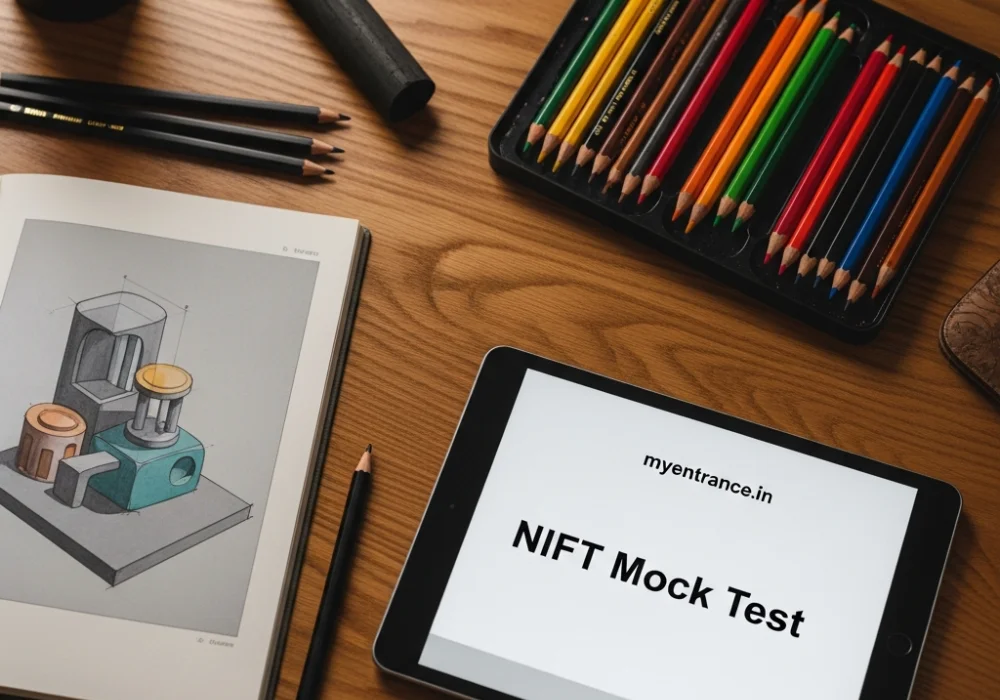
Unlocking Your Creative Potential: The NIFT CAT Blueprint
The National Institute of Fashion Technology (NIFT) is the pinnacle of design education in India. While many students focus heavily on the General Ability Test (GAT), the Creative Ability Test (CAT) is where the true selection happens. Accounting for a significant 50% of the total weightage for many courses, the CAT is designed to evaluate your intuition, power of observation, and innovation. To secure a seat in your dream campus, you need more than just good drawing skills; you need a strategic blueprint. This guide explores the depths of the NIFT CAT and how you can unleash your creativity to secure top scores in the upcoming exams.
Understanding the Philosophy of the Creative Ability Test
Unlike standard art exams, the NIFT CAT is not just about making a ‘pretty’ picture. The examiners are looking for your ability to solve problems visually. They want to see how you perceive the world around you and how you can translate a concept into a tangible design. Whether it is designing a futuristic product, illustrating a social issue, or creating a pattern based on a specific theme, the focus is always on your thought process. The latest pattern emphasizes originality over technical perfection. A perfectly shaded drawing that lacks a unique idea will often score lower than a slightly rough sketch with a brilliant, innovative concept.
The Power of Observation and Realism
One of the most critical aspects of the NIFT CAT blueprint is developing a keen eye for detail. Designers are essentially observers. You must start looking at everyday objects, people, and environments with a critical eye. Notice the way light falls on a fabric, the proportions of a human body while sitting versus standing, and the textures of different materials like wood, metal, or glass. In the current syllabus, questions often ask students to depict scenes from memory. Strengthening your visual memory through daily sketching of your surroundings is an essential practice routine. Use the comprehensive mock tests available on myentrance.in to practice these observation-based questions under timed conditions.
Mastering Proportions and Perspective
Anatomy and perspective are the backbone of any great design sketch. Many aspirants struggle with human figures, often drawing them stiff or out of proportion. To excel, you must master the 8-head theory for fashion illustration and understand basic human anatomy. Similarly, perspective drawing—whether it is one-point, two-point, or three-point perspective—adds a professional depth to your work. If you are asked to design a room or a street scene, applying correct perspective rules will immediately set your work apart from the amateurs. High-scoring candidates use these technical foundations to build a realistic stage for their creative ideas.
The Core Pillars of Design Success
To systematically approach the CAT paper, you should focus on these five core pillars:
- Innovation: Always think of a second or third idea. Your first thought is often what everyone else will draw. Push yourself to find a unique angle.
- Composition: How you place elements on the page matters. Use the rule of thirds or leading lines to guide the examiner’s eye to the most important part of your design.
- Color Theory: Colors evoke emotions. Understanding the psychological impact of colors (like red for passion/danger or blue for calm/trust) allows you to communicate your theme more effectively without words.
- Neatness and Presentation: While creativity is king, a messy sheet can detract from your work. Maintain clean borders, avoid excessive smudging, and ensure your final lines are confident.
- Time Management: You typically have three questions to answer in three hours. Allocating roughly 50-60 minutes per question, including brainstorming time, is crucial.
Comparing Performance Levels in NIFT CAT
Understanding the difference between an average attempt and a top-tier response is vital for self-improvement. The following table highlights the key differences across various evaluation criteria:
| Evaluation Criteria | Average Performance | Top-Tier Performance |
|---|---|---|
| Concept Development | Predictive and literal interpretations. | Abstract, metaphorical, and innovative ideas. |
| Sketching Quality | Weak outlines and lack of depth. | Confident strokes with varied line weights. |
| Color Application | Flat colors with little shading. | Harmonious palettes with light and shadow. |
| Storytelling | Disjointed elements on the page. | Cohesive narrative that speaks to the theme. |
| Human Figures | Stiff, ‘stick-man’ like proportions. | Dynamic, anatomically correct, and expressive. |
Advanced Techniques: Poster Design and Logo Creation
In recent years, the NIFT CAT has frequently included questions on graphic communication, such as designing posters, logos, or postage stamps. These questions test your ability to condense a large message into a small, impactful visual. When designing a poster, focus on the hierarchy of information. The most important message should be the boldest. For logo design, simplicity is your best friend. A great logo should be recognizable even if it is scaled down to the size of a thumbnail. Practicing these specific formats through myentrance.in mock tests will help you understand the latest pattern of communication-based questions.
Applying Color with Purpose
Don’t just pick colors because they look good. If the question asks you to design a kitchen for an elderly person, your color palette should be warm, inviting, and easy on the eyes. If you are designing a sportswear brand, use vibrant, high-contrast colors that suggest energy and movement. Most experts suggest using dry media like pencil colors or pastels for the CAT, as they are faster to control than watercolors, allowing you to maximize your time for the actual design work.
The Importance of Consistent Practice and Feedback
Creativity is like a muscle; the more you exercise it, the stronger it becomes. Solving past papers and sample questions is the only way to build the speed and confidence required for the exam. However, solving them in a vacuum isn’t enough. You need to compare your work with high-quality benchmarks. The mock tests on myentrance.in are specifically designed to mimic the current exam environment, providing you with a platform to test your skills against the latest trends and standards. Make it a habit to sketch every day, even if it is just a fifteen-minute gesture drawing or a quick doodle of a new product idea.
Final Tips for Exam Day
On the day of the exam, ensure you have a complete kit of sharpened pencils, a good eraser, a sharpener, and a reliable set of colors. Read the questions twice. Often, students miss a small detail in the prompt that can lead to a significant loss of marks. Start by lightly sketching your ideas before committing to dark lines. Most importantly, stay calm and let your imagination run wild. NIFT is looking for the next generation of designers who aren’t afraid to break the mold.
Frequently Asked Questions (FAQ)
What are the best coloring tools for NIFT CAT?
Most successful candidates prefer high-quality waterproof pencil colors or plastic crayons. They are easy to blend, don’t bleed through the paper, and require no drying time, which is essential for the fast-paced nature of the exam.
Is drawing skill more important than the idea?
No. While basic sketching proficiency is necessary to convey your thoughts, NIFT values the ‘idea’ or ‘innovation’ more. A creative solution to a problem will usually outscore a technically perfect but unoriginal drawing.
How many questions are usually there in the CAT section?
The CAT section typically consists of three questions, each testing different aspects of your creativity, such as 2D design, 3D visualization, and thematic illustration.
Can I use markers or sketch pens?
It is generally advised to avoid sketch pens for large areas as they can make the paper soggy and leave streaks. They are best used only for fine outlines or highlighting small details.
How can myentrance.in help me prepare for NIFT CAT?
myentrance.in provides specialized mock tests and study materials that reflect the latest pattern of the NIFT entrance exams. It helps you practice time management and exposes you to the variety of questions you can expect in the Creative Ability Test.





