
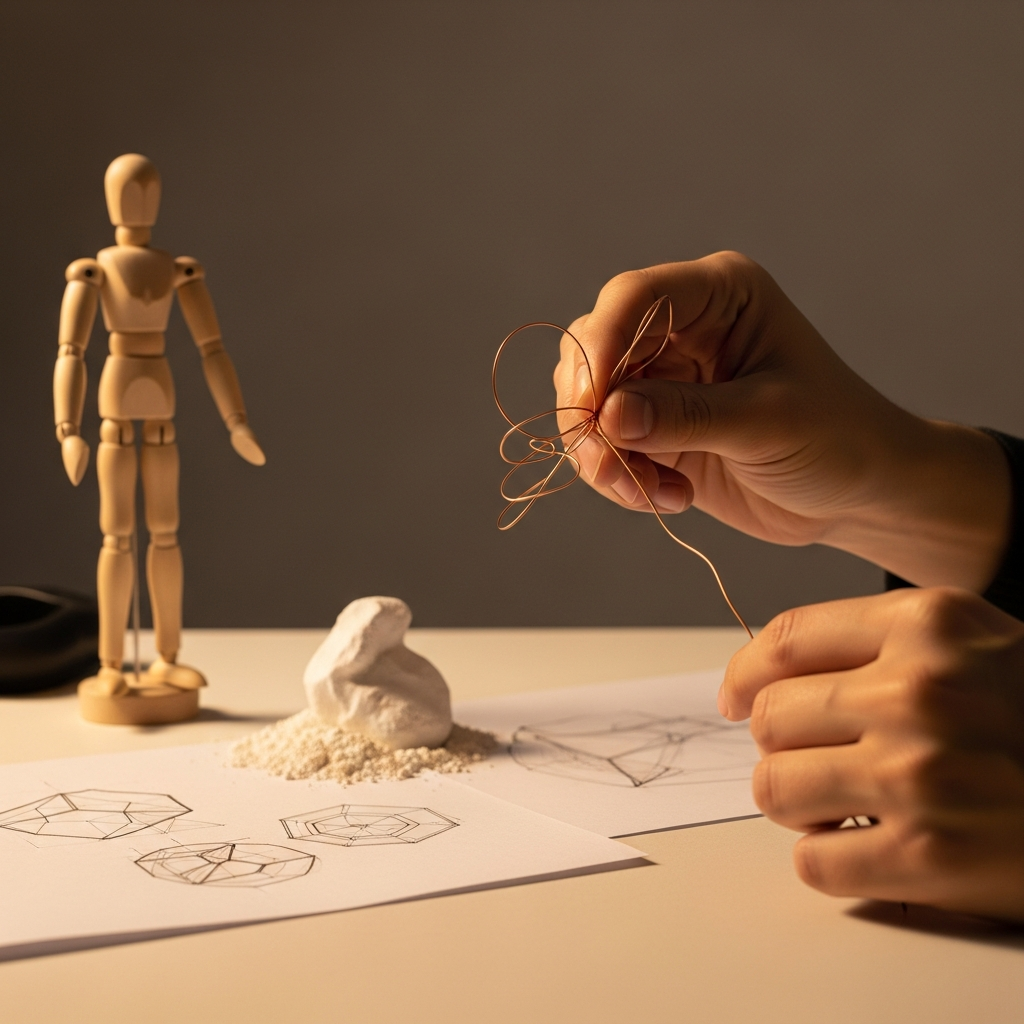
The Psychological Bridge: Moving from Prelims to the Studio Test
Passing the NID Design Aptitude Test (DAT) Prelims is a significant milestone, but the Studio Test and the subsequent situational interview represent a shift from theoretical knowledge to psychological application. For many aspirants, this transition is daunting because it moves away from paper-based problem solving to tangible, real-world creation. The National Institute of Design (NID) isn’t just looking for someone who can draw; they are scouting for individuals who think like designers. This guide explores the psychological nuances of the Studio Test and how you can prepare effectively using the mock tests on myentrance.in.
Understanding the ‘Designer Mindset’
What does it mean to have a designer mindset? In the context of the NID situational interview, it involves three core psychological pillars: empathy, resilience, and curiosity. Interviewers observe how you interact with materials, how you respond to constraints, and how you articulate your thought process. They are interested in your ‘why’ more than your ‘what’.
- Empathy: Can you design for a user who is different from you?
- Resilience: How do you react when a model collapses or when a material doesn’t behave as expected?
- Curiosity: Do you ask questions about the problem before jumping to a solution?
The Anatomy of the Situational Interview
The situational interview often happens alongside or after the material handling tasks. The jury might ask you to explain your model or give you a hypothetical scenario to solve on the spot. Psychologically, this is a test of your cognitive flexibility. They want to see if you can defend your design choices while remaining open to feedback. Practicing with the latest pattern mock tests on myentrance.in can help you simulate these pressure-filled scenarios.
Comparing Approaches: Traditional vs. Psychological Preparation
To succeed, you must move beyond rote learning. The following table highlights the difference between a standard approach and the high-level designer mindset required for NID.
| Evaluation Aspect | Traditional Preparation | Designer Mindset (NID Requirement) |
|---|---|---|
| Problem Solving | Following a fixed formula or template. | Adapting to unique constraints and user needs. |
| Material Usage | Focusing only on the beauty of the object. | Focusing on functionality and material honesty. |
| Communication | Memorizing scripted answers. | Authentic storytelling and process explanation. |
| Observation | Noting obvious physical traits. | Identifying latent needs and environmental cues. |
Developing 3D Thinking and Material Empathy
One of the biggest psychological hurdles in the Studio Test is material handling. Whether it is clay, wire, cloth, or thermocol, each material has a ‘personality’. A designer mindset involves understanding these properties intuitively. If you are asked to create a representation of ‘Speed’ using wire, the jury isn’t just looking for a car shape; they are looking for how you used the tension of the wire to convey the concept psychologically.
The Role of Observation in Design Psychology
The NID Studio Test frequently includes observation tests. These might involve sensory tasks or drawing from memory. The psychological trick here is ‘Active Perception’. Instead of just looking, you must analyze. If asked to draw a scene from a railway station, a designer observes the ergonomics of the benches, the flow of the crowd, and the lighting, rather than just the people.
How to Prepare for the Unexpected
The best way to prepare for the psychological pressure of the situational interview is through consistent practice. At myentrance.in, we provide mock tests that reflect the current syllabus and upcoming exam trends. These tests include:
- Simulated material handling challenges.
- Creative writing prompts for situational analysis.
- Memory-based observation exercises.
- Audio-visual perception tasks.
By exposing yourself to these variety of tasks, you reduce the ‘novelty effect’ that causes panic during the actual exam.
Final Tips for the Situational Interview
When you sit across from the NID jury, remember that they are your future mentors, not just examiners. Maintain eye contact, be honest about your failures during the model-making process, and show enthusiasm for the problem-solving journey. Acknowledging that your first idea failed but your third idea succeeded shows more maturity than presenting a ‘perfect’ model with no story behind it.
Frequently Asked Questions
What is the main goal of the NID Situational Interview?
The primary goal is to assess a candidate’s creative thinking, problem-solving abilities, and how they apply design principles to real-world or hypothetical scenarios.
How can I improve my material handling skills for the Studio Test?
Practice with diverse materials like clay, paper, wire, and scrap. Focus on how these materials can be joined and manipulated to represent abstract concepts.
Does my model need to be beautiful to score well?
Not necessarily. While neatness counts, the NID jury prioritizes the conceptual clarity, structural integrity, and the thought process behind the model over mere aesthetics.
Are mock tests really helpful for a practical test like the Studio Test?
Yes, mock tests on platforms like myentrance.in help you understand the latest patterns, manage your time effectively, and prepare your mind for the types of prompts you will face.





