
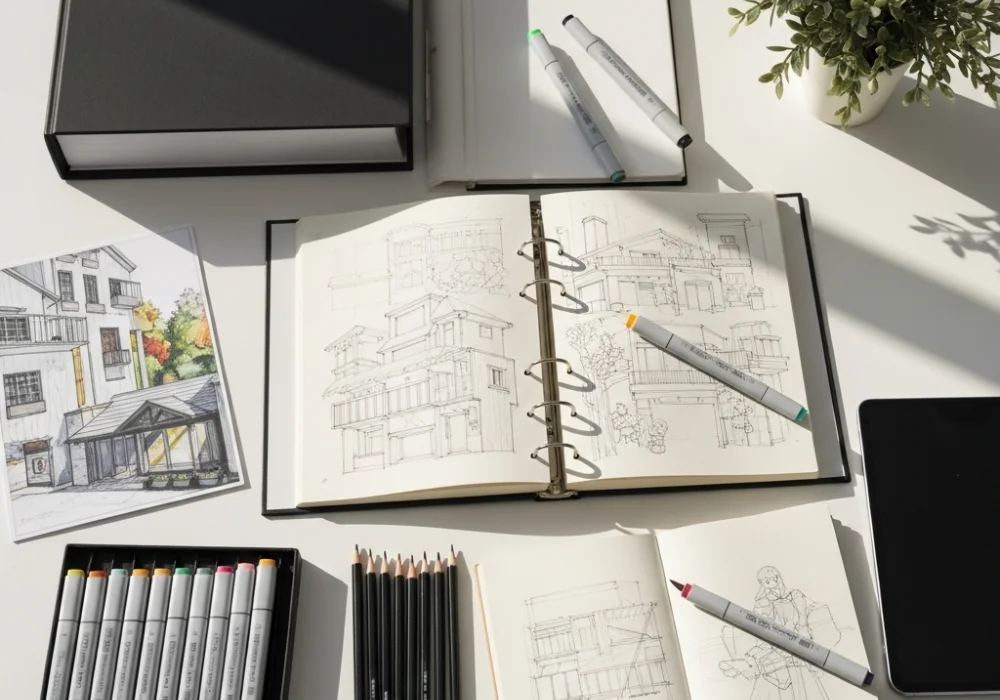
Understanding the Role of the NID Portfolio
For any design aspirant, the National Institute of Design (NID) represents the pinnacle of creative education. While the Design Aptitude Test (DAT) Prelims evaluate your observational and analytical skills, the NID Portfolio and Studio Test phases are where your true creative identity is revealed. A portfolio is not merely a collection of your best drawings; it is a visual narrative of your thought process, problem-solving abilities, and your unique perspective on the world. To succeed in the latest pattern of design entrances, mastering the art of portfolio curation is non-negotiable.
What Makes an NID Portfolio Stand Out?
Many students mistake a portfolio for an art gallery. However, NID faculty are more interested in how you think than how well you can shade a sphere. They look for ‘Design Thinking’—the ability to identify a problem and work towards a creative solution. Your portfolio should showcase a variety of skills, ranging from traditional sketching to digital manipulation, photography, or even three-dimensional model making. It is essential to demonstrate that you are versatile and open to experimenting with different mediums.
Key Elements to Include
- Process Sketches: Show the messy middle. Include your rough doodles and failed attempts to demonstrate how an idea evolved.
- Diverse Mediums: Use charcoal, watercolors, digital tools, and even clay or paper-mache models.
- Observation Studies: Detailed sketches of everyday objects, human anatomy, or nature that show you pay attention to detail.
- Problem-Solving Projects: Any instance where you designed a product or a system to solve a real-world issue.
Comparing Portfolio Approaches: What to Avoid vs. What to Aim For
To help you understand the distinction between a standard application and a winning one, refer to the table below which highlights the differences in approach based on the current syllabus requirements.
| Feature | Standard Portfolio | Winning NID Portfolio |
|---|---|---|
| Content Focus | Finished, polished artworks only. | Focus on the journey from ideation to final execution. |
| Subject Matter | Copying famous paintings or characters. | Original concepts and personal observations. |
| Variety | Only pencil sketches or paintings. | Mix of 2D, 3D, digital, and experimental work. |
| Narrative | Random collection of works. | A cohesive story reflecting the designer’s personality. |
| Feedback | Self-reviewed without professional input. | Refined through mock tests and expert critiques. |
Step-by-Step Guide to Preparing Your NID Portfolio
1. Start with a Theme or Narrative
A cohesive portfolio is much more memorable than a disjointed one. Try to find a thread that connects your work. Are you passionate about sustainability? Is your work focused on human emotions? Having a central theme helps the jury understand your motivations as a designer.
2. Document Your Process Thoroughly
Every project in your portfolio should be accompanied by a brief description. Explain the ‘Why’ behind the ‘What’. Use mind maps, mood boards, and iteration sketches to show that your final output was the result of logical thinking and creative exploration. This is a crucial part of the current syllabus for design entrance exams.
3. Curate for Quality, Not Quantity
It is better to have 10 exceptional pieces than 30 mediocre ones. Select works that highlight different facets of your skill set. If two pieces show the same skill, pick the stronger one. Ensure that your portfolio is manageable and easy to navigate during an interview.
4. Leverage Mock Tests and Feedback
Preparation is incomplete without testing your skills under pressure. Utilizing resources like the mock tests available on myentrance.in can help you understand the time constraints and the type of creative thinking required for the NID DAT. Mock tests allow you to refine your ability to generate ideas quickly, which you can then polish and include in your portfolio.
The Interview: Presenting Your Work
Your portfolio is the conversation starter, but your explanation is the deal-clocker. Practice talking about your work. Be prepared to explain why you chose a specific color palette, why you used a particular material, or what you would change if you had more time. Confidence in your process is just as important as the work itself.
Common Pitfalls to Avoid
- Plagiarism: Never include work that isn’t yours. The NID jury has seen thousands of portfolios and can easily spot unoriginal content.
- Over-polishing: Don’t be afraid to show mistakes. A portfolio that looks too ‘perfect’ often lacks the raw creative energy faculty look for.
- Ignoring the Brief: If there are specific requirements for the upcoming exams regarding file size or physical dimensions, follow them strictly.
Frequently Asked Questions (FAQ)
What is the ideal number of projects for an NID portfolio?
There is no fixed number, but typically 12 to 15 high-quality projects are sufficient to show a range of skills without overwhelming the jury.
Can I include digital art in my NID portfolio?
Yes, digital art is highly encouraged as it shows proficiency with modern tools. However, ensure it is balanced with hand-drawn sketches to demonstrate foundational skills.
Do I need to be an expert at drawing to get into NID?
While basic drawing skills are necessary to communicate ideas, NID values your ability to think creatively and solve problems more than technical illustration perfection.
How should I organize my physical portfolio?
Organize it logically. Start with your strongest piece to grab attention, group similar works together, and end with another strong piece to leave a lasting impression.
Are mock tests helpful for portfolio preparation?
Absolutely. Platforms like myentrance.in offer mock tests that simulate the creative pressure of the DAT, helping you generate the kind of original work that belongs in a top-tier portfolio.





