
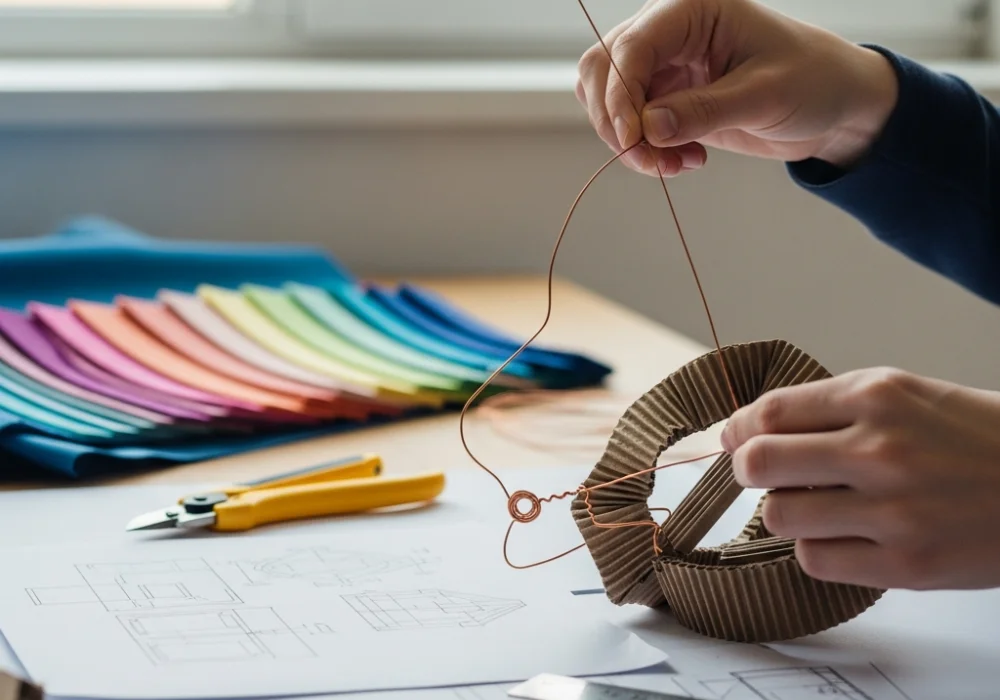
Introduction to NIFT Situation Test Material Manipulation
The National Institute of Fashion Technology (NIFT) Situation Test is a critical phase for B.Des aspirants. After clearing the initial written rounds, students are evaluated on their creative ability to handle three-dimensional forms. Material manipulation is the heart of this test. It is not just about building a model; it is about how creatively you can transform a flat piece of paper, a rigid piece of wire, or a limp piece of fabric into a thematic representation of a concept. In this guide, we will explore the nuances of material handling to help you excel in the latest pattern of the exam.
The Core Objective of Material Manipulation
The examiners look for innovation, aesthetic appeal, neatness, and structural stability. Material manipulation is the process of changing the physical state of a material—through folding, cutting, twisting, or layering—to serve a specific design purpose. To prepare effectively, students should engage with diverse materials and practice with professional resources. At myentrance.in, we provide curated mock tests that simulate the exact conditions of the NIFT Situation Test, ensuring you are well-prepared for any material combination provided.
Essential Materials Provided in the NIFT Situation Test
While the specific materials can vary, the following items are commonly included in the kit provided to students:
- Cardboard and Ivory Sheets: The foundation for most structural models.
- Wire (Copper or Aluminum): Used for creating skeletons, support, or intricate details.
- Aluminum Foil: Great for adding texture, shine, and fluid shapes.
- Clay or Plasticine: Ideal for organic forms and minute detailing.
- Fabric and Threads: Used for draping, adding softness, or signifying movement.
- Straws, Buttons, and Beads: Often provided as supplementary items for detailing.
Comparative Analysis of Material Manipulation Techniques
Understanding which technique works best for which material is key to managing time during the two-hour exam. Below is a comparison of common materials and their manipulation potential.
| Material | Manipulation Technique | Best Used For |
|---|---|---|
| Cardboard | Scoring, Cutting, Folding | Base structures, geometric shapes, walls |
| Wire | Bending, Twisting, Coiling | Human figures, trees, outlines, reinforcement |
| Aluminum Foil | Crumpling, Sculpting, Texturing | Water effects, metallic surfaces, organic curves |
| Ivory Sheet | Quilling, Pleating, Origami | Delicate details, flowers, fans, repetitive patterns |
| Fabric | Draping, Knotting, Braiding | Clothing simulation, curtains, soft textures |
Top Techniques for Material Manipulation
1. Scoring and Folding Cardboard
Never fold cardboard directly; it creates messy cracks. Use a cutter to lightly ‘score’ the surface (cut only halfway through) before folding. This ensures sharp, professional edges that improve the neatness of your model. This technique is essential for building stable architectural forms in the upcoming exams.
2. Wire Management
Wire is one of the trickiest materials. Use the ‘loop’ technique to join wires without using excessive tape. If you need to show volume with wire, try coiling it around a pencil to create a spring-like structure. This adds a dynamic element to your 3D model.
3. The Power of Texturing
Transformation is key. If you are given a plain white sheet, don’t just leave it flat. Use a pin to create perforated patterns or use the edge of your scale to create corrugated textures. Transforming the surface of the material shows the examiners that you have a deep understanding of design elements.
Strategic Planning During the Exam
One of the biggest mistakes students make is jumping into construction without a plan. Spend the first 15 minutes sketching your idea and deciding which material will represent which part of your concept. Remember, your model must be self-supporting and use only the materials provided. Practice this time management skill by taking the mock tests available on myentrance.in, which are designed to mirror the current syllabus and pressure levels of the actual exam.
Common Pitfalls to Avoid
- Overuse of Adhesive: Visible glue marks or excessive use of sticky tape can lead to negative marking. Aim for mechanical joins whenever possible.
- Lack of Stability: If your model collapses when the examiner moves the table, you will lose significant marks. Always ensure a sturdy base.
- Ignoring the Brief: Ensure your model directly answers the question asked. A beautiful model that doesn’t fit the theme is useless.
- Poor Write-Up: The 100-word write-up explaining your concept is just as important as the model itself. Practice articulating your design choices clearly.
Frequently Asked Questions (FAQ)
What is the most important material in the NIFT Situation Test?
There is no single “most important” material. Success depends on how you manipulate the combination of materials provided to create a cohesive 3D form. However, cardboard is frequently used as the primary structural element.
Can I bring my own materials to the exam?
No, you are strictly prohibited from bringing any external materials. You must use only what is provided in the official kit. You may only bring your basic stationery kit (scissors, cutter, scale, glue, etc.).
How can I improve my material handling speed?
Speed comes with practice. Try creating models with a limited set of materials at home within a 2-hour deadline. Using mock test prompts from portals like myentrance.in can provide realistic practice scenarios.
Is the write-up evaluated?
Yes, the write-up is a crucial part of the evaluation. It explains your design process, the choice of materials, and how your model relates to the given theme.
How should I handle clay if it is provided?
Clay is best used for organic shapes. To prevent it from falling off, create a wire armature (skeleton) first and then apply the clay over it for better stability.
Take Your Design Preparation to the Next Level!
Need expert feedback on your models? Or looking for the best mock tests to ace the NIFT Situation Test? Our experts are here to guide you every step of the way for the upcoming exams.
💬 Chat with our Experts on WhatsApp (+91 9526806124)




