
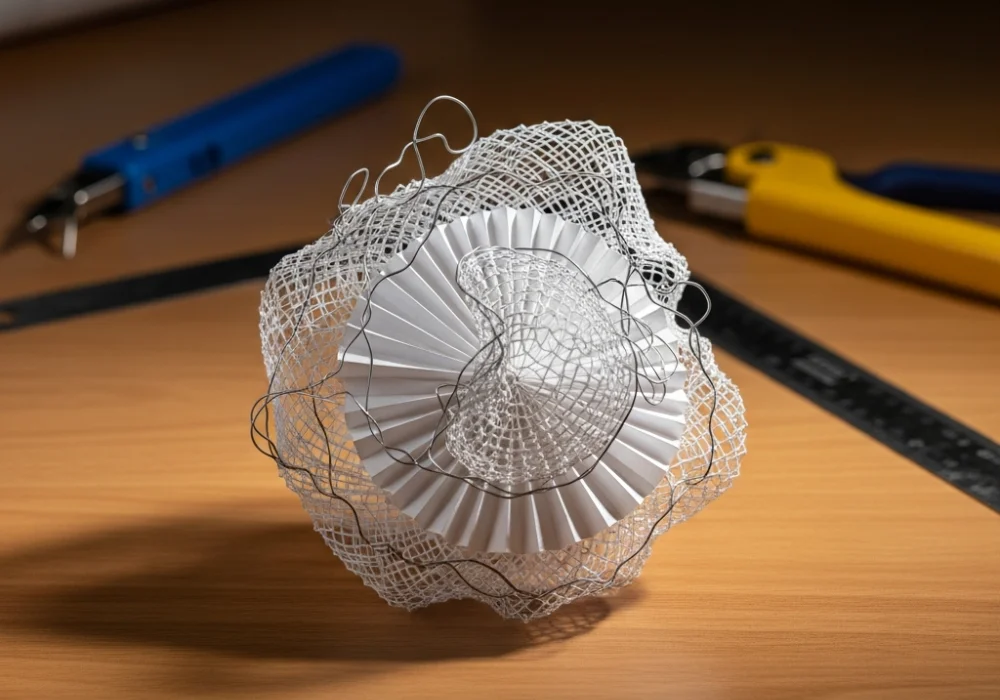
Introduction to the NIFT Situation Test
The NIFT Situation Test is the final hurdle for students aspiring to join the prestigious National Institute of Fashion Technology. While the GAT and CAT measure your analytical and artistic abilities, the Situation Test evaluates your tactile skills, creativity in three dimensions, and material handling under pressure. Understanding the evaluation metrics is critical because the judges are not just looking for a beautiful model; they are looking for a designer’s mind at work. To excel, one must combine innovation with technical precision. At myentrance.in, we provide specialized mock tests that simulate these exact constraints to help you practice effectively.
The Five Pillars of Evaluation Metrics
Judges evaluate your performance based on five distinct criteria. Mastering these is the difference between an average score and a top rank.
- Conceptualization: How well you have interpreted the theme. Is your idea original or a literal representation?
- Innovation and Creativity: Your ability to use materials in unconventional ways. For instance, using a straw not just as a pipe, but as a structural joint or a textured surface.
- Material Manipulation: The skill with which you handle paper, wire, cloth, and other provided items. This includes techniques like scoring, folding, and weaving.
- Structural Stability and Neatness: Your model must stand on its own and be free of visible glue marks or messy joints.
- Design Write-up: A concise explanation of your concept, why you chose certain materials, and how your model relates to the theme.
Advanced Model-Making Techniques
1. Paper Manipulation: Beyond Simple Folds
Paper is the most common material provided. Advanced students use scoring—making a light cut on the surface—to create sharp, professional folds. Quilling adds intricate texture, while pleating and crumpling can create organic shapes representing water or fabric. For the latest pattern of exams, focus on creating volume without using excess material.
2. Wire and Thread Work
Wire should be used for skeletal structures or decorative elements. Instead of just bending it, try coiling it around a pencil for a spring effect or weaving it with thread to create a mesh. This demonstrates high-level material manipulation skills that catch the eyes of the evaluators.
3. The ‘No-Glue’ Challenge
While glue is provided, models that stay together through interlocking techniques or slots are often rated higher. It shows a sophisticated understanding of joinery and 3D geometry. If you must use glue, ensure it is applied sparingly and hidden within the structure.
Comparison: Amateur vs. Professional Approaches
| Metric | Amateur Approach | Professional Strategy (Recommended) |
|---|---|---|
| Material Usage | Used as provided (e.g., flat paper). | Transformed texture (e.g., pleated, embossed). |
| Stability | Flimsy, often collapses or leans. | Self-standing with a solid center of gravity. |
| Theme Interpretation | Literal (e.g., a simple chair for ‘Comfort’). | Abstract (e.g., a cocoon shape for ‘Comfort’). |
| Joints | Visible tape or messy glue blobs. | Seamless interlocking or hidden adhesives. |
| Write-up | Descriptive (What I made). | Analytical (Why and how I designed it). |
The Importance of the Design Write-up
The write-up is often neglected by candidates. It should be approximately 50 to 100 words. Start with your inspiration, explain the transition from 2D to 3D, and highlight the specific materials used. Mentioning how the mock tests at myentrance.in helped you manage time can give you a perspective on how to structure your thoughts quickly. A clear, legible, and professional write-up bridges the gap between your model and the judge’s understanding.
Practice Strategies for the Upcoming Exams
Time management is the biggest challenge. You have limited time to plan, execute, and write. We recommend following a strict timeline: 15 minutes for brainstorming, 90 minutes for model making, and 15 minutes for the write-up. Practicing with the mock material kits and online resources from myentrance.in can significantly improve your speed and confidence.
Frequently Asked Questions (FAQ)
What materials are usually provided in the NIFT Situation Test?
Common materials include cardboards, thermocol, colored paper, wire, cloth, thread, pins, and adhesives like Fevicol or tape. The specific kit varies each year to test adaptability.
How long is the NIFT Situation Test?
The test typically lasts for two hours, during which you must complete the model and the written explanation.
Is drawing allowed during the test?
You are usually provided with a sheet for rough work where you can sketch your initial ideas before starting the 3D model.
How important is the write-up in the final score?
While the model carries the most weight, the write-up is crucial for clarifying your intent and ensuring the judges understand your creative vision.





