
Mastering the NID DAT: The Fusion of Logic and Art
The National Institute of Design (NID) Entrance Exam, commonly known as the Design Aptitude Test (DAT), is one of the most competitive creative assessments in India. Success in this exam doesn’t just come from being a ‘good artist’; it stems from a candidate’s ability to fuse design logic with visual communication. For aspirants looking to secure a seat in the B.Des or M.Des programs, understanding the nuances of current syllabus patterns is crucial. At myentrance.in, we provide comprehensive mock tests specifically designed to challenge your cognitive and creative boundaries.
The Core of Design Logic: Thinking Beyond the Obvious
Design logic is the cognitive foundation of the NID DAT. It involves critical thinking, problem-solving, and the ability to empathize with users. Unlike traditional academic exams, NID tests your perspective on the world. You might be asked to redesign a common household object or solve a social issue through a visual campaign. This requires a structured approach to thinking, often referred to as ‘Design Thinking’.
To excel in design logic, you must practice observation. Notice how doors open, how children interact with toys, or how signage helps or confuses people in public spaces. These real-world observations translate into your answers during the exam. Utilizing the mock tests on myentrance.in can help you simulate these problem-solving scenarios under timed conditions, ensuring you develop the mental agility required for the latest pattern of the exam.
Integrated Sketching Drills: More Than Just Drawing
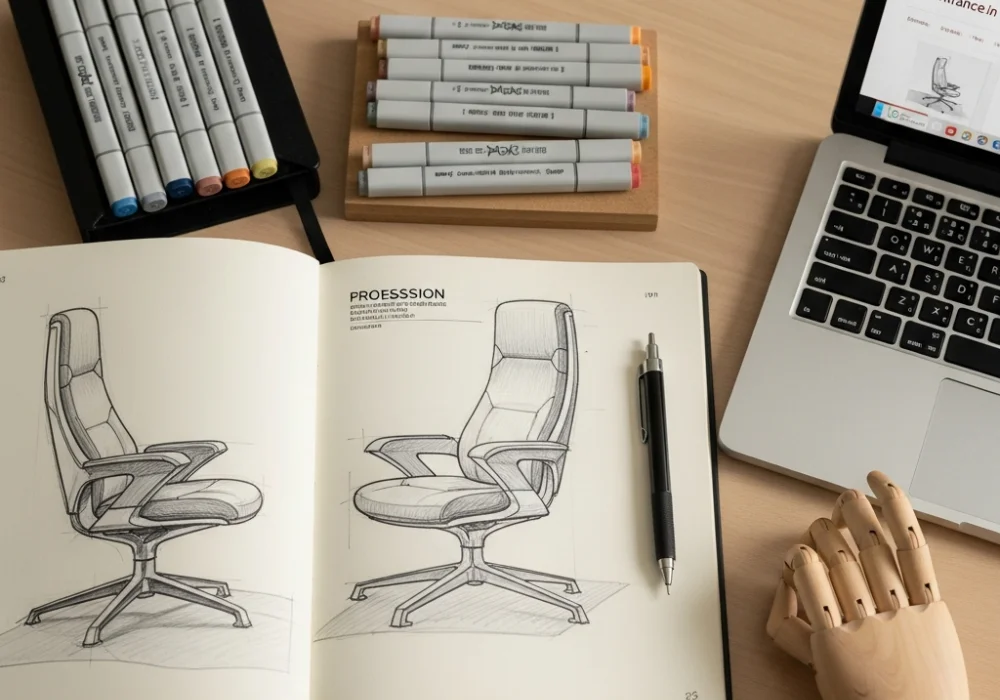
Sketching for NID is fundamentally different from fine arts. In the NID DAT, your sketches are a vehicle for your ideas. Integrated sketching drills focus on speed, accuracy, and conceptual clarity. The goal is to convey a complex thought through simple, effective lines. Aspirants should focus on three main pillars: perspective, human anatomy, and light/shadow dynamics.
Essential Sketching Exercises
- Perspective Practice: Draw a street view from a bird’s eye perspective and a worm’s eye perspective daily. This builds a strong sense of spatial awareness.
- Object Metamorphosis: Take two unrelated objects (e.g., a toaster and a turtle) and sketch a three-step transition from one to the other. This tests lateral thinking.
- Storyboarding: Practice drawing a 5-step sequence of a daily activity, such as making tea or changing a lightbulb, focusing on flow and continuity.
Comparative Analysis of NID DAT Components
Understanding what the examiners are looking for can significantly tilt the scales in your favor. Below is a comparison of the key areas tested in the Prelims and how they contribute to your overall score.
| Assessment Area | Skills Tested | Weightage Impact |
|---|---|---|
| General Knowledge | Current affairs, history of art, and design trends. | High for Prelims |
| Logical Reasoning | Pattern recognition, spatial ability, and puzzles. | Medium for Prelims |
| Creative Sketching | Proportion, composition, and visual narrative. | Very High (Prelims & Mains) |
| Design Problem Solving | Ideation, empathy, and functional feasibility. | Very High (Prelims & Mains) |
The Role of Mock Tests in Your Preparation
Consistency is key to mastering the NID DAT. Many students possess the talent but struggle with time management. This is where myentrance.in steps in. Our platform offers a wide array of mock tests that mirror the upcoming exams’ difficulty level. By taking these tests, you can identify your strengths and weaknesses in areas like color theory, typography, and abstract visualization. Regular practice with these materials ensures that when the actual exam day arrives, you are not just prepared but confident.
Advanced Tips for Upcoming Exams
As you prepare for the next cycle of entrance tests, keep these advanced strategies in mind:
- Analyze Previous Patterns: While we don’t focus on specific years, analyzing the evolution of question types over the last decade helps in predicting the focus of the current syllabus.
- Limit Your Tools: Practice primarily with a HB pencil, a few shades of grey markers, and basic color pencils. NID rarely allows elaborate mediums.
- Work on Speed: A perfect sketch that is only 50% complete earns fewer marks than a good sketch that is 100% complete. Aim for completion.
Frequently Asked Questions (FAQ)
What is the most important part of the NID DAT Prelims?
The most important part is the subjective section where sketching and design problem-solving are tested. These questions evaluate your creative thinking and ability to communicate ideas visually.
How can I improve my design logic?
Improving design logic requires constant questioning. Ask yourself ‘why’ a product is designed a certain way and ‘how’ it could be improved for better user experience. Reading about design history and practicing logical puzzles also helps.
Are mock tests necessary for NID preparation?
Yes, mock tests are essential. They help you get used to the exam format, manage your time effectively, and reduce anxiety. Platforms like myentrance.in provide realistic simulations of the actual test environment.
Can I clear NID without formal art training?
Absolutely. NID looks for ‘design aptitude’ rather than just ‘fine art skills’. If you can think creatively and represent your ideas clearly through basic sketching, you have a strong chance of succeeding.





