
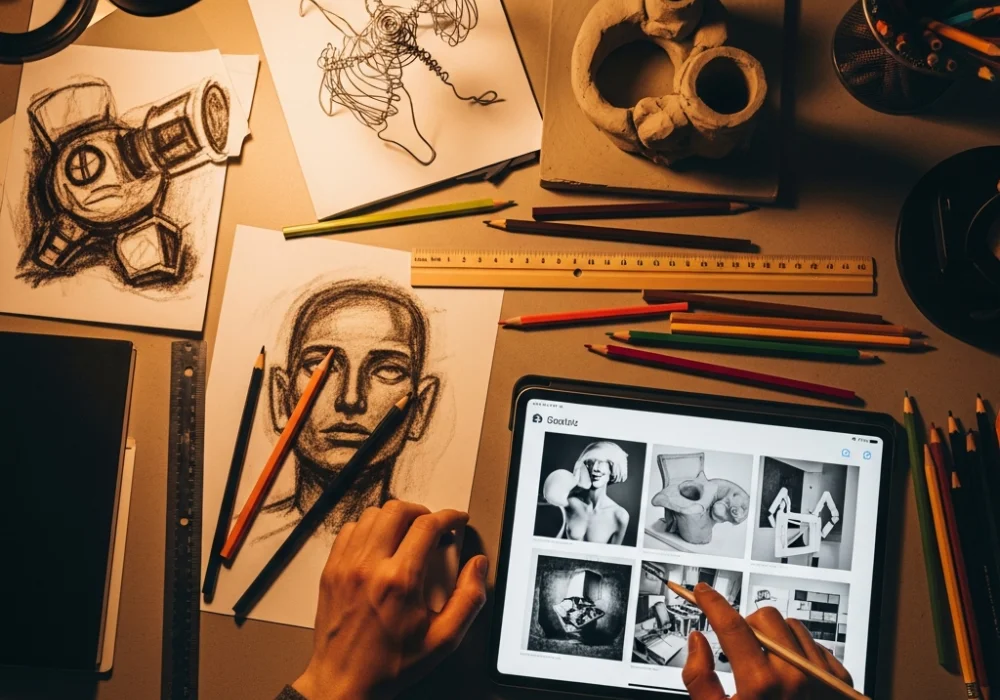
Navigating the Final Frontier: The NID Studio Test
Passing the National Institute of Design (NID) Design Aptitude Test (DAT) Prelims is a significant achievement, but the real challenge begins with the Studio Test. This stage is designed to evaluate your sensory skills, material handling capabilities, and, most importantly, your ability to think on your feet. Unlike the written prelims, the Studio Test is an immersive, hands-on experience that demands a blend of technical precision and wild imagination.
To excel, candidates must go beyond basic sketching. At myentrance.in, we provide specialized mock tests and resources tailored to the latest pattern to help you bridge the gap between imagination and execution.
Advanced Creative Thinking Strategies
Creative thinking is not just about having a ‘good idea’; it is about systematic problem-solving through a design lens. In the Studio Test, you are often asked to solve complex problems with limited resources. Here are three advanced strategies to sharpen your mindset:
- Lateral Thinking: Avoid the first three ideas that come to your mind. Usually, these are clichés. Force yourself to look at the prompt from a perspective that others might ignore.
- The SCAMPER Technique: Use this mnemonic (Substitute, Combine, Adapt, Modify, Put to another use, Eliminate, Reverse) to transform mundane objects into innovative solutions.
- Empathy Mapping: Design is for people. Before building a model, quickly identify the user’s pain points. A design that solves a human problem always scores higher than a purely aesthetic one.
Material Handling and 3D Modeling
The material handling round is often the most intimidating. You might be given clay, wire, cloth, paper, or even found objects. The goal is not just to create a sturdy model, but to demonstrate an understanding of the material’s properties.
| Material Type | Focus Area | Pro Tip |
|---|---|---|
| Wire/String | Structural Integrity | Use tension and loops for strength without excess bulk. |
| Clay/Plaster | Form and Texture | Focus on the ‘negative space’ to create dynamic shapes. |
| Paper/Cardboard | Precision and Joinery | Avoid using too much adhesive; try interlocking tabs. |
| Found Objects | Resourcefulness | Look at the object’s potential, not its original purpose. |
Building a Standout Portfolio
While not always mandatory for every discipline, having a portfolio ready is crucial for your design journey and interviews. Your portfolio should be a narrative of your growth, not just a gallery of finished works.
- Show Your Process: Include rough sketches, failed attempts, and iterations. NID faculty value your thought process more than the final polished product.
- Diverse Skillset: Show that you can work across mediums—photography, digital art, hand-sketching, and 3D prototyping.
- Personal Voice: Your portfolio should reflect who you are. Avoid copying styles; let your unique perspective on the world shine through.
Success through Mock Tests
Preparation is the key to confidence. Utilizing the mock tests available on myentrance.in allows you to simulate the high-pressure environment of the actual exam. Our current syllabus-aligned materials ensure you are practicing with the right constraints, helping you manage time efficiently during the actual Studio Test.
Frequently Asked Questions (FAQ)
What is the weightage of the Studio Test in the final merit list?
The weightage varies depending on the current year’s official notification, but typically, the Studio Test carries significant weight, often around 30% to 50% of the final score.
Is a digital portfolio better than a physical one?
Both have merits. A digital portfolio is easily shared, but a physical portfolio allows the interviewer to see the texture and scale of your work. Ensure your digital work is accessible offline.
Can I bring my own materials to the Studio Test?
No, NID provides all necessary materials. You are usually only allowed to bring basic stationery like pencils, erasers, and cutters.





