
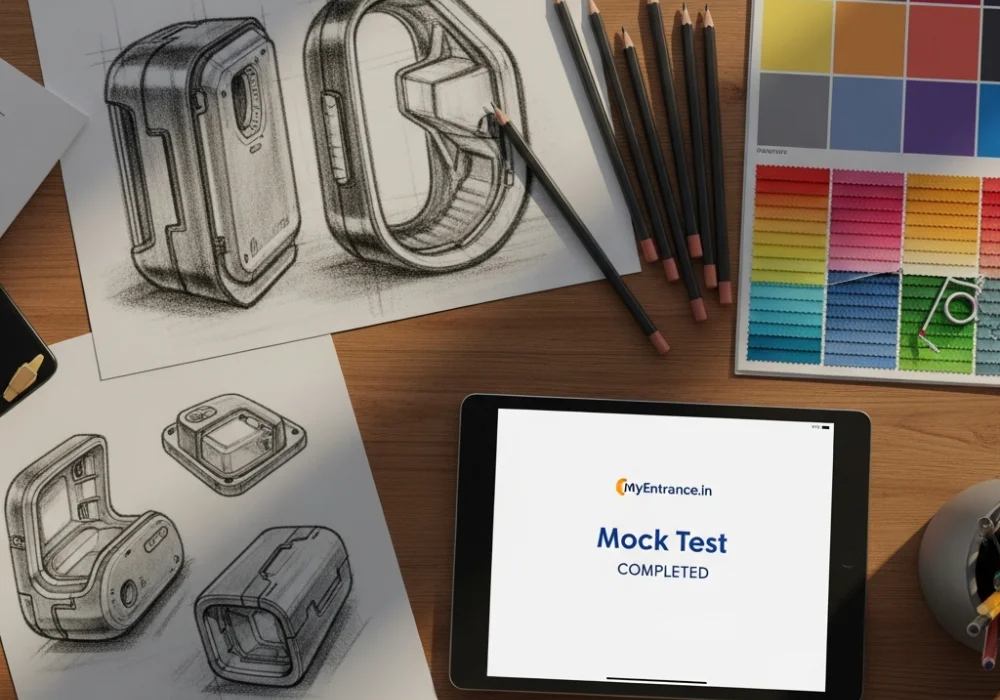
Introduction to NID DAT Success
The National Institute of Design (NID) is the premier destination for aspiring designers in India. Securing a seat at this prestigious institution requires more than just raw talent; it demands a strategic approach to the Design Aptitude Test (DAT). The journey to becoming a design professional starts with understanding that the NID DAT is not a typical academic exam. It evaluates your perception, creativity, visualization skills, and ability to communicate ideas through visual mediums. To excel in this competitive environment, practicing with Essential NID DAT Model Question Papers is not just recommended—it is absolutely critical. Model papers serve as a blueprint of the actual examination, helping students navigate the complexities of the current syllabus and latest exam pattern with confidence.
Table of Contents
Understanding the NID DAT Exam Pattern
The NID DAT is conducted in two primary stages: the DAT Prelims and the DAT Mains. The Prelims act as a screening test and are primarily composed of two parts. Part A usually consists of objective-type questions (MCQs) that test your general knowledge, spatial ability, and logical reasoning. Part B is the subjective section where your drawing and creative thinking skills are put to the test. Succeeding in Part B requires a deep understanding of perspective, light and shadow, and storytelling. Model papers are designed to replicate this mix, ensuring you are not surprised by the format on the day of the exam. The current pattern emphasizes not just drawing skills, but the clarity of thought and the uniqueness of the solution provided to a design problem.
ℹℹ Click to Reveal: Pro-Tip on Time Management
Always allocate specific time slots for Part A and Part B during your practice sessions. Aim to finish Part A in 45-60 minutes so you have ample time for the detailed sketches required in Part B.
The Importance of Model Question Papers
Why are model papers considered essential? Firstly, they provide a realistic simulation of the time pressure you will face. Many talented students fail to complete their sketches because they spend too much time on a single question. Secondly, model papers allow you to identify recurring themes and topics. Whether it is product design, poster making, or sequential drawing, these papers help you spot the trends in the latest curriculum. Furthermore, they serve as a diagnostic tool. After solving a model paper, you can evaluate your performance to see which areas need more focus. Are you struggling with human anatomy? Is your perspective off? Practice papers give you the answers before the actual exam does.
Key Topics and Weightage Analysis
Focusing on the right topics is the key to efficiency. Below is a comparative table of the key areas you should master through model papers:
| Focus Area | Topic Category | Skill Evaluated | Importance |
|---|---|---|---|
| Visual Perception | Part A & B | Observation & Detail | Very High |
| Spatial Ability | Part A | 3D Visualization | High |
| Storytelling | Part B | Communication | Critical |
| Color Theory | Part B | Aesthetic Sense | Medium |
Effective Practice Strategies for Students
To get the most out of NID DAT model papers, follow these expert-recommended strategies:
- Simulate Exam Conditions: Sit in a quiet room, set a timer for 3 hours, and do not take breaks. This builds physical and mental stamina.
- Analyze the Question Carefully: In design exams, the question often contains hidden constraints or hints. Spend the first 5 minutes of each section reading and planning.
- Focus on Ideation: Don’t just draw the first thing that comes to mind. Brainstorm at least three concepts and choose the most unique one.
- Refine Your Rendering: While the idea is king, good presentation helps. Practice clean line work and effective shading to make your sketches pop.
Why Choose MyEntrance.in for Mock Tests
At MyEntrance.in, we understand the specific nuances of design entrances. Our mock tests and model papers are curated by design experts who have analyzed years of exam patterns. We offer:
- Comprehensive model papers covering all sections of the upcoming exams.
- Detailed solutions and feedback mechanisms to help you improve.
- A user-friendly platform that replicates the online testing experience for Part A.
- Expert guidance for Kerala PSC, SSC, and NIFT as well, making us a one-stop solution for competitive exam preparation.
Common Mistakes to Avoid During Practice
Many students make the mistake of focusing only on drawing. Remember, NID is looking for a designer, not just an artist. A common error is ignoring the objective questions in Part A, which can significantly affect your overall score. Another mistake is failing to practice with a variety of mediums. While pencils are standard, some questions might require you to show color proficiency. Lastly, many candidates forget to check the legibility of their written explanations. If the examiner cannot read your logic behind a design, you lose points. Practice writing concise, clear descriptions alongside your sketches in your model paper sessions.
Frequently Asked Questions
How many model papers should I solve before the exam?
It is recommended to solve at least 10-15 full-length model papers. This helps in mastering time management and covers a wide range of creative challenges.
Is the DAT Prelims score used for final selection?
Yes, the Prelims score is used to shortlist candidates for the Mains. In the final merit list, both Prelims and Mains scores are typically given weighted importance.
Where can I find the latest NID DAT mock tests?
You can find the most updated and comprehensive mock tests for NID DAT, NIFT, and other exams on www.myentrance.in.
Quick Knowledge Check
Test your design awareness with these three quick questions!
ℹℹ Click to Reveal Answer
Two-point perspective is most commonly used for street-level architectural views.
ℹℹ Click to Reveal Answer
To establish the visual style, color palette, and emotional tone of a project before starting the final design.
ℹℹ Click to Reveal Answer
Kerning is the process of adjusting the spacing between individual characters in a word to achieve a visually pleasing result.
Ready to Ace the NID DAT?
Don’t leave your success to chance. Start practicing with our high-quality model papers and join thousands of successful students.
ᄑ Chat with our Experts on WhatsApp (+91 9526806124)




