
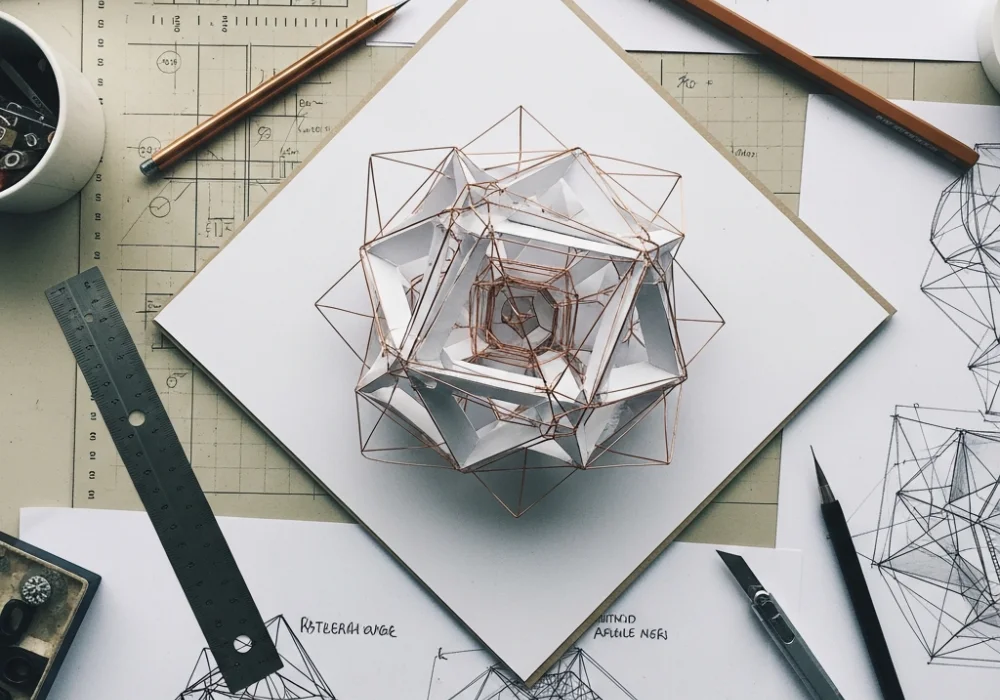
Conquering the NID DAT Studio Test with Professional 3D Modeling Skills
Cracking the National Institute of Design (NID) Design Aptitude Test (DAT) Prelims is a significant achievement, but the real challenge lies in the Studio Test. For many aspirants, the 3D modeling round is the most intimidating. This phase tests not just your creativity, but your spatial awareness, material handling skills, and time management. To secure a seat in one of India’s premier design institutes, you need to think like a professional designer. At myentrance.in, we provide the resources and mock tests you need to navigate these practical challenges effectively.
Understanding the Role of 3D Modeling in the Studio Test
The Studio Test is designed to evaluate a candidate’s ability to transform 2D concepts into 3D realities. It is about how you perceive form, volume, and structure. Unlike a theoretical exam, you are given a set of materials and a specific problem statement. The goal is to build a model that is aesthetically pleasing, structurally sound, and contextually relevant to the problem provided.
Key Evaluation Criteria
- Material Innovation: How creatively you use the provided resources.
- Structural Integrity: Whether your model can stand on its own and hold its weight.
- Attention to Detail: The neatness of your joints and the finish of the surface.
- Spatial Intelligence: Your ability to translate dimensions accurately into physical space.
The Materials: Know Your Tools
In the NID DAT Studio Test, you won’t always get the same set of materials. Professionals know that every material has a ‘personality’—some are flexible, others are rigid. Understanding these properties is the first step toward mastery.
| Material Type | Ease of Use | Structural Strength | Best For… |
|---|---|---|---|
| Cardboard/Mount Board | Medium | High | Geometric structures and base foundations |
| Craft Wire/Aluminum Wire | Difficult | Medium | Creating skeletons or fluid, organic lines |
| Clay/Plastilene | Easy | Low | Organic forms and rapid prototyping |
| Thread/String | Medium | Low | Tension elements and adding texture |
| Straws/Plastic Strips | Easy | Medium | Building trusses and repetitive patterns |
Pro Tips for High-Scoring 3D Models
1. Start with a Rapid Prototype
Don’t jump straight into your final model. Spend the first 5-10 minutes sketching a rough idea and making a miniature ‘test’ version using scrap bits. This helps you identify potential structural failures before you commit your primary materials. Use the latest pattern mock tests on myentrance.in to practice this quick-thinking approach under timed conditions.
2. Focus on the Joinery
Pros know that a model is only as strong as its weakest joint. Instead of relying solely on excessive amounts of glue or tape, use mechanical joins. For example, if you are working with cardboard, use ‘slot-in’ techniques or ‘hinge’ folds. This shows the examiners that you understand construction principles, not just surface-level aesthetics.
3. Respect the Material’s Nature
If you are given wire, don’t try to make it look like a solid block. Use it to define edges and volumes. If you are given clay, use its plasticity to create curves that cardboard cannot achieve. A professional approach involves highlighting the unique properties of each material rather than forcing them to behave in unnatural ways.
4. Manage Your Time Strategically
The most common reason for failure in the NID DAT Studio Test is an unfinished model. Divide your time into four phases: Conceptualization (10%), Prototyping (15%), Final Construction (60%), and Finishing/Cleaning (15%). Always leave time at the end to hide glue marks and clean up the workspace.
Common Pitfalls to Avoid
- Over-complication: Often, a simple, well-executed idea scores higher than a complex, messy one.
- Excessive Adhesive: Visible glue or messy tape application can significantly lower your score. Aim for invisible joints.
- Ignoring the Brief: Ensure your model actually solves the problem stated in the question. A beautiful model that doesn’t answer the prompt is a waste of effort.
- Lack of Stability: Ensure your model doesn’t wobble. Stability is a non-negotiable aspect of design.
How Mock Tests Can Transform Your Preparation
The transition from drawing to physical modeling requires a different cognitive load. Practicing with the latest pattern mock tests from myentrance.in allows you to simulate the pressure of the Studio Test. Our resources cover various scenarios, from designing a wearable accessory to creating a futuristic transport model, ensuring you are prepared for whatever the examiners throw at you.
The Importance of Post-Practice Analysis
After you finish a practice model at home, take photos from different angles. Look for gaps in your joints or areas where the form lacks balance. Comparing your work against professional design portfolios can help you spot nuances that you might have missed during the construction process.
Frequently Asked Questions (FAQ)
What kind of tools should I carry for the NID DAT Studio Test?
While NID usually provides the necessary tools like cutters and rulers, it is always wise to be familiar with using a precision knife (X-Acto), metal scales, and different types of adhesives like glue sticks and double-sided tape. Always check the official admit card instructions for the specific items you are allowed to bring.
How important is the explanation or write-up for the model?
Very important. Most 3D modeling tasks require a short paragraph explaining your concept. It should be concise, professional, and explain how your model solves the given problem. Use design terminology like ‘ergonomics’, ‘balance’, ‘rhythm’, and ‘utility’.
Can I use my own materials if I find the provided ones insufficient?
No. You are strictly required to use only the materials provided by the center. Using external materials can lead to disqualification. The test is specifically designed to see how you perform under resource constraints.
Should I focus more on the concept or the finish?
It is a balance. A great concept poorly executed looks unprofessional, while a perfect finish on a boring concept lacks ‘soul’. Aim for a ‘Minimum Viable Product’—a model that is conceptually strong and cleanly finished.
How can myentrance.in help me with the Studio Test?
We provide a curated collection of previous years’ question themes and expert-designed mock tests that mimic the current syllabus. These materials help you understand the expected difficulty level and the variety of materials you might encounter.
Take Your Design Preparation to the Next Level
Confused about how to start your 3D modeling journey? Need professional feedback on your prototypes? We are here to help you clear every doubt and provide the best study material for your upcoming exams.
💬 Chat with our Experts on WhatsApp (+91 9526806124)




