
The Ultimate NIFT Guide: Crafts of North East India
Deep dive into the Seven Sisters and Sikkim to ace your NIFT GAT and CAT sections.
Introduction: Why North East Crafts Matter for NIFT
For any aspirant aiming to crack the National Institute of Fashion Technology (NIFT) entrance exam, understanding the indigenous crafts of India is not just a choice—it is a necessity. The North Eastern region of India, comprising the ‘Seven Sister’ states (Arunachal Pradesh, Assam, Manipur, Meghalaya, Mizoram, Nagaland, and Tripura) along with the ‘Brother’ state Sikkim, represents a treasure trove of sustainable design, intricate textile patterns, and organic material usage. In the Creative Ability Test (CAT), you might be asked to design a product inspired by tribal motifs, while the General Ability Test (GAT) frequently includes questions on Geographical Indication (GI) tags and traditional weaving techniques.
The North East is a region where craft is integrated into the daily lifestyle. Unlike industrial production, the crafts here are deeply rooted in the ecology and the spiritual beliefs of the local tribes. From the ‘Green Gold’ (bamboo) to the ‘Golden Thread’ (Muga Silk), every material tells a story of harmony between man and nature. As a design student, studying these crafts helps you understand the evolution of sustainable fashion—a key theme in the global design industry today. This interactive blog post is designed to test your knowledge through high-impact flashcards and provide you with a comprehensive study guide to ensure you don’t miss a single mark on this topic.
Key Craft Categories of the North East
Before we dive into our flashcard challenge, let’s review the pillars of North Eastern craftsmanship. This region excels in four primary areas: Textiles, Bamboo & Cane, Pottery, and Metalwork.
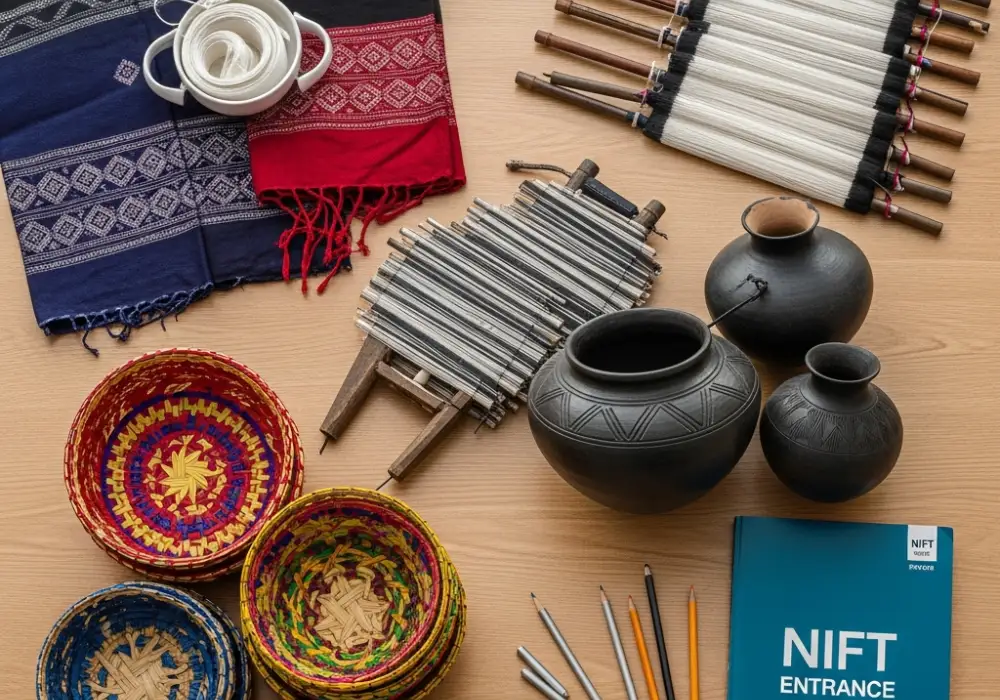
1. Textiles and Weaving: Weaving is a way of life in the North East. Almost every household in states like Assam and Nagaland possesses a loom. The ‘Loin Loom’ or ‘Backstrap Loom’ is unique to this region, allowing weavers to create dense, sturdy fabrics with complex geometric patterns. Silk production is another highlight; Assam is world-renowned for its three varieties of indigenous silks: Muga, Eri, and Pat. Muga silk is naturally golden and becomes more lustrous with every wash, making it one of the most expensive and sought-after silks in the world.
2. Bamboo and Cane: Abundant rainfall in the region makes it the perfect habitat for various species of bamboo and cane. These materials are used to create everything from architectural structures and bridges to delicate jewelry and household utensils. The ‘Japi’ of Assam and the bamboo mats of Tripura are iconic examples of this versatility.
3. Black Pottery: While most Indian pottery is terracotta-based, the Longpi village in Manipur produces a distinctive black pottery made from a mixture of serpentinite rock and weathered rock. This pottery is crafted without a wheel, using only hands and wooden tools, resulting in a primitive yet sophisticated aesthetic that is highly valued in modern interior design.
Mastering the Motif: Tips for NIFT CAT
In the Creative Ability Test (CAT), simply knowing the names of the crafts is not enough. You must be able to visually represent them. Here are some design elements unique to North East crafts that you can incorporate into your drawings:
- Geometric Precision: Naga and Apatani textiles use straight lines, triangles, and diamonds. Practice drawing these with freehand precision.
- Nature-Inspired Symbols: Look for the ‘Hornbill’ bird motif in Naga crafts or the ‘Butterflies’ in Manipuri embroidery. These are great for adding a regional touch to a modern garment design task.
- Color Palettes: Use bold contrasts. Red, Black, and White are the primary colors of Nagaland. Assam uses the natural golden hue of Muga, often accented with red and green ‘Butas’ (small floral motifs).
- Texture: When sketching bamboo or cane products, use cross-hatching and fine lines to represent the woven texture. This shows the examiner your attention to material detail.
The Future of North East Crafts in Fashion
Modern designers are increasingly looking toward the North East for inspiration and collaboration. Labels like ‘Vekhrezu’ and designers like Daniel Syiem are bringing traditional Naga weaves and Meghalayan silk to international runways. By studying these crafts, you are aligning yourself with the future of ‘Sustainable Luxury’. Remember, NIFT isn’t just looking for artists; they are looking for innovators who can bridge the gap between ancient heritage and modern global markets.
As you prepare, keep a ‘Craft Diary’. Note down the GI tags—Assam alone has several including Muga Silk, Gamocha, and the Chokuwa Rice (though the latter is food, it’s culturally relevant). Understand the difference between ‘Puan’ from Mizoram and ‘Phanek’ from Manipur. These nuances will set you apart from thousands of other candidates.





