
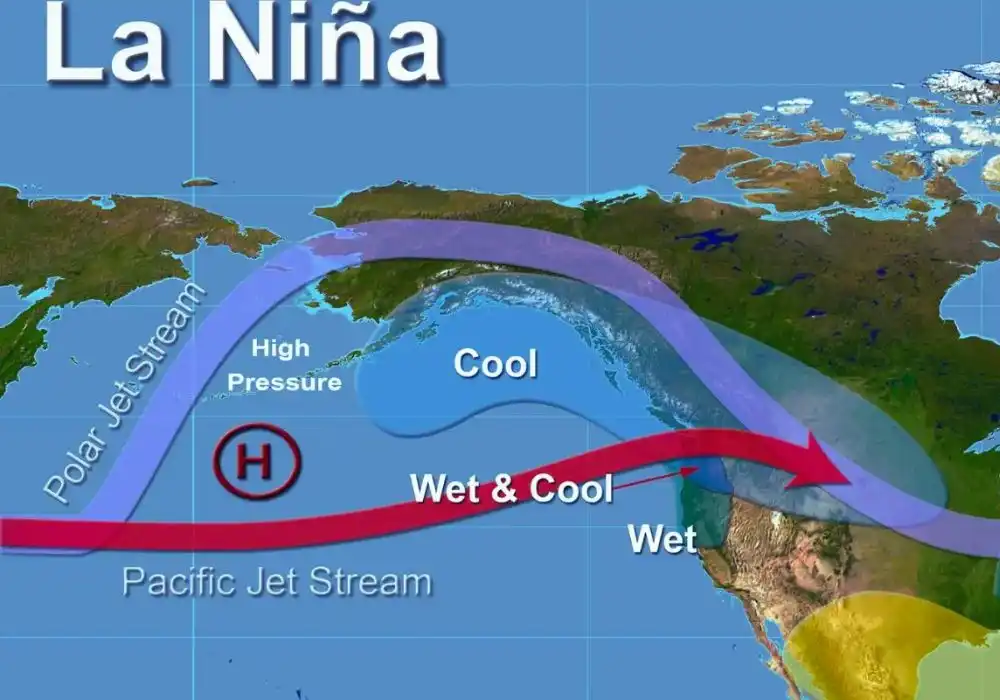
The intricate dance of global weather patterns constantly shapes our planet, and understanding these shifts is crucial, not just for daily life but also for excelling in competitive examinations. Weather experts are now pointing towards the potential return of La Niña, a significant climate phenomenon, which could bring an intense cold wave to India during the winter of 2025-26 (December-January). This prediction holds particular weight, following the unique “Triple Dip La Niña” period observed from 2020 to 2023. For aspirants preparing for exams like UPSC, SSC, PSC, NID, NIFT, and other government recruitment tests, comprehending La Niña is essential, as it often features in Geography, Environment, and Current Affairs sections. For consistent scoring in exams, these static gk notes are an invaluable tool.
What Exactly is La Niña?
At its core, La Niña represents a cooling phase of the naturally occurring El Niño-Southern Oscillation (ENSO) climate pattern. This phenomenon originates in the equatorial Pacific Ocean. During a La Niña event, the surface waters in the central and eastern equatorial Pacific become unusually colder than average. This cooling is linked to stronger-than-usual easterly trade winds, which push warm surface water towards the western Pacific, allowing colder water from the ocean depths to rise to the surface in the east. Conversely, its counterpart, El Niño, involves an abnormal warming of these same Pacific waters. These oceanic temperature changes have far-reaching atmospheric consequences, influencing global weather patterns, including those thousands of miles away in India.
The Looming La Niña and India’s Climate Outlook
The forecast for a potential La Niña re-emergence by late 2025 comes after a prolonged period of its influence. The recent “Triple Dip La Niña” event, spanning three consecutive winters from 2020 to 2023, was an unusual occurrence, impacting global weather extensively. The anticipated return signals that India should prepare for specific meteorological responses. Historically, La Niña often brings about distinct changes to India’s climate, with the most notable being its impact on the monsoon seasons and winter temperatures. For students, this becomes a critical current affairs topic that integrates with fundamental geographical concepts, making it a high-yield area for examination questions.
How La Niña Shapes Indian Weather Patterns
La Niña’s influence on Indian weather is not direct but rather mediated through what are known as “teleconnections.” These are long-distance atmospheric links where a change in one part of the world (like the Pacific Ocean) triggers a cascade of atmospheric responses that ultimately affect weather in distant regions.
One of the primary ways La Niña impacts India is by strengthening the winter monsoon, also known as the Northeast Monsoon, which primarily affects South India. Stronger easterly winds associated with La Niña can enhance moisture transport across the Bay of Bengal, leading to increased rainfall in states like Tamil Nadu, Andhra Pradesh, and parts of Kerala during the October-December period.
Furthermore, a prevalent teleconnection during La Niña years often leads to a strengthening of westerly disturbances, which are crucial for winter precipitation in North India. This can contribute to more intense and prolonged cold waves across the northern plains and hilly regions, especially during December and January. The prediction of an intense cold wave for 2025-26 is a direct consequence of these atmospheric adjustments, where the increased chill can be attributed to the altered jet stream patterns and enhanced continental air mass penetration.
Why This Matters for Your Competitive Exams
Understanding phenomena like La Niña is not merely an academic exercise; it’s a practical skill for competitive exams. Questions on climate change, global weather patterns, and their regional impacts are regularly featured in the General Studies papers for UPSC and State PSCs, in Geography sections for SSC, and even in General Awareness for various government exams. Topics such as the ENSO cycle, Indian Monsoon dynamics, the concept of teleconnections, and the socio-economic impacts of extreme weather events are all directly linked to La Niña. By grasping the “why, what, where, when, and how” of La Niña, you gain a deeper understanding of dynamic geographical processes, equipping you to tackle both factual and analytical questions effectively. MyEntrance.in provides daily news quizzes, current affairs updates, and static general knowledge resources to help you stay ahead of such important developments and master the underlying concepts. You can beat exam stress with these last-minute techniques to stay calm and focused.
Frequently Asked Questions (FAQs)
Q1: What is the fundamental difference between El Niño and La Niña?
A1: El Niño refers to an abnormal warming of the surface waters in the central and eastern equatorial Pacific Ocean, while La Niña signifies an abnormal cooling of these same waters. They are opposite phases of the El Niño-Southern Oscillation (ENSO) cycle.
Q2: How do global weather patterns like La Niña specifically affect India?
A2: La Niña influences India through “teleconnections,” long-distance atmospheric links. It often leads to a stronger Northeast (winter) monsoon in South India and can contribute to more intense and prolonged cold waves across North India by enhancing westerly disturbances and altering atmospheric circulation.
Q3: Is La Niña always associated with colder winters in India?
A3: While La Niña generally increases the probability of colder winters in India, especially in the northern parts, due to enhanced cold air intrusion and westerly disturbances, its impact can vary slightly depending on other regional and global atmospheric factors. However, the tendency is towards cooler conditions.
Q4: What are “teleconnections” in simple terms?
A4: Teleconnections are like domino effects in the atmosphere. They are large-scale, long-distance atmospheric patterns that link weather anomalies in one part of the world to simultaneous weather anomalies in distant regions. For instance, changes in ocean temperatures in the Pacific (ENSO) can trigger atmospheric waves that eventually alter weather patterns over India.
Q5: How can staying updated on climate patterns like La Niña help with competitive exams?
A5: Understanding climate patterns like La Niña is vital for competitive exams as they fall under Geography, Environment, and Current Affairs sections. Questions related to the ENSO cycle, monsoon dynamics, extreme weather events, and their socio-economic impacts are common, requiring candidates to have a comprehensive grasp of these phenomena.





