
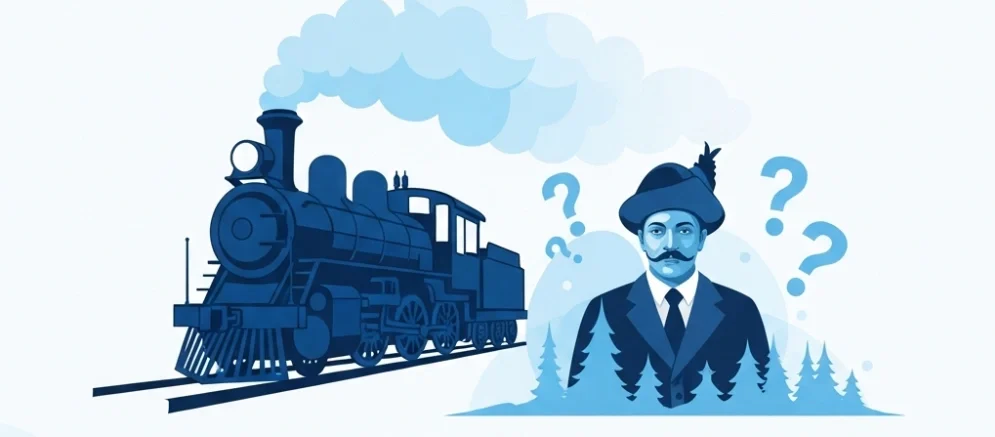
Decoding the Malabar Rebellion of 1921 for Kerala PSC
The Malabar Rebellion of 1921 is not just a chapter in history; for a Kerala PSC aspirant, it is a goldmine of marks. From the leadership of Variamkunnath Kunjahammed Haji to the harrowing details of the Wagon Tragedy, this topic appears consistently across Degree Level, Plus Two Level, and SSLC Level Preliminary and Mains examinations. In this ultimate guide, we will break down the socio-political causes, the revolutionary leadership, and the critical data points that the commission loves to test. This is your definitive Previous Year Questions decoder designed to turn complex history into easy-to-remember shortcuts.
Socio-Political Landscape: Why did 1921 Happen?
To master the Previous Year Questions on this topic, one must understand the twin engines that fueled the rebellion: Agrarian Distress and the Khilafat Movement. The Malabar region was under the grip of a rigid ‘Janmi’ system where the British-backed landlords frequently evicted tenants (Kudiyans) through a practice known as ‘Melcharth’. This economic exploitation, combined with the global Khilafat Movement and Mahatma Gandhi’s Non-Cooperation Movement, created a volatile atmosphere.
- The Manjeri Conference (1920): A pivotal moment where the Khilafat and Tenancy issues merged.
- The Pookkottur Incident: The spark that ignited the full-scale armed rebellion following a police raid on the Khilafat committee office.
💡 Pro-Tip: The ‘Twin-Cause’ Formula
Whenever you see a question regarding the nature of the rebellion, remember it was ‘Agrarian in content but Religious in form’—a classic phrase used by historians like K.N. Panikkar often quoted in Previous Year Questions.
The Lion of Malabar: Variamkunnath Kunjahammed Haji
Variamkunnath Kunjahammed Haji is the central figure of the 1921 rebellion. Unlike many other uprisings, Haji established a short-lived independent state called ‘Malayala Rajyam’. He even issued his own passports and currency, demonstrating a high level of administrative organization. His leadership was characterized by a strict code of conduct where he forbade the targeting of civilians based on religion, focusing purely on British authority and oppressive landlords.
He was eventually captured at Chaliyar Valley and executed on January 20, 1922. A famous fact often asked in Previous Year Questions is his last wish: to be executed from the front without being blindfolded, facing his motherland.
The Wagon Tragedy: A Dark Chapter
On November 10, 1921, one of the most brutal incidents of the British Raj occurred. Around 100 prisoners were packed into a windowless freight wagon (No. 1711) of the Madras and Southern Mahratta Railway to be transported from Tirur to the Bellary Central Jail (later diverted toward Podanur). By the time the train reached Podanur, 64 prisoners had died of suffocation, and others died later, bringing the total to 70.
- Date: November 10, 1921.
- Wagon Number: 1711.
- Inquiry Committee: Knapp Committee (often tested in Previous Year Questions).
The Previous Year Questions Decoder: 5 Realistic Challenges
Question 1: Who was the president of the Khilafat Committee in Malabar during the 1921 rebellion?
Traditional Method: Students often memorize a list of hundreds of leaders, leading to confusion between Ali Musliyar, Kunjahammed Haji, and the Khilafat presidents. They spend minutes trying to recall the specific organizational structure of 1921.
30-Second Ninja Shortcut: Use the ‘PK-AM’ Mnemonic. Pookkottur Khilafat was led by Ali Musliyar. However, the spiritual leadership was Ali Musliyar, while the Malabar District Khilafat President was P.M. Attakoya Thangal. Focus on the word ‘District’ vs ‘Local’.
💡 Click to Reveal Answer
Answer: P.M. Attakoya Thangal (District Level). Ali Musliyar was the key leader at Tirurangadi.
Question 2: The Wagon Tragedy took place between which two stations?
Traditional Method: Visualizing the entire railway map of 1921 South India. Students get confused between Tirur, Calicut, Podanur, and Bellary.
30-Second Ninja Shortcut: Remember ‘T.P.’ (Tirur to Podanur). The destination was Bellary, but the tragedy was discovered at Podanur. So, the transport path is T-P.
💡 Click to Reveal Answer
Answer: Tirur to Podanur. (Remember: They were being sent to Bellary jail, but the tragedy unfolded at Podanur).
Question 3: Which British officer was killed at the beginning of the rebellion at Tirurangadi?
Traditional Method: Searching through long lists of British collectors and police officers like Connolly, Logan, and Hitchcock.
30-Second Ninja Shortcut: Associate ‘Rowley’ with the ‘Riot’. Officer Rowley and Sub-inspector Johnstone were the primary targets during the initial Tirurangadi clash. Note: Don’t confuse this with William Logan (Malabar Manual) or H.V. Conolly (who was killed in 1855, much earlier!).
💡 Click to Reveal Answer
Answer: Private Rowley (British Army) and some police officials. The Collector at the time was E.F. Thomas.
Question 4: What was the name of the independent state established by Variamkunnath Haji?
Traditional Method: Reading various history books which describe the rebellion as a ‘peasant uprising’ or ‘communal riot’ without focusing on the political entity established.
30-Second Ninja Shortcut: Haji wanted a ‘Malayalam Country’. Translating that literally gives you ‘Malayala Rajyam’. This was his vision of a British-free Malabar.
💡 Click to Reveal Answer
Answer: Malayala Rajyam.
Question 5: Who described the Wagon Tragedy as the ‘Black Hole of Podanur’?
Traditional Method: Attempting to recall every statement made by national leaders like Gandhi or Nehru about Malabar.
30-Second Ninja Shortcut: This is a comparison to the ‘Black Hole of Calcutta’. It was a common journalistic and nationalist trope of the time, but in Previous Year Questions, it is frequently attributed to Sumit Sarkar or nationalist newspapers of that era. However, the specific comparison is a key theme in the Knapp Committee dissent notes and subsequent nationalist literature.
💡 Click to Reveal Answer
Answer: This phrase is often used in nationalist historiography to compare the British atrocity to their own historical claims. Always look for ‘Nationalist Press’ or specific authors like ‘K. Madhavan Nair’ who documented the tragedy in ‘Malabar Kalapam’.
Cheat Sheet / Quick Revision Formulas
| Key Category | Fact to Remember |
|---|---|
| Wagon Tragedy Date | November 10, 1921 |
| Execution of Haji | January 20, 1922 |
| Book: ‘Malabar Kalapam’ | K. Madhavan Nair |
| Special Police Force | Malabar Special Police (MSP) – Formed in 1921 |
| Main Battle | Battle of Pookkottur (August 26, 1921) |
| Inquiry Committee | A.R. Knapp Committee |
The 1921 Mnemonic Chain:
P-T-W-M: Pookkottur Battle (Aug) -> Tirurangadi Incident -> Wagon Tragedy (Nov) -> Malayala Rajyam’s End (Jan).
Ready to Ace the Kerala PSC Exam?
Don’t let complex history stop you from achieving your dream government job. Our experts are here to help you simplify the syllabus and master every Previous Year Question trend!
💬 Chat with our Experts on WhatsApp (+91 9526806124)




