
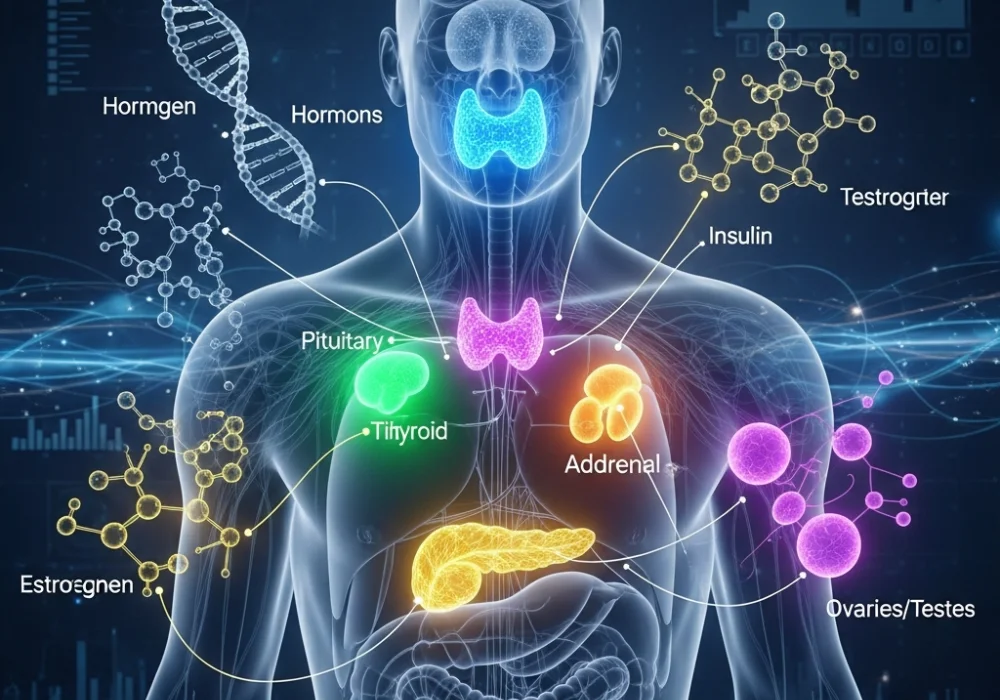
Mastering Human Anatomy: The Endocrine System for Kerala PSC
Welcome, aspirants, to the ultimate guide for decoding one of the most high-weightage topics in the Kerala PSC General Science syllabus: Human Anatomy – Functions of Hormones and Endocrine Gland Secretions. Year after year, the Kerala Public Service Commission includes multiple questions regarding the chemical messengers of our body. Understanding these isn’t just about memorizing names; it is about understanding the delicate balance that keeps the human machine running.
The endocrine system consists of ductless glands that release hormones directly into the bloodstream. Unlike the exocrine system (which uses ducts), the endocrine system acts like a wireless communication network. In this guide, we will analyze Previous Year Questions, apply ninja shortcuts for 30-second solving, and build a rock-solid foundation for your upcoming exams.
💡 Why is this topic crucial?
Statistics show that at least 2 to 3 questions in any Tenth Level, Plus Two Level, or Degree Level Kerala PSC Preliminary and Mains exams are dedicated to Biology, specifically focusing on hormones like Insulin, Thyroxine, and Adrenaline. Mastering this section guarantees easy marks!
Concept Deep-Dive: The Chemical Orchestrators
Before we jump into the questions, let us understand the hierarchy. The Hypothalamus is the ‘Master of the Master Gland.’ It controls the Pituitary Gland, which in turn regulates most other glands. Hormones are organic catalysts that act on ‘target organs.’ Even a microscopic deviation in their secretion levels can lead to significant disorders.
For example, if the growth hormone is secreted in excess during childhood, it leads to Gigantism. If it is under-secreted, it leads to Dwarfism. Understanding these ‘hyper’ and ‘hypo’ states is the secret to cracking Kerala PSC science questions.
Question 1: The Sugar Regulator
Question: Which hormone is produced by the Beta cells of the Islets of Langerhans in the Pancreas to lower blood glucose levels?
- A) Glucagon
- B) Insulin
- C) Somatostatin
- D) Epinephrine
💡 Click to Reveal Answer & Fact
Answer: B) Insulin. Extra Fact: The deficiency of Insulin leads to Diabetes Mellitus. The Pancreas is also known as a ‘Heterocrine Gland’ because it functions as both endocrine and exocrine.
Question 2: The Emergency Hormone
Question: Which gland is known as the ‘Suprarenal Gland’ and secretes the ‘Fight or Flight’ hormone?
- A) Thyroid
- B) Pituitary
- C) Adrenal
- D) Thymus
💡 Click to Reveal Answer & Fact
Answer: C) Adrenal. Extra Fact: The inner part (medulla) secretes Adrenaline, while the outer part (cortex) secretes Cortisol, often called the ‘Stress Hormone.’
Question 3: The Metabolic Engine
Question: Simple Goiter is caused by the deficiency of which element, affecting the secretion of Thyroxine?
- A) Iron
- B) Calcium
- C) Iodine
- D) Magnesium
💡 Click to Reveal Answer & Fact
Answer: C) Iodine. Extra Fact: Thyroxine is often called the ‘Personality Hormone’ because it influences both physical and mental growth.
Question 4: The Biological Clock
Question: Which gland secretes Melatonin, the hormone responsible for regulating the sleep-wake cycle?
- A) Pineal Gland
- B) Hypothalamus
- C) Parathyroid
- D) Thalamus
💡 Click to Reveal Answer & Fact
Answer: A) Pineal Gland. Extra Fact: The Pineal gland is the smallest endocrine gland in the human body. It is often calcified in adults, known as ‘Brain Sand.’
Question 5: The Calcium Controller
Question: Which hormone increases blood calcium levels by stimulating calcium release from bones?
- A) Calcitonin
- B) Parathormone
- C) Aldosterone
- D) Vasopressin
💡 Click to Reveal Answer & Fact
Answer: B) Parathormone. Extra Fact: Parathormone is secreted by the Parathyroid glands, which are four pea-sized glands located on the back of the Thyroid.
Hormone & Gland Cheat Sheet for Quick Revision
Use this table to quickly revise the most frequently asked facts based on Previous Year Questions.
| Gland | Hormone | Primary Function / Disease |
|---|---|---|
| Pituitary | Growth Hormone | Growth (Gigantism/Dwarfism) |
| Thyroid | Thyroxine | Metabolism (Goiter/Cretinism) |
| Pancreas | Insulin | Lowers Glucose (Diabetes Mellitus) |
| Adrenal | Adrenaline | Emergency (Fight/Flight) |
| Thymus | Thymosin | Immunity (T-lymphocytes) |
| Testis/Ovary | Testosterone/Estrogen | Secondary Sexual Characters |
Advanced Concept: The Feedback Mechanism
In the Kerala PSC Degree Level exams, they often ask about how the body maintains balance. This is called Negative Feedback. For instance, when your blood sugar is high, the pancreas senses it and releases Insulin. Once the sugar levels drop to normal, the pancreas detects the drop and stops secreting Insulin. It is exactly like a thermostat in an air conditioner. Understanding this logical flow helps you answer ‘Statement Type’ questions that are becoming common in recent Kerala PSC patterns.
Remember the ADH (Antidiuretic Hormone) or Vasopressin. It prevents excessive water loss through urine. Deficiency of ADH leads to Diabetes Insipidus (not to be confused with Mellitus!). People with this condition urinate frequently and feel very thirsty. This distinction is a classic trap in competitive exams.
Ready to Ace Your Science Section?
Mastering the endocrine system is just the beginning. At myentrance.in, we provide topic-wise breakdowns of every chapter in the Kerala PSC syllabus. If you found these ninja shortcuts helpful, imagine what a full-length mock test could do for your confidence!
💬 Chat with our Experts on WhatsApp (+91 9526806124)




