
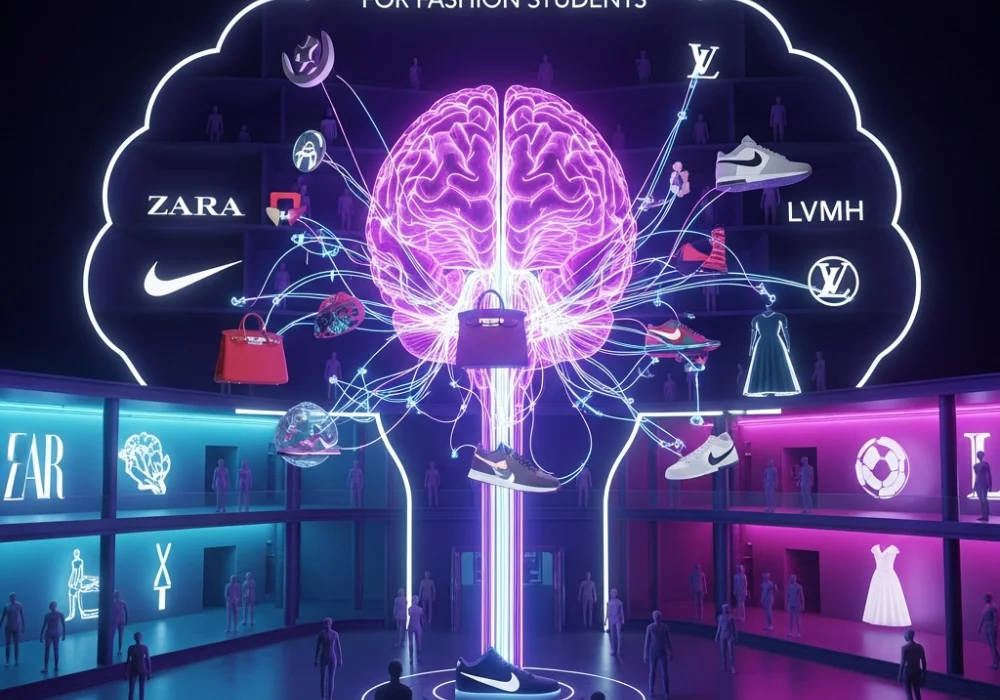
The Art of Memorizing Fashion Empires
For any NIFT Master of Fashion Management (MFM) aspirant, the General Ability Test (GAT) case studies are the ultimate hurdle. You aren’t just asked for names; you are asked for strategies, supply chain secrets, and the ‘Why’ behind a brand’s billion-dollar valuation. Memorizing these details can feel like drinking from a firehose. However, as your world-class memory coach, I am here to tell you that the brain loves absurdity, color, and storytelling. In this guide, we will transform dry corporate histories into vivid, unforgettable mental movies. By the end of this article, you will have a ‘Mental Mall’ where every store tells you its secret to success. Let’s dive into the mnemonics that will make you a NIFT topper.
💡 Why do mnemonics work for MFM?
Mnemonics work because they bridge the gap between abstract data (like ‘Vertical Integration’) and concrete imagery (like ‘A giant ladder inside a Zara store’). For the MFM GAT, you need to recall specific business models under pressure. These hacks create neurological shortcuts to that information.
1. Zara: The SPEEDY ZORRO
Zara is the king of Fast Fashion. To remember their success story, imagine a character named SPEEDY ZORRO who wears a Zara cape and slashes prices with his sword.
- S – Supply Chain: They own their factories (Vertical Integration).
- P – Proximity: Most manufacturing happens in Spain/Portugal/Morocco (near the HQ).
- E – Every Two Weeks: New designs hit the floor twice a week.
- E – Empty Shelves: They produce in small batches to create ‘Scarcity’.
- D – Data Driven: Store managers send feedback daily to designers.
- Y – Youthful Speed: From sketch to store in just 15 days!
💡 Case Study Tip
If a question asks about Zara’s competitive advantage, mention ‘Just-in-Time’ (JIT) manufacturing. Think of Zorro arriving ‘Just in Time’ to save the fashion world!
2. Uniqlo: The TECH-TADASHI
Uniqlo isn’t about fashion trends; it’s about Technology. Their founder is Tadashi Yanai. Imagine a robot named TADASHI wearing a glowing HEAT-TECH vest.
- T – Technology First: Innovations like HeatTech, Airism, and Ultra Light Down.
- A – All Ages: Their philosophy is ‘Made for All’ (Universal design).
- D – Durable Basics: They focus on high-quality essentials, not runway trends.
- A – Affordable: Low cost due to high-volume production of fewer SKUs.
- S – Stock Management: Unlike Zara, Uniqlo plans its inventory a year in advance.
- H – High Quality: They source premium fabrics like Supima cotton and Cashmere.
- I – Internalization: A massive global presence starting from Hiroshima, Japan.
💡 Click to Reveal the Secret
Uniqlo’s business model is called SPA (Specialty store retailer of Private label Apparel). Remember it as ‘SPA’ – like a relaxing tech-spa for your clothes.
3. LVMH: The LUXURY BARONS
LVMH is a conglomerate powerhouse led by Bernard Arnault. To remember their strategy, think of the BARONS of wealth sitting in a castle made of Louis Vuitton trunks.
- B – Bernard Arnault: The ‘Wolf in Cashmere’ who built the empire.
- A – Acquisitions: They don’t start brands; they buy heritage brands (Tiffany, Dior).
- R – Rarefied Image: They maintain high prices and never give discounts to keep ‘Prestige’.
- O – Organic Growth: Strengthening existing brands through high-profile designers.
- N – Networking: Synergies between wine, leather, and jewelry divisions.
- S – Star Brands: Their concept of brands that are timeless and high-margin (Louis Vuitton, Moët).
💡 Key MFM Concept
LVMH uses ‘Synergy’. If they buy a watch brand, they use the distribution network of their fashion brand to sell it. It’s like one giant family helping each other out!
4. Nike: PHIL’S SWOOSH-ing Story
Nike is about Emotion and Storytelling. Imagine Phil Knight (founder) running a marathon while telling a beautiful story through a megaphone shaped like a SWOOSH.
- S – Storytelling: Their ads focus on the athlete’s struggle, not the shoe’s rubber.
- W – Waffle Sole: The first innovation was made in a literal waffle iron!
- O – Outsourced Production: Nike owns very few factories; they focus on design and marketing.
- O – Omni-channel: Selling via apps (SNKRS), website, and physical stores.
- S – Sports Marketing: Endorsing icons like Michael Jordan and Cristiano Ronaldo.
- H – Hero Archetype: Their brand voice makes the customer feel like a hero.
💡 Exam Fact
Nike’s transition to ‘DTC’ (Direct-to-Consumer) is a major case study topic. They are cutting out middle-man retailers to sell directly to you. Think: ‘Nike to You’.
5. H&M: The COLLAB CAT
H&M is known for Democratizing Fashion. Imagine a fashionable CAT wearing a high-end designer dress but buying it for a ‘High-street’ price.
- C – Collaborations: Every year they collab with designers like Balmain, Versace, or Mugler.
- A – Accessibility: Trendy fashion at prices the average student can afford.
- T – Triple Bottom Line: Their focus on ‘Sustainability’ (Conscious Collection).
H&M’s success secret is bringing Catwalk style to the Sidewalk. They use a global network of suppliers (unlike Zara’s local model).
6. Hermès: The CRAFTY HORSE
Hermès started as a harness workshop. To remember them, imagine a CRAFTY HORSE hand-stitching a Birkin bag with a golden needle.
- C – Craftsmanship: One artisan works on one bag from start to finish.
- R – Rare: They limit production to keep demand high (The Birkin waitlist).
- A – Artisan focus: They prioritize the worker’s skill over machine speed.
- F – Family Heritage: Still largely family-controlled, preserving 19th-century values.
- T – Timeless: They don’t do ‘trends’. A bag bought in 1980 is still fashionable today.
7. Patagonia: The GREEN MOUNTAIN
Patagonia is the ultimate ‘Ethical’ brand. Imagine a GREEN MOUNTAIN that talks and says, ‘Don’t Buy This Jacket!’ (their famous ad).
- G – Giving Back: 1% of sales goes to environmental causes (1% for the Planet).
- R – Repair: They encourage customers to fix old clothes instead of buying new ones.
- E – Eco-Friendly: Using recycled polyester and organic cotton.
- E – Ethics: Radical transparency in the supply chain.
- N – No Profit over Planet: Yvon Chouinard (founder) gave the company away to a trust to fight climate change.
💡 MFM Case Study Hook
Patagonia uses ‘Anti-Marketing’. By telling people NOT to buy their products, they actually built massive brand loyalty. It’s the psychology of trust!
8. Gucci: The REBORN PHOENIX
Gucci has died and been reborn many times. Imagine a PHOENIX wearing double-G belts rising from the ashes.
- R – Rebranding: Tom Ford saved them in the 90s with ‘Sexy Fashion’; Alessandro Michele saved them later with ‘Geek Chic’.
- E – Eccentricity: Breaking traditional luxury rules to attract Gen-Z.
- B – Brand Heritage: Keeping the horsebit and the red-green stripes alive.
9. Chanel: The NUMBER 5 POWER
Coco Chanel revolutionized women’s clothes. Think of the NUMBER 5 bottle filled with FREEDOM.
- F – Freedom: She removed the corset and gave women trousers and jerseys.
- I – Icons: The Little Black Dress (LBD), Tweed Suit, and the 2.55 Quilted Bag.
- V – Vertical Control: They own the flower fields in Grasse for their perfume!
- E – Exclusivity: Like Hermès, they increase prices regularly to maintain status.
10. The Memory Palace: The NIFT Mall
Close your eyes. Imagine you are walking through a giant mall. This is your Memory Palace.
- Entrance: A Zorro statue (Zara) holding a stopwatch (Speed).
- Left Wing: A robot (Uniqlo) selling glowing vests (HeatTech).
- Center Court: A golden castle (LVMH) where kings (Arnault) buy other shops (Acquisition).
- Right Wing: A stadium (Nike) where people are crying while running (Storytelling).
- Back Exit: A recycling bin shaped like a mountain (Patagonia).
Whenever you see a question about these brands, ‘walk’ through this mall in your mind. The answers will be waiting at the storefronts!
Summary Table of Mnemonics
| Brand | Mnemonic | Core Strategy |
|---|---|---|
| Zara | SPEEDY ZORRO | Vertical Integration & Speed |
| Uniqlo | TECH-TADASHI | Lifewear & Fabric Tech |
| LVMH | LUXURY BARONS | Acquisition & Synergy |
| Nike | PHIL’S SWOOSH | Emotional Storytelling |
| Hermès | CRAFTY HORSE | Artisanal Scarcity |
| Patagonia | GREEN MOUNTAIN | Ethical Anti-Consumerism |
Confused about MFM Case Studies?
Don’t let complex business models overwhelm you. Our experts at MyEntrance are here to simplify every topic with 1-on-1 guidance, mock tests, and personalized memory plans!
💬 Chat with our Experts on WhatsApp (+91 9526806124)




