
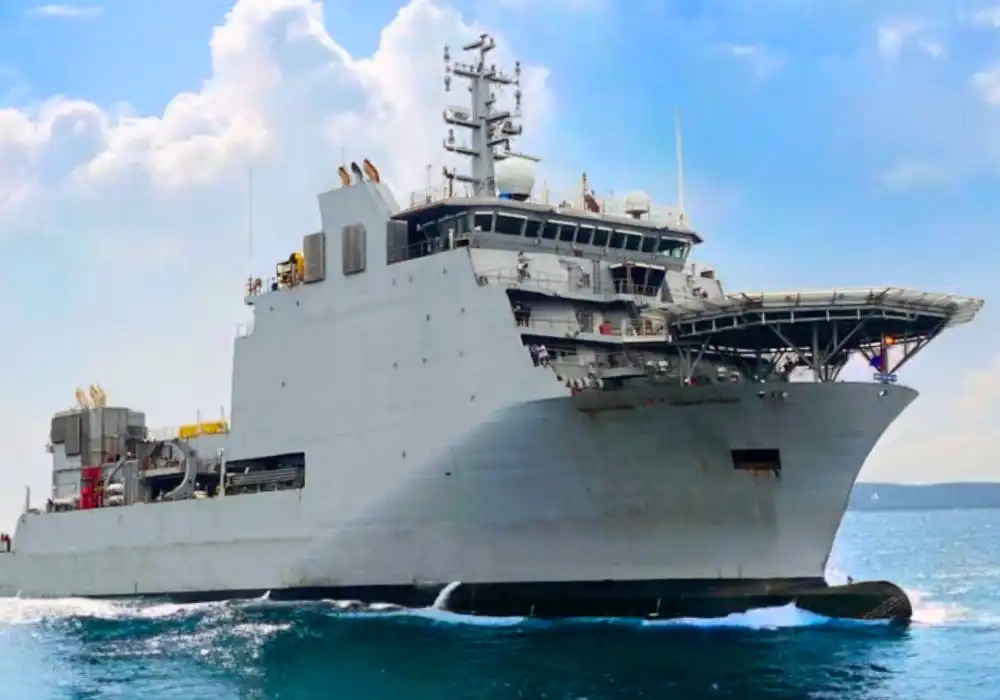
For aspirants targeting prestigious examinations like UPSC, SSC, PSC, NID, NIFT, and various other government job tests, staying updated with current affairs, especially in defence and international relations, is paramount. The participation of the Indian Navy’s latest indigenously designed Diving Support Vessel (DSV), INS Nistar, in the multinational Exercise Pacific Reach 2025 in Singapore, is not just a news headline; it’s a treasure trove of information blending current events, static general knowledge, and strategic insights crucial for your success. Let’s delve deeper into why this event holds significant weight for your examination preparation.
Why This Event Matters for Your Exam Preparation
Understanding events like INS Nistar’s deployment goes beyond mere facts; it tests your comprehension of India’s strategic vision, technological advancements, and diplomatic efforts. For competitive exams, this scenario touches upon several key areas: defence capabilities, international cooperation, maritime security, and current geopolitical landscape. It highlights India’s ‘Make in India’ initiative, its growing prowess in naval technology, and its role as a responsible global stakeholder. A thorough grasp of such developments allows you to tackle questions related to defence, international relations, and general awareness with confidence.
INS Nistar: A Glimpse into India’s Naval Strength
At the heart of this news is INS Nistar, a cutting-edge Diving Support Vessel that epitomizes India’s commitment to self-reliance in defence manufacturing. This vessel is not merely a ship; it represents a significant leap in indigenous design and construction capabilities. As a DSV, INS Nistar is equipped with advanced diving systems, including deep submergence rescue vehicles (DSRVs) and hyperbaric chambers, making it indispensable for critical missions such as submarine rescue operations, underwater search and salvage, and maintenance of undersea assets. Its role as a ‘mothership’ for deep submergence operations underscores its strategic importance in enhancing the Indian Navy’s operational readiness and capability to respond to complex maritime emergencies. Its participation showcases India’s growing confidence in its naval assets and its ability to contribute to global maritime safety and security.
Understanding Exercise Pacific Reach 2025: A Global Collaboration
Exercise Pacific Reach is a biennial multinational naval exercise designed to foster interoperability and enhance cooperation among participating nations in areas of submarine rescue and humanitarian assistance. Hosted this year in Singapore, the 2025 iteration brings together naval forces from over 40 nations, all focused on sharing best practices, refining rescue protocols, and strengthening collective response mechanisms for potential underwater incidents. The ‘why’ behind such exercises is multifaceted: they serve as crucial platforms for naval diplomacy, building mutual trust, and ensuring that in times of crisis, an effective and coordinated international response is possible. For India, participating in such a large-scale, high-stakes exercise demonstrates its commitment to regional stability and its readiness to contribute to global maritime safety, especially in the strategically vital Indo-Pacific region.
Strategic Implications and India’s Role
India’s presence at Exercise Pacific Reach with INS Nistar holds profound strategic implications. Firstly, it underscores the Indian Navy’s expanding operational footprint and its capability to project power and assistance far beyond its territorial waters. Secondly, it provides an invaluable opportunity for the Indian Navy personnel to train alongside their international counterparts, exchanging technical expertise and operational doctrines. This cross-cultural interaction is vital for enhancing understanding and developing seamless coordination during joint operations. Thirdly, India’s active participation reaffirms its position as a responsible maritime power, dedicated to upholding a rules-based international order and ensuring the safety of sea lanes. For competitive exam aspirants, this highlights India’s evolving role in global security architecture and its growing influence on the international stage.
Frequently Asked Questions (FAQs)
1. What is the primary role of a Diving Support Vessel (DSV) like INS Nistar?
A Diving Support Vessel (DSV) such as INS Nistar is primarily designed to support deep-sea diving operations, including submarine rescue missions, underwater search and salvage, repair and maintenance of subsea equipment, and deploying advanced remotely operated vehicles (ROVs) for various tasks. They are crucial for enhancing the operational reach and safety aspects of naval forces, especially in managing underwater contingencies.
2. What is the significance of INS Nistar being “indigenously designed and constructed”?
The “indigenously designed and constructed” aspect of INS Nistar signifies a major milestone for India’s ‘Make in India’ and ‘Atmanirbhar Bharat’ (Self-Reliant India) initiatives in the defence sector. It demonstrates India’s growing capabilities in naval shipbuilding, reducing dependence on foreign suppliers, boosting domestic defence manufacturing, creating jobs, and ensuring strategic autonomy in critical maritime technologies.
3. Why do countries participate in multinational naval exercises like Pacific Reach?
Countries participate in multinational naval exercises like Pacific Reach for several critical reasons: to enhance interoperability and standardize procedures among different navies, build mutual trust and confidence, share best practices and technological advancements, improve collective response capabilities for complex scenarios like submarine rescue or disaster relief, and strengthen diplomatic ties through military cooperation.
4. Besides INS Nistar, what other Indian Navy developments or exercises are important for competitive exams?
For competitive exams, other significant Indian Navy developments include the induction of aircraft carriers like INS Vikrant (another indigenously built marvel), new destroyer classes (e.g., Visakhapatnam-class), submarine projects (e.g., Project 75I), and major naval exercises like Malabar (with Quad nations), MILAN (multinational), and TROPEX (theatre-level readiness operational exercise). Understanding these helps paint a complete picture of India’s naval strategy.
5. How does India’s participation in exercises like Pacific Reach benefit its international relations?
India’s participation in multinational exercises like Pacific Reach significantly benefits its international relations by demonstrating its commitment to global maritime security, showcasing its naval capabilities and readiness to contribute to collective efforts, fostering stronger strategic partnerships with participant nations, and enhancing its image as a reliable and responsible maritime power in the Indo-Pacific region and beyond. It serves as an effective tool for naval diplomacy.





