
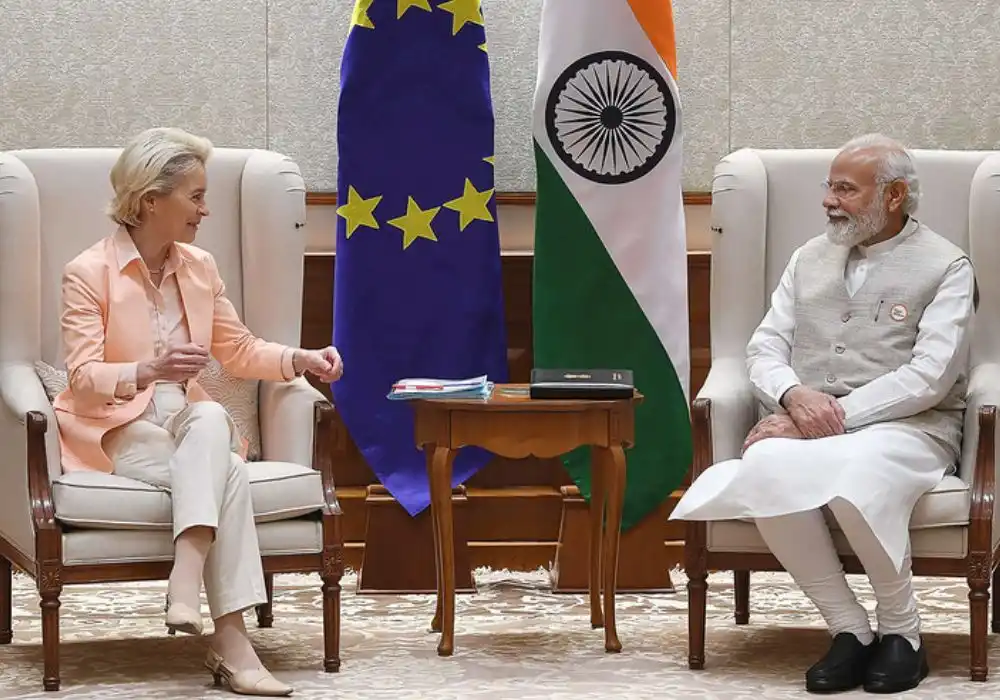
In a significant move poised to shape India’s economic future and its global standing, the Union Minister of Commerce and Industry, Piyush Goyal, recently embarked on a crucial two-day visit to Brussels, Belgium. This high-level diplomatic engagement marks a pivotal moment in the ongoing negotiations for the ambitious India-European Union Free Trade Agreement (FTA). For aspirants of UPSC, SSC, PSC, and other government examinations, understanding the nuances of this visit is not just about staying updated with current affairs, but also grasping core concepts in international relations, trade policy, and economic diplomacy.
The Objective: Deepening India-EU Trade Ties
What is Happening?
Minister Piyush Goyal’s visit to the heart of the European Union aimed at accelerating the discussions surrounding the India-EU Free Trade Agreement. During his time in Brussels, the Minister engaged in vital deliberations with Maroš Šefčovič, the Executive Vice-President and European Commissioner for Trade of the European Union. These discussions are critical, as they occur at a decisive juncture in the complex negotiation process. The focus is on ironing out differences and finding common ground to forge a mutually beneficial trade pact.
Why is This Visit So Important?
This visit is far from a routine diplomatic exchange; it underscores India’s strategic intent to deepen its economic partnership with one of the world’s largest and most influential economic blocs. An FTA with the European Union would unlock immense opportunities for Indian businesses, providing preferential access to a market of over 450 million consumers. Conversely, it offers European companies greater access to India’s rapidly growing economy. For students, this highlights the “why” behind government actions – driving economic growth, creating employment, and integrating India further into global supply chains. It’s a prime example of proactive economic diplomacy in action.
Understanding the India-EU Free Trade Agreement
What is an FTA?
A Free Trade Agreement is a pact between two or more countries to reduce barriers to trade – such as tariffs, quotas, and non-tariff barriers – on most goods and services traded among them. The goal is to make trade easier and cheaper, fostering economic growth and greater choice for consumers. The India-EU FTA is envisioned as a comprehensive agreement, covering not just goods, but also services, investment, intellectual property rights, sustainable development, and dispute resolution mechanisms.
Why is the India-EU FTA particularly significant?
The European Union is one of India’s largest trading partners, and a comprehensive FTA could significantly boost bilateral trade and investment flows. It offers Indian industries, from textiles and pharmaceuticals to IT services and automotive components, unprecedented opportunities for market access and competitiveness. Conversely, it provides European companies with a gateway to India’s vast and dynamic market. This agreement is seen as a cornerstone of India’s broader strategy to diversify its trade relationships and secure its position as a global manufacturing and export hub, aligning with initiatives like “Make in India” and “Vocal for Local.”
Key Players and Strategic Locations
Who are the Key Figures?
On the Indian side, the central figure is Piyush Goyal, the Minister of Commerce and Industry, who leads India’s trade negotiations. His counterpart in the European Union is Maroš Šefčovič, the Executive Vice-President and European Commissioner for Trade, responsible for the EU’s trade policy. Understanding the roles of these high-level officials is essential for current affairs and general knowledge sections of competitive exams, as they represent the decision-makers in such crucial international agreements.
Where do these Discussions Take Place?
The discussions are held in Brussels, Belgium, which serves as the de facto capital of the European Union and hosts major EU institutions like the European Commission and the Council of the European Union. This location underscores the importance and centrality of the European Union in global economic and political affairs. Knowing the headquarters of international organizations and significant diplomatic venues is a recurring static GK topic in various examinations.
Implications for Your Competitive Exams
For aspirants preparing for competitive examinations, events like Minister Goyal’s visit and the ongoing FTA negotiations are rich sources of questions across multiple subjects. In current affairs, you might face questions on the purpose of the visit, the names of key individuals, or the status of the negotiations. In economics, you could be asked about the benefits and challenges of FTAs, the impact on specific sectors, or India’s trade policy. In international relations, the strategic significance of strengthening ties with the EU and its geopolitical implications are vital. It’s not just about memorizing facts, but understanding the underlying principles and broader context.
Frequently Asked Questions (FAQs)
Q1: What is the primary objective of the India-EU Free Trade Agreement negotiations?
A1: The primary objective is to create a comprehensive trade pact that reduces tariffs and non-tariff barriers on goods and services, facilitates investment, and enhances economic cooperation between India and the European Union, aiming for mutual economic growth and market access.
Q2: Who is India’s current Minister of Commerce and Industry, leading these trade discussions?
A2: India’s current Minister of Commerce and Industry, responsible for leading these pivotal trade discussions, is Piyush Goyal.
Q3: Where is the headquarters of the European Union, the location for these high-level trade talks?
A3: The de facto headquarters of the European Union, where major EU institutions are located and these trade talks are held, is Brussels, Belgium.
Q4: How would the India-EU FTA potentially benefit India’s economy?
A4: The India-EU FTA could significantly benefit India’s economy by providing Indian businesses with preferential access to the vast European market, boosting exports, attracting foreign investment, stimulating economic growth, and creating employment opportunities across various sectors.
Q5: Why is understanding events like the Commerce Minister’s foreign visits important for competitive exam aspirants?
A5: Such events are crucial for competitive exam aspirants because they form significant current affairs topics, provide real-world examples for questions on international relations and economic policy, test knowledge of key government figures and global organizations, and highlight strategic developments that can appear in both preliminary and main examinations, including interviews.





