
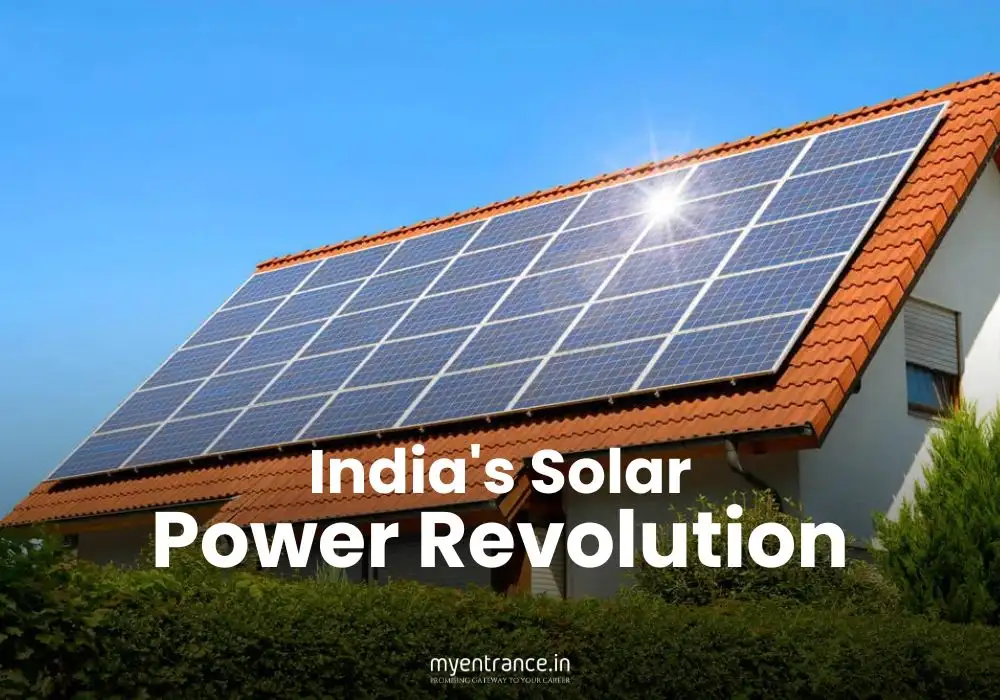
Welcome to an in-depth exploration of India’s remarkable journey in solar power generation – a topic not only vital for the nation’s future but also a recurrent feature in competitive examinations like UPSC, SSC, PSC, and other government recruitment tests. Understanding India’s strides in renewable energy, particularly solar, is crucial for your current affairs, general knowledge, environment, and economy sections. As a global leader in clean energy, India’s solar model has garnered international acclaim, making it an essential subject for every aspiring candidate.
Why India’s Solar Power Model Matters (For the Nation & Your Exams)
The shift towards solar power in India is driven by multifaceted objectives. Firstly, it addresses the nation’s escalating energy demand, ensuring energy security and reducing dependence on fossil fuels, which are both finite and environmentally damaging. Secondly, it is a powerful weapon in the fight against climate change, significantly lowering carbon emissions and promoting environmental sustainability. From an economic perspective, solar power fosters new industries, creates employment opportunities, and reduces import bills for coal and oil. For competitive exams, questions often revolve around these very “why” factors: the economic benefits, environmental impact, and strategic importance of renewable energy. Understanding the “why” provides a strong foundation for answering analytical questions and essay topics.
What Defines India’s Solar Success Story
India’s solar power model is a robust blend of strategic policy, technological adoption, and public participation, widely recognized as one of the world’s most successful. It isn’t just about massive solar farms; it encompasses a holistic approach including large-scale utility projects, significant rooftop solar installations in urban and rural areas, and innovative off-grid solutions for remote regions. Key initiatives like the PM Surya Ghar Muft Bijli Yojana (formerly PM-KUSUM for solar pumps) have been instrumental in popularizing solar adoption by offering subsidies and incentives. This comprehensive strategy, from large-scale generation to individual household units, ensures broad-based growth and decentralization of power generation. Exam questions frequently test your knowledge of specific schemes and their objectives, so grasping the breadth of India’s solar initiatives is key.
Where India’s Solar Footprint is Expanding
From the sun-drenched deserts of Rajasthan and Gujarat hosting some of the world’s largest solar parks, to the rooftops of millions of homes across diverse states, India’s solar footprint is expanding rapidly. Major solar projects are operational in states like Andhra Pradesh, Karnataka, Telangana, and Madhya Pradesh, contributing significantly to the national grid. The push for rooftop solar is particularly strong in urban centers, allowing consumers to generate their own electricity and even feed surplus power back into the grid through net-metering policies. This geographical spread demonstrates a nationwide commitment to harnessing solar energy, making it a truly pan-Indian phenomenon. For your exams, it’s beneficial to be aware of the leading states in solar power generation and the types of solar projects prevalent in different regions.
When Did India’s Solar Revolution Gain Momentum?
While efforts to harness solar energy have been ongoing for decades, India’s solar revolution truly gained unprecedented momentum in the last decade. A pivotal moment was the launch of the International Solar Alliance (ISA) in 2015, co-founded by India and France, which positioned India as a global leader and advocate for solar energy adoption among ‘sunshine countries.’ Subsequent national policies, ambitious capacity targets, and continuous support for research and development further accelerated this growth. The government’s proactive stance, coupled with technological advancements making solar more affordable and efficient, marked a definitive turning point. When answering questions about timelines or policy evolution in exams, recalling the ISA’s inception and the subsequent policy push is highly relevant.
How India Achieved This Solar Triumph
India’s solar success is a testament to strong governmental commitment, robust policy frameworks, and strategic international collaboration. The government has implemented various policies such as capital subsidies, viability gap funding, accelerated depreciation, and open access for renewable energy. The ‘Make in India’ initiative has also encouraged domestic manufacturing of solar components, reducing import dependency and creating a resilient supply chain. Furthermore, India’s leadership in the International Solar Alliance has facilitated knowledge sharing, technology transfer, and financial mobilization for solar projects globally, cementing its role as a global solar powerhouse. Understanding these “how” factors – policies, technologies, and international partnerships – is critical for comprehensively addressing questions on India’s energy transition.
By grasping these fundamental aspects of India’s solar power model, you are not just learning facts; you are gaining a deeper understanding of a critical national and global trend that is consistently tested in competitive examinations.
Frequently Asked Questions (FAQs)
1. What is the primary objective behind India’s focus on solar power?
India’s primary objective for focusing on solar power is to achieve energy security by reducing reliance on fossil fuel imports, combat climate change by lowering carbon emissions, and promote sustainable economic growth through clean energy generation and job creation.
2. What is the International Solar Alliance (ISA) and what is India’s role in it?
The International Solar Alliance (ISA) is an intergovernmental organization with a primary objective to work for efficient consumption of solar energy to reduce reliance on fossil fuels. India, along with France, co-founded the ISA and plays a leading role in promoting solar energy adoption, technology transfer, and capacity building among its member countries, mostly located between the Tropics of Cancer and Capricorn.
3. Can individual households benefit from India’s solar initiatives?
Absolutely. Individual households can significantly benefit from schemes like the PM Surya Ghar Muft Bijli Yojana which incentivizes the installation of rooftop solar units. These programs often provide subsidies, financial assistance, and net-metering facilities, allowing households to generate their own electricity, reduce their bills, and even earn from surplus power.
4. How does solar power contribute to India’s environmental goals?
Solar power contributes significantly to India’s environmental goals by being a clean source of energy that produces zero greenhouse gas emissions during operation. By replacing electricity generated from coal and other fossil fuels, it helps in reducing air pollution, mitigating climate change, and achieving India’s commitments under international agreements like the Paris Agreement.
5. What is the significance of the “21 lakh rooftop solar units” mentioned in relation to India’s solar model?
The installation of “21 lakh rooftop solar units” signifies the massive scale and success of government initiatives aimed at decentralizing solar power generation and empowering individual consumers. It highlights the widespread adoption of solar technology at the grassroots level, contributing substantially to India’s overall renewable energy capacity and demonstrating the practicality and affordability of solar for the common citizen.





