
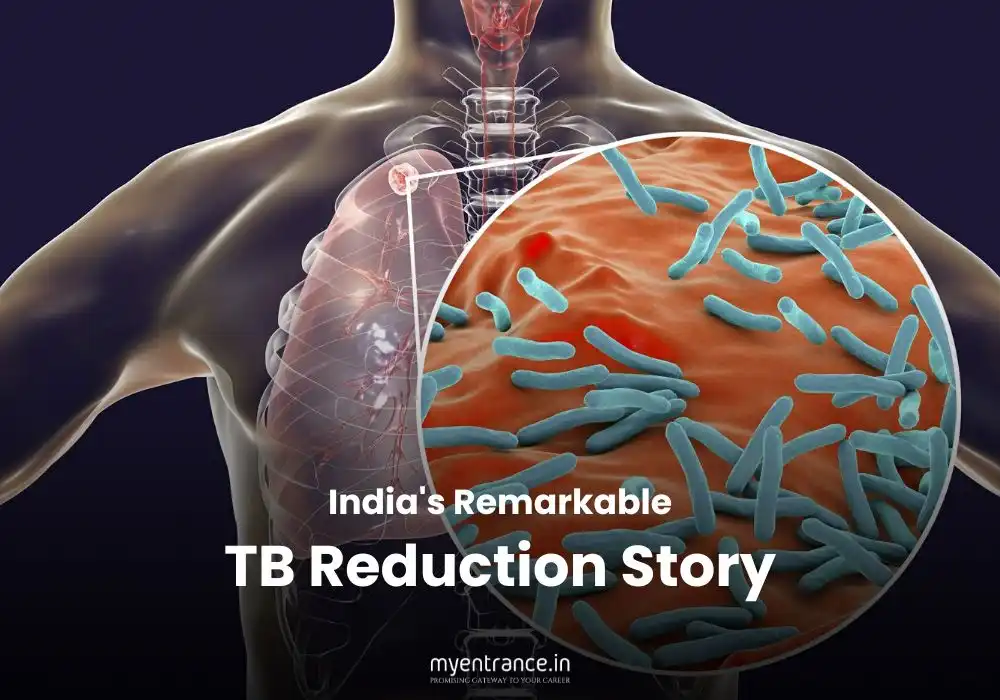
For aspirants of UPSC, SSC, PSC, NID, NIFT, and a multitude of other competitive examinations, the line between current affairs and static knowledge is increasingly blurred. True success lies in understanding not just the “what” of a news event, but the “why,” the “how,” and the “so what.” The recent World Health Organization’s (WHO) report on Tuberculosis (TB) is a quintessential example of such a topic. India’s achievement in significantly reducing its TB burden is not merely a public health victory; it is a narrative rich with insights into governance, international relations, socio-economic development, and policy implementation—all crucial themes for any serious candidate. The ultimate online resource for notifications and preparation for Kerala PSC examinations.
A Landmark Achievement in Global Public Health
Tuberculosis, an ancient scourge that has plagued humanity for millennia, remains one of the world’s top infectious killers. For decades, India has carried the unenviable distinction of bearing the highest burden of TB globally, accounting for a substantial portion of the world’s cases and deaths. This context is what makes the findings of the WHO Global Tuberculosis Report 2025 so monumental. The report confirms a definitive and accelerated downward trajectory in India’s TB incidence, marking a critical turning point in a long and arduous battle.
This progress is a testament to a decade of sustained, strategic, and intensified effort. It signals that the disease, once considered an intractable problem in a country of India’s size and diversity, can be tamed through political will, systemic strengthening, and community participation. Understanding this journey is to understand the mechanics of effective public health intervention, a subject frequently explored in the General Studies papers of major examinations.
The Numbers Speak: A Deep Dive into the WHO Report’s Findings
While headlines capture the essence, the devil—and the marks—are in the details. The WHO report provides specific data points that form the bedrock of any analytical answer in an exam.
Substantial Case Reduction: India has registered a 21% reduction in its total tuberculosis cases over the past decade. This figure is not just impressive in isolation; its true significance is revealed in comparison. The global average decline for the same period stands at approximately 12%. This means India’s rate of progress is nearly double the global average, positioning it as a high-performer in the global fight against TB.
Prevalence Rate Decline: A more nuanced indicator is the change in prevalence per lakh population. The report indicates that this number has fallen from 237 per lakh population in 2015 to 187 per lakh population currently. This shift from a baseline year (often linked to the launch of the UN Sustainable Development Goals and India’s own renewed elimination push) provides a clear, measurable benchmark of progress. It translates to thousands of fewer transmissions and a lighter burden on the healthcare system.
These statistics are not abstract; they represent a tangible improvement in the health and well-being of the nation, a key indicator of human development that examiners expect candidates to appreciate.
The ‘How’ Behind the Headlines: Deconstructing India’s Multi-Pronged Strategy
The decline in TB cases is not a serendipitous event but the direct outcome of a concerted, multi-pronged national strategy, primarily orchestrated through the Revised National Tuberculosis Control Programme (RNTCP), now ambitiously renamed the National Tuberculosis Elimination Programme (NTEP). The key pillars of this success include:
Enhanced Detection and Diagnosis: Moving beyond reliance on slow, traditional microscopy, India has scaled up the use of highly sensitive molecular diagnostic tests like CB-NAAT (Cartridge-Based Nucleic Acid Amplification Test) and Truenat machines. These devices, deployed even at the district and block levels, provide accurate results within hours, enabling a “test and treat” approach that was previously impossible.
Patient-Centric Support Systems: Recognizing that TB disproportionately affects the economically vulnerable, the government introduced the Nikshay Poshan Yojana. This direct benefit transfer scheme provides ₹500 per month to TB patients for nutritional support throughout their treatment duration. This is a critical intervention, as good nutrition is integral to recovery and prevents patients from abandoning treatment due to financial hardship.
Digital Governance and Monitoring: The Nikshay Portal is a comprehensive web-based platform used for monitoring the entire TB patient lifecycle—from notification and diagnosis to treatment and outcome. This digital backbone ensures real-time tracking, reduces paperwork, and holds the system accountable, a prime example of leveraging technology for good governance.
Active Case Finding (ACF): Instead of waiting for symptomatic patients to walk into a clinic (Passive Case Finding), the NTEP has initiated ACF campaigns in vulnerable populations. Health workers actively screen communities in high-risk areas, leading to early detection and breaking the chain of transmission.
Community Engagement and Partnerships: The programme has successfully leveraged a network of community stakeholders, including NGOs, private sector providers, and religious leaders, to combat stigma and ensure treatment adherence. The involvement of the private sector is crucial, as a significant number of Indians first seek care from private practitioners.
Global Context and India’s Leadership Role
India’s success has profound implications for global health. As a nation of 1.4 billion people, its progress single-handedly bends the global TB curve downwards. This achievement demonstrates to other high-burden countries that rapid progress is feasible with determination and a well-executed plan. It strengthens India’s position as a leader in global health diplomacy, a point not lost on international observers. This leadership is a soft power asset, a topic relevant for UPSC Mains papers on international relations.
However, the report is also a reminder that the battle is far from over. Drug-resistant TB (DR-TB) remains a formidable threat, and the COVID-19 pandemic caused disruptions that highlighted the fragility of health gains. Continued innovation, funding, and vigilance are essential to meet the ambitious target of eliminating TB in India by 2025, a goal that, while challenging, has galvanized the entire health machinery.
Why This Narrative is Crucial for Your Competitive Exams (and How MyEntrance.in Helps You Master It)
For an exam aspirant, this story is a goldmine of potential questions across various formats and subjects.
Preliminary Exams (MCQs): Direct questions on the percentage decline (21%), the global average (12%), the name of the scheme for nutritional support (Nikshay Poshan Yojana), or the digital monitoring platform (Nikshay).
Mains Examinations (Descriptive): This topic can be the centrepiece of essays on “India’s Public Health Success Stories,” “Challenges in Disease Eradication,” or “The Interlinkage between Health and Development.” In GS Paper II (Governance) and III (Science & Tech), questions could be: “Analyze the factors behind India’s success in reducing TB incidence” or “Discuss the role of digital technology in strengthening the National TB Elimination Programme.”
Interviews: An informed candidate can use this example to demonstrate a holistic understanding of policy implementation, governance, and India’s developmental journey.
At MyEntrance.in, we transform this complex current affair into actionable knowledge and assured marks. Our platform is specifically engineered to bridge the gap between news and exam-ready answers.
Interactive Examinations: Our topic-specific quizzes won’t just ask for the percentage decline. We will present case studies and statement-based questions that test your analytical ability, such as, “How does the Nikshay Poshan Yojana address the socio-economic determinants of health in TB management?”
Daily News Quizzes: We ensure that a significant report like the WHO TB Report is integrated into our daily quizzes, reinforcing your memory and helping you connect it to other ongoing news, such as the Union Health Budget or reports on other diseases.
Static GK Integration: Our modules on international organizations (like the WHO, Stop TB Partnership) and national health programs (like NTEP, Ayushman Bharat) provide the foundational knowledge necessary to contextualize such reports.
Expert Examination Tips: We provide guidance on how to structure an answer on this topic—for instance, starting with the data, explaining the causative factors, discussing the challenges, and concluding with the future roadmap and global significance.
By leveraging these resources, you can move beyond rote learning and develop the critical thinking skills needed to excel, turning a public health achievement into a personal competitive advantage.
Frequently Asked Questions (FAQs)
1. What is the single most important takeaway from the recent WHO Global TB Report for India?
The primary takeaway is that India has achieved a 21% reduction in its total TB cases over the last decade, a rate of decline that is nearly double the global average of 12%, signifying a major and accelerated public health success.
2. Beyond the 21% figure, what specific statistic demonstrates improved public health outcomes?
The decline in TB prevalence from 237 per lakh population in 2015 to 187 per lakh population is a more granular indicator. It shows a measurable decrease in the disease’s footprint across the population, leading to fewer transmissions and a reduced burden on healthcare infrastructure.
3. Why is it essential for competitive exam aspirants to follow reports from bodies like the WHO?
Reports from international organizations like the WHO provide authoritative data on global and national trends. These form the basis for current affairs questions in Prelims, provide fodder for essays and answer-writing in Mains, and offer talking points for Interviews, testing a candidate’s awareness of India’s position in the world.
4. What are the key government initiatives credited for this decline in TB cases?
Major initiatives include the National Tuberculosis Elimination Programme (NTEP) itself, the Nikshay Poshan Yojana for nutritional support, the nationwide deployment of advanced molecular diagnostics (CB-NAAT/Truenat), the Nikshay digital portal for monitoring, and Active Case Finding drives in high-risk communities.
5. How can a platform like MyEntrance.in help me master such dynamic topics for my exam?
MyEntrance.in offers an integrated approach. We don’t just list the news; we break it down through detailed analyses, test understanding through context-driven quizzes, connect it to static syllabus areas, and provide exam-focused tips on how to effectively present this knowledge in different formats required by UPSC, SSC, PSC, and other major exams.





