
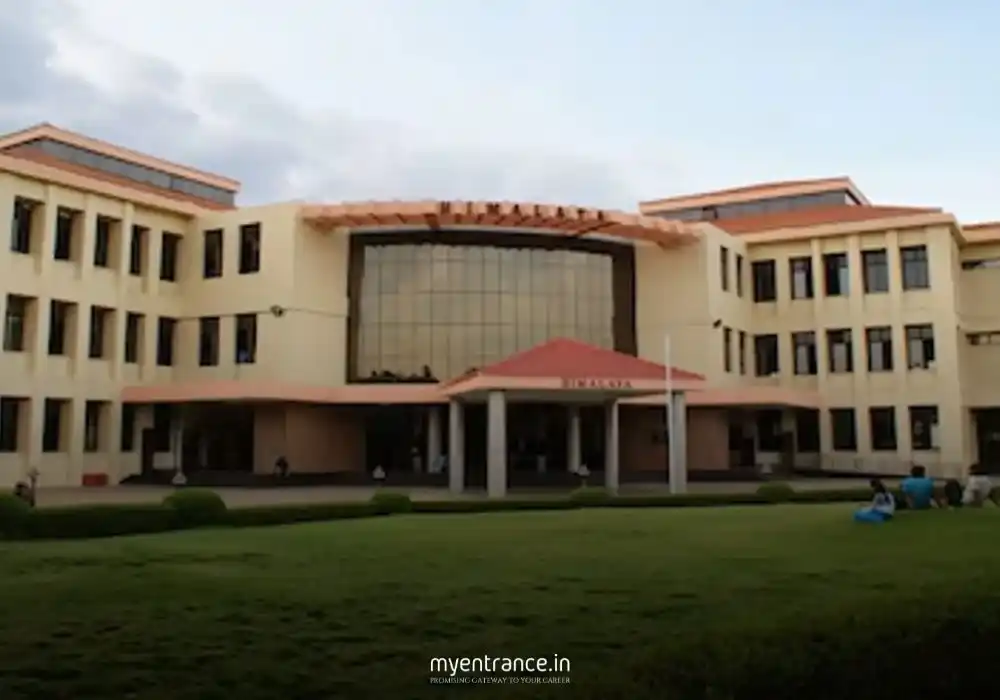
India is not merely a nation-state; it is a vibrant, living tapestry woven from countless threads of culture, tradition, and thought. Perhaps the most defining and intricate of these threads is its staggering linguistic diversity. With over 19,500 languages and dialects recorded in its history, and more than 120 major languages actively spoken today, India is a veritable subcontinent of expression. This plurality is not just a cultural artifact; it is a colossal, natural laboratory for understanding the very fabric of human cognition. In a landmark move that bridges technological prowess with profound humanistic inquiry, the Indian Institute of Technology Madras (IIT Madras) has established a groundbreaking Language & Cognition Lab. This initiative is not simply the opening of a new research facility; it is the launch of a dedicated scientific mission to decode the intricate dialogue between the Indian mind and the languages it inhabits.
The Philosophical and Scientific Imperative: Why This Lab Matters Now
To comprehend the significance of the Language & Cognition Lab, one must first understand the fundamental question it seeks to answer: How does the language we speak shape the way we think? This concept, often referred to as linguistic relativity, moves beyond vocabulary and grammar to investigate whether our cognitive processes—memory, perception, problem-solving, and even our sense of time and space—are influenced by our linguistic frameworks.
India, with its unparalleled linguistic landscape, presents a unique opportunity to explore this. Consider the cognitive world of a native Tamil speaker, whose language classifies the past into remote and recent, potentially structuring memory differently from a Hindi speaker. Or the spatial reasoning of a Khasi speaker from Meghalaya, who might use absolute cardinal directions (north, south) instead of egocentric ones (left, right). Each of India’s languages offers a distinct lens through which its speakers may perceive and interpret reality. The Lab is founded on the premise that to ignore this diversity is to ignore a fundamental aspect of human intelligence.
The “why” behind this initiative is multifaceted and urgent:
-
Preservation of Intangible Heritage: A vast number of India’s languages are endangered, with many smaller dialects on the brink of extinction. When a language dies, it is not merely a set of words that is lost; it is an entire worldview, a repository of cultural knowledge, history, and ecological understanding that vanishes. The Lab acts as a scientific ark, systematically documenting and analyzing these linguistic systems before they disappear, ensuring that their unique cognitive and cultural contributions are preserved for posterity.
-
Decoding the Multilingual Mind: India is a nation of polyglots. The cognitive implications of navigating multiple linguistic systems from childhood are profound. Does this constant code-switching enhance executive functions like attention control, working memory, and cognitive flexibility? Could it contribute to a cognitive reserve that delays the onset of neurodegenerative diseases like Alzheimer’s? The Lab’s research promises to move beyond anecdotal evidence, providing rigorous, neuroscientific data on the tangible benefits of multilingualism, with direct implications for educational policy, cognitive health, and geriatric care.
-
Fueling Indigenous Technological Innovation: The global digital revolution has been largely monolingual, dominated by the English language. For the billion-plus citizens of India to truly benefit from technology, it must speak their language. The insights generated by the Lab are the foundational bedrock for developing next-generation language technologies. This includes creating AI that can understand the nuances, sentiments, and grammatical complexities of Indian languages, building accurate machine translation systems that work for low-resource dialects, and designing educational software that adapts to a child’s specific linguistic background. This is not just about convenience; it is about digital inclusion and technological sovereignty.
The IIT Madras Advantage: A Confluence of Disciplines
The choice of IIT Madras as the home for this lab is strategic and symbolic. As an institution synonymous with cutting-edge engineering and scientific innovation, its foray into linguistics signals a paradigm shift. The study of language is no longer confined to the humanities; it is an interdisciplinary science requiring computational power, engineering precision, and neuroscientific tools.
The “how” of the Lab’s operation is as innovative as its mission. It functions as a crucible where disparate fields meld:
-
Linguistics and Psychology provide the theoretical framework for understanding language structure (syntax, semantics) and the design of behavioral experiments to test cognitive functions.
-
Computer Science and Engineering contribute through computational linguistics, using algorithms to model language acquisition and process vast corpora of textual and speech data. They also develop the software and hardware tools for experimentation.
-
Neuroscience brings in powerful neuroimaging techniques like Electroencephalography (EEG), which measures electrical activity in the brain with millisecond precision, allowing researchers to observe the brain’s real-time response to different linguistic stimuli. This can reveal, for instance, how the brain of a bilingual person processes a metaphor differently in their first versus second language.
The research methodologies are equally sophisticated. Beyond EEG, researchers will employ eye-tracking to study reading patterns, primed lexical decision tasks to map mental lexicons, and cross-linguistic comparisons to isolate the effects of specific grammatical features on cognition. A key focus will be on developmental studies, tracking language acquisition in infants and children across different linguistic environments to understand the foundational stages of the language-cognition link.
Broader Implications: From Policy to Competitive Edge
The establishment of the Language & Cognition Lab resonates far beyond the academic corridors of IIT Madras. For a country navigating the complex interplay between tradition and modernity, its work has profound societal implications.
In the realm of education, the findings could revolutionize pedagogical approaches. Understanding how children from diverse linguistic backgrounds learn best can inform the creation of more effective, personalized learning materials and teaching strategies, moving away from a one-size-fits-all model.
For public policy, the Lab’s research can provide an evidence base for crucial decisions on language policy, medium of instruction, and the integration of mother tongues in early and higher education. It can also inform cognitive health initiatives for an aging population, promoting multilingualism as a protective lifestyle factor.
For the aspiring youth of India, particularly students preparing for prestigious competitive examinations like the UPSC, SSC, and PSC, this development is a significant current affairs topic. It embodies several key themes that are recurrent in these exams: India’s growing scientific research capabilities, the strategic importance of preserving cultural heritage, the push for technological self-reliance (Atmanirbhar Bharat), and the application of science for social good. Understanding such initiatives is not just about memorizing a fact; it is about appreciating the interconnectedness of science, society, and governance—a perspective highly valued in these examinations. Platforms like myentrance.in, dedicated to holistic educational preparation, recognize the importance of such multidimensional topics in building a candidate’s analytical depth and general awareness.
Conclusion: A Journey into the Mind’s Babel
The IIT Madras Language & Cognition Lab is more than a research center; it is a beacon, illuminating a path toward a deeper, more scientifically-grounded understanding of India’s greatest treasure—its people and their voices. By embarking on this ambitious journey to map the relationship between Indian languages and the Indian mind, it is not only safeguarding a priceless heritage but also laying the groundwork for a future where technology is more human, education is more inclusive, and our understanding of ourselves is more complete. It is a testament to the fact that in the symphony of India’s many tongues may lie the secrets to the universal workings of the human brain.





