
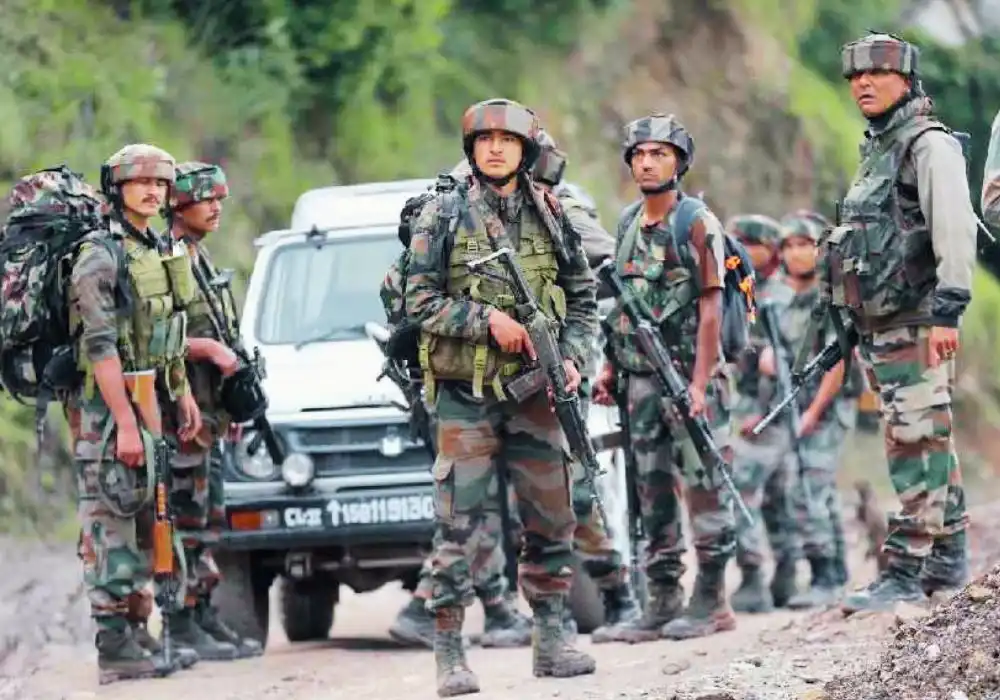
The landscape of national security is a critical and dynamic area that consistently forms a significant part of competitive examinations like UPSC, SSC, PSC, and other government recruitment tests. While daily news often reports on specific incidents, understanding the underlying mechanisms and broader implications is paramount for any serious aspirant. Recently, reports from Jammu highlight an intensive and continuous commitment to internal security, with authorities indicating over a hundred anti-terror operations being conducted daily across the Jammu division. This isn’t just a news item; it’s a vital case study in India’s ongoing struggle against terrorism, demanding a deeper dive for comprehensive exam preparation.
Why Internal Security is Crucial for Aspirants
Understanding internal security isn’t merely about memorizing headlines; it’s about grasping the multifaceted challenges a nation faces and how its machinery responds. For exams, this translates into questions on current affairs, static general knowledge, policy analysis, and even ethical dilemmas in interview stages. The persistent efforts in regions like Jammu underscore several key areas: the nature of threats, the operational strategies of security forces, the importance of intelligence gathering, and the geopolitical factors influencing national stability. Aspirants must approach such news with an analytical mind, connecting it to broader themes like border management, cross-border terrorism, insurgencies, and the role of various security agencies.
Decoding the ‘What’ and ‘Where’ of Jammu’s Operations
When we hear about “over 100 anti-terror operations daily,” it points to a well-coordinated and aggressive stance against specific threats. The primary objective articulated by senior police officials is the neutralization of foreign terrorists, often found hidden in the dense forest covers of the Jammu division. This highlights the ‘what’ – proactive counter-terrorism efforts – and the ‘where’ – a geographically challenging terrain that provides cover for adversaries. Jammu division, strategically located, often acts as a gateway and a crucial sector in maintaining peace in the wider Union Territory of Jammu and Kashmir. The consistent nature of these operations reflects a sustained infiltration attempt from across the border and the unwavering resolve of India’s security apparatus to prevent their establishment and activities within its territory. These operations are not isolated incidents but part of a larger, ongoing strategy to secure sensitive border areas and maintain peace.
The ‘How’ of Sustained Counter-Terrorism Efforts
The successful execution of numerous daily operations involves a complex interplay of various security stakeholders. This includes the Jammu and Kashmir Police, the Indian Army, paramilitary forces like the CRPF, and various intelligence agencies. Their coordination is critical – from gathering actionable intelligence, mapping out forested hideouts, planning surgical strikes, to ensuring minimal collateral damage. These efforts often involve surveillance, intelligence-led search and cordon operations, and precise engagements. The use of advanced technology, local human intelligence, and specialized units are all integral to how these operations are carried out effectively, often in challenging environmental conditions. Such sustained efforts demonstrate a shift from reactive responses to a proactive and preventative security posture, aiming to disrupt terrorist networks at their nascent stages.
Connecting the Dots for Your Examinations
For competitive exam aspirants, the ongoing internal security scenario in Jammu presents a wealth of material.
* Current Affairs: Regularly following the developments in Jammu and Kashmir, including security operations, government initiatives, and socio-economic changes, is non-negotiable. Our daily news quizzes and current affairs analyses are designed to keep you updated on such critical issues.
* Static General Knowledge: This context connects to static GK topics such as the geographical significance of Jammu and Kashmir, the history of Article 370 and 35A, the Jammu and Kashmir Reorganisation Act, 2019, and the roles and structures of various security forces and intelligence agencies in India.
* UPSC Mains (GS Paper III – Internal Security): This topic directly falls under internal security, terrorism, border areas, organized crime, and linkages with internal security. Understanding the nuances of these operations provides real-world examples for your answers.
* Interview Preparation: Being able to articulate the challenges of internal security, the strategies employed, and the role of civil administration alongside security forces demonstrates a well-rounded understanding crucial for interview stages.
Engaging with such news beyond the headline level enriches your understanding and equips you with the comprehensive knowledge required to excel in government examinations. Focus on the ‘why’ behind the news, the ‘what’ it entails, the ‘where’ it is happening, and the ‘how’ it is being managed by the nation’s security architecture.
Frequently Asked Questions (FAQs)
Q1: Why is the internal security situation in Jammu and Kashmir particularly significant for competitive exams?
A1: The internal security situation in Jammu and Kashmir is a critical topic due to its geopolitical importance, persistent cross-border terrorism, historical complexities, and its direct relevance to India’s sovereignty and integrity. It features prominently in current affairs, static GK, and internal security papers (like UPSC GS Paper III), assessing a candidate’s understanding of national challenges and administrative responses.
Q2: What is the primary objective behind the sustained anti-terror operations in the Jammu division?
A2: The primary objective is to neutralize foreign terrorists who attempt to infiltrate and hide within the dense forests and difficult terrains of the region. These operations aim to disrupt their networks, prevent acts of terror, and maintain peace and stability in the strategically vital Jammu division.
Q3: Which government agencies are typically involved in such extensive anti-terror operations in Jammu?
A3: Extensive anti-terror operations typically involve a collaborative effort from multiple agencies, including the Jammu and Kashmir Police, the Indian Army, Central Reserve Police Force (CRPF), Border Security Force (BSF) in border areas, and various national and state intelligence agencies. Their coordinated efforts are crucial for successful outcomes.
Q4: How does understanding the security dynamics of Jammu and Kashmir help in answering questions related to national security for exams like UPSC or SSC?
A4: It provides practical context for theoretical concepts related to terrorism, border management, internal challenges, and counter-insurgency strategies. It helps aspirants analyze government policies, the role of security forces, the impact of cross-border elements, and the socio-economic dimensions of conflict, enabling them to formulate well-informed and analytical answers.
Q5: What are some key concepts or terms related to internal security in Jammu and Kashmir that aspirants should be familiar with?
A5: Aspirants should be familiar with terms like “cross-border terrorism,” “infiltration bids,” “Line of Control (LoC),” “Unlawful Activities (Prevention) Act (UAPA),” “counter-insurgency operations,” “intelligence gathering,” “hybrid terrorism,” and the historical context of constitutional provisions related to the region, including the Jammu and Kashmir Reorganisation Act, 2019.





