
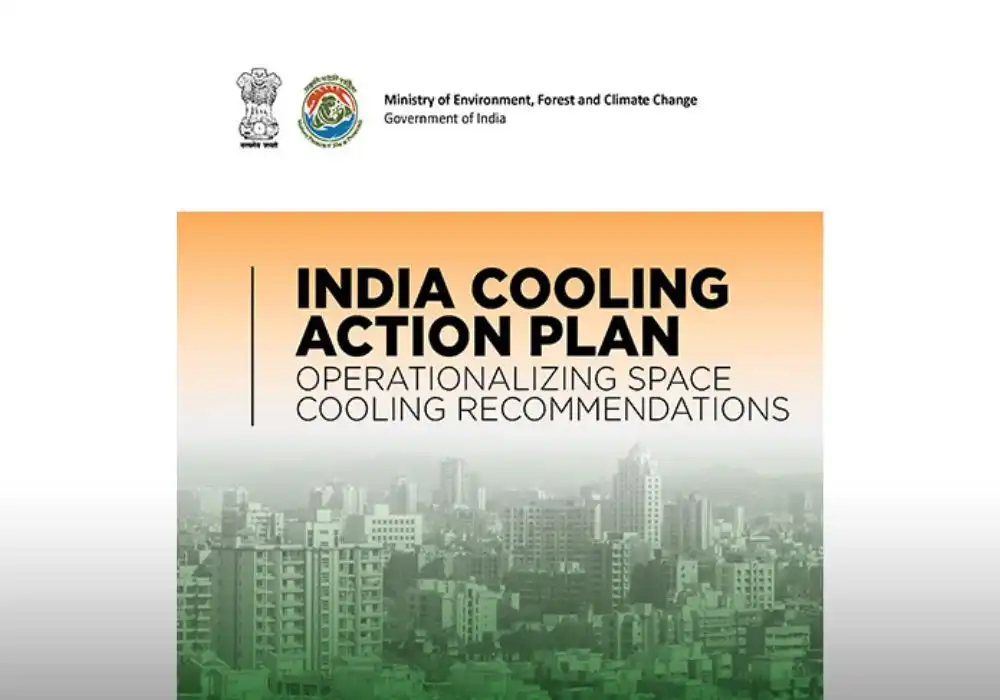
India has once again positioned itself as a global leader in environmental stewardship, taking a monumental step towards a sustainable future. In a significant announcement, the nation has become one of the very first countries worldwide to implement a comprehensive Cooling Action Plan. This initiative marks a pivotal moment in our fight against climate change and our commitment to a greener planet, offering critical insights for every aspiring civil servant and competitive exam candidate.
India’s Pioneering Step in Sustainable Cooling: What and Why?
At its core, the India Cooling Action Plan (ICAP) is a visionary strategy designed to address the burgeoning demand for cooling across various sectors while simultaneously mitigating its environmental impact. As temperatures rise and urbanization expands, the need for air conditioning, refrigeration, and industrial cooling solutions skyrockets. This surge in demand, if unchecked, can lead to increased energy consumption, higher greenhouse gas emissions, and a greater strain on our natural resources.
The “why” behind ICAP is multifaceted. Firstly, it aims to reduce cooling demand across all sectors – residential, commercial, and industrial – through passive cooling strategies, improved building designs, and smart urban planning. Secondly, it focuses on transitioning to more energy-efficient cooling equipment and appliances, thereby lowering electricity consumption. Thirdly, and critically for environmental preservation, ICAP seeks to reduce the use of refrigerants that are harmful to the ozone layer and contribute significantly to global warming, such as Hydrofluorocarbons (HFCs). This proactive approach demonstrates India’s dedication to sustainable development, setting a global precedent for other nations to follow. Learn effective last-day revision strategies to maximize your remaining study hours.
The Voice Behind the Vision: Minister Bhupender Yadav’s Key Announcement
The significant announcement regarding India’s pioneering Cooling Action Plan came from Mr. Bhupender Yadav, the Union Minister of Environment, Forest and and Climate Change (MoEFCC). Addressing the nation through a video message during the 31st World Ozone Day event in New Delhi, Minister Yadav underscored India’s unwavering commitment to environmental protection. His statement highlighted the government’s proactive stance on climate action and its resolve to integrate environmental considerations into national development strategies. The Ministry of Environment, Forest and Climate Change plays a crucial role in formulating and implementing policies that protect India’s natural resources, conserve biodiversity, and address the challenges of climate change, making such announcements authoritative and policy-driven.
Connecting the Dots: World Ozone Day and Broader Climate Action
The choice of World Ozone Day as the platform for this announcement is profoundly significant. Celebrated annually on September 16th, World Ozone Day commemorates the signing of the Montreal Protocol on Substances that Deplete the Ozone Layer in 1987. This international treaty is widely regarded as one of the most successful global environmental agreements, having successfully phased out numerous chemicals responsible for ozone layer depletion, thereby protecting Earth from harmful ultraviolet radiation.
The link between ozone layer protection and the India Cooling Action Plan is direct and crucial. Many of the substances historically used in refrigerants, like Chlorofluorocarbons (CFCs) and Hydrochlorofluorocarbons (HCFCs), were potent ozone-depleting substances. While the Montreal Protocol has largely phased these out, their replacements, HFCs, though not ozone-depleting, are powerful greenhouse gases that contribute significantly to global warming. ICAP’s objective to reduce HFC usage directly aligns with the broader goals of climate action and global warming mitigation, showcasing a holistic approach to environmental challenges. For aspirants, understanding this interconnectedness between global protocols, national policies, and scientific advancements is key.
Implications for Competitive Exam Aspirants: Your Knowledge Edge
For students preparing for prestigious examinations like UPSC, SSC, PSC, NID, NIFT, and other government recruitment tests, this development is a goldmine of current affairs and static general knowledge. Questions related to environmental policies, international agreements, government initiatives, and sustainable development are regular features in these exams.
Here’s how this information can be crucial:
* Current Affairs: Knowing about the India Cooling Action Plan (ICAP), its objectives, and the context of its announcement (World Ozone Day, Minister Bhupender Yadav) is vital.
* General Knowledge (Static & Dynamic): Understanding the Montreal Protocol, ozone layer depletion, greenhouse gases (HFCs), and the role of the Ministry of Environment, Forest and Climate Change are fundamental.
* Essay & Descriptive Papers: ICAP can be a strong point to include in essays on environmental policy, sustainable development, India’s climate action, or energy efficiency.
* Interview Preparation: Being able to articulate India’s leadership in environmental initiatives like ICAP demonstrates a well-rounded understanding of national and international affairs.
This initiative underscores India’s commitment to achieving its climate goals and transitioning towards a more sustainable and resilient future. It’s a testament to how national policy can contribute significantly to global environmental challenges. Take your daily dose of current affairs to stay informed and prepared.
Frequently Asked Questions (FAQs)
1. What is the primary objective of the India Cooling Action Plan (ICAP)?
The primary objective of ICAP is to provide a long-term vision and strategy to address the cooling demand across various sectors while simultaneously reducing its environmental impact through sustainable cooling. This involves minimizing energy consumption, transitioning to climate-friendly refrigerants, and enhancing energy efficiency.
2. Who announced the implementation of India’s Cooling Action Plan?
The implementation of India’s Cooling Action Plan was announced by Mr. Bhupender Yadav, the Union Minister of Environment, Forest and Climate Change (MoEFCC).
3. Why was the announcement made on World Ozone Day?
The announcement was strategically made during the 31st World Ozone Day event to highlight the interconnectedness between protecting the ozone layer and mitigating climate change. While the Montreal Protocol phases out ozone-depleting substances, ICAP focuses on reducing harmful greenhouse gases like HFCs, which are often used as replacements and contribute to global warming.
4. What kind of exams is this information relevant for?
This information is highly relevant for competitive examinations such as UPSC Civil Services, SSC CGL/CHSL, State Public Service Commission (PSC) exams, NID, NIFT, and other government and entrance exams where Current Affairs, General Knowledge, Environment & Ecology, and Government Policies are key components of the syllabus.
5. How does ICAP contribute to India’s broader climate change goals?
ICAP contributes significantly by reducing the demand for cooling, improving the energy efficiency of cooling equipment, and phasing down the use of high global warming potential refrigerants. These actions directly support India’s commitments under international climate agreements like the Paris Agreement, helping to curb greenhouse gas emissions and move towards a more sustainable and low-carbon economy.
***





