
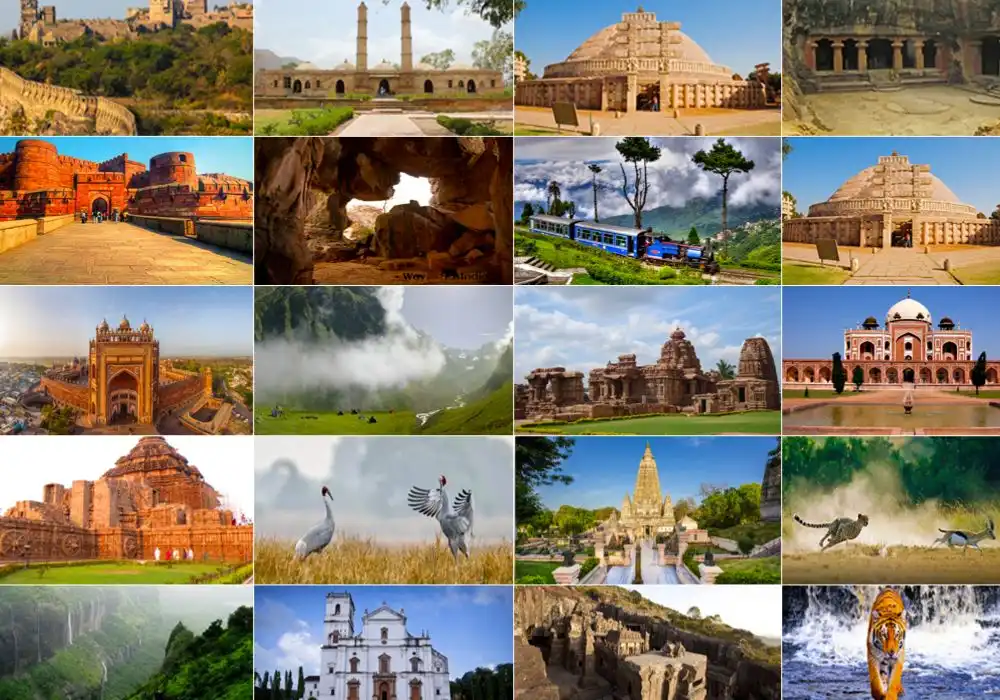
India’s magnificent tapestry of natural beauty and cultural richness continues to gain global recognition. In a significant development for our nation’s heritage and, crucially, for aspirants preparing for competitive examinations, the Permanent Delegation of India to the United Nations Educational, Scientific and Cultural Organisation (UNESCO) recently announced a substantial increase in Indian properties on the UNESCO World Heritage Tentative List. This expansion not only elevates India’s standing on the global stage but also introduces fresh and vital information for your upcoming SSC, UPSC, PSC, NID, NIFT, and other government exams. Sharpen your skills with these current affairs practice questions updated daily.
Understanding the UNESCO Tentative List: Your Gateway to Global Heritage
What is the UNESCO Tentative List?
Before a site can be officially inscribed as a UNESCO World Heritage Site, it must first be included on a country’s Tentative List. Think of this as an inventory of natural and cultural heritage sites that a country considers to be of outstanding universal value and, therefore, suitable for nomination to the World Heritage List. It’s the first critical step in a rigorous multi-year nomination process. Inclusion on this list signals a nation’s intent to nominate these sites in the future.
Why is it Crucial for India?
Placement on the Tentative List is a declaration of potential. It highlights sites that possess extraordinary significance, whether for their historical depth, architectural brilliance, ecological importance, or unique geological features. For India, a land brimming with such wonders, this process is vital for ensuring international recognition, fostering preservation efforts, attracting sustainable tourism, and safeguarding these treasures for future generations.
India’s Expanding Heritage Footprint: The Latest Update
In a recent and noteworthy announcement, seven additional Indian properties have been included in the UNESCO World Heritage Tentative List, specifically under the ‘Natural Category.’ This significant addition brings India’s total number of sites on this preparatory list to an impressive 69.
To put this into perspective, the expanded list now comprises 49 sites under the Cultural category, 3 under the Mixed category (which possess both natural and cultural significance), and, with these new inclusions, a total of 17 sites under the Natural category. This development underscores India’s rich biodiversity and unique natural landscapes, which are now being globally acknowledged for their ecological and geological importance. Each site on this list represents a potential future World Heritage Site, marking a journey of recognition and conservation.
Why UNESCO Recognition Matters for India and Your Preparation
The global recognition conferred by UNESCO’s World Heritage status or even inclusion on its Tentative List brings immense benefits. For India, it translates into enhanced global visibility, increased tourism, opportunities for international funding and technical assistance for conservation, and a boost to national pride and identity. These sites become symbols of our shared human and natural history, drawing attention and resources towards their meticulous preservation.
For you, the aspiring exam candidate, this development is a goldmine of examination material. Understanding the intricacies of UNESCO’s role, the specific sites, their categories, and their significance is no longer just “nice to know” but an absolute “must-know.”
Your Exam Edge: Mastering UNESCO Facts with MyEntrance.in
Knowledge of UNESCO World Heritage Sites, particularly new additions or those on the Tentative List, is a hot topic across a spectrum of competitive examinations.
* Current Affairs: Direct questions on the number of sites, categories, and the latest additions are highly probable. Expect inquiries about the date of the announcement or the significance of these natural sites.
* Static General Knowledge (GK): These new sites will soon become part of your essential GK. You’ll need to know their locations, their unique features, and the state or region they belong to. MyEntrance.in’s daily news quizzes and dedicated GK sections will keep you updated.
* UPSC and PSC Exams: Beyond factual recall, these exams may test your understanding of heritage conservation policies, the economic impact of tourism, or India’s efforts in environmental protection, all of which are intrinsically linked to UNESCO listings. Essay topics or descriptive questions could easily revolve around these themes.
* NID and NIFT: For design and arts aspirants, these sites offer a rich source of cultural context, historical aesthetics, and natural forms that can inspire design projects and analytical questions.
How to Prepare: MyEntrance.in provides comprehensive resources to help you master these topics. Regularly engage with our current affairs updates for the latest news, test your knowledge with interactive examinations and quizzes, and dive deep into our static general knowledge modules to build a robust foundation. Pay special attention to the geographical locations and the distinct features of these newly added natural sites. Understanding the “why” behind their selection will give you an edge. You can build a strong foundation with our comprehensive static gk guide.
Frequently Asked Questions (FAQs)
Q1: What is the primary difference between a site on the UNESCO Tentative List and a World Heritage Site?
A1: A site on the UNESCO Tentative List is a preliminary inventory of natural and cultural properties that a country intends to nominate for World Heritage status. It is the first step in the nomination process. A World Heritage Site, on the other hand, has successfully passed a rigorous evaluation process and has been officially inscribed by UNESCO for its outstanding universal value, receiving international protection and recognition.
Q2: How many Indian sites are currently on the UNESCO World Heritage Tentative List, and what are their category breakdowns?
A2: Following the recent additions, India now has a total of 69 sites on the UNESCO World Heritage Tentative List. These are categorized as 49 Cultural sites, 3 Mixed sites (possessing both cultural and natural significance), and 17 Natural sites.
Q3: Why is it important for competitive exam aspirants to stay updated on UNESCO World Heritage Sites and the Tentative List?
A3: This information is crucial for competitive exams because it frequently appears in current affairs sections, static general knowledge, and even in essay or descriptive questions for UPSC/PSC. New additions to the Tentative List are considered recent developments and are prime candidates for questions on locations, categories, and the significance of these heritage sites for India.
Q4: Which category saw the recent addition of seven new sites to India’s Tentative List?
A4: The recent inclusion of seven new Indian properties on the UNESCO World Heritage Tentative List specifically falls under the ‘Natural Category,’ highlighting India’s rich biodiversity and unique natural landscapes.
Q5: How does being on the UNESCO Tentative List benefit India, even before full inscription?
A5: Inclusion on the Tentative List brings several benefits, including increased national and international attention to these sites, potentially leading to better conservation efforts, preliminary studies and funding for site preservation, and a boost to local tourism and economic development as these sites gain visibility as future World Heritage contenders.





