
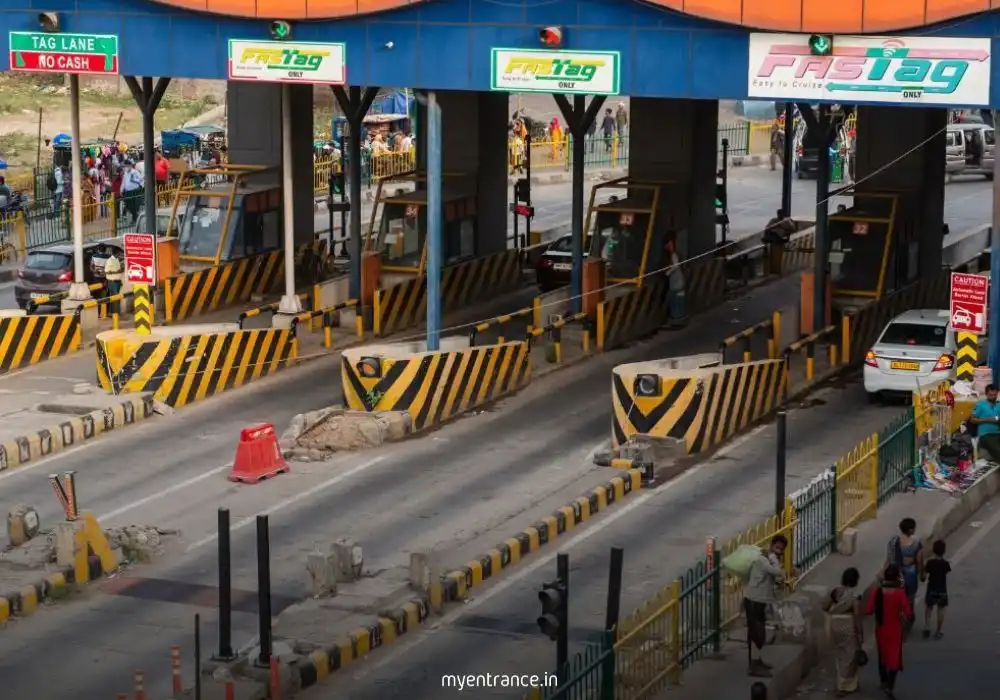
India’s journey towards becoming a global economic powerhouse is inextricably linked to the robust development of its infrastructure, with its expansive road network serving as the very lifelines of commerce and connectivity. Among the most visible and vital components of this network are the numerous toll plazas dotting the national landscape. Far from being mere collection points, these facilities represent crucial pillars in the financing, maintenance, and strategic expansion of our highways, making their understanding essential not just for daily commuters but, more critically, for aspirants preparing for prestigious examinations like UPSC, SSC, PSC, NID, NIFT, and other government sector roles. A comprehensive grasp of the underlying principles governing tolling, its economic implications, and its geographical distribution offers invaluable insights into India’s developmental trajectory and governance.
The Strategic Imperative of Toll Plazas in Nation Building
Toll plazas are fundamentally designed to ensure the sustainability and continuous enhancement of India’s road infrastructure. As the nation rapidly constructs and upgrades its vast network of national highways and expressways, the sheer scale of investment required is immense. Toll collection provides a dedicated revenue stream, often under Public-Private Partnership (PPP) models, which directly contributes to the construction, maintenance, and operational costs of these high-quality road assets. This system reduces the direct burden on the central exchequer for every project, allowing for faster execution and expansion of critical transport corridors. Furthermore, tolls play a pivotal role in demand management, ensuring efficient traffic flow and discouraging excessive use of premium infrastructure by non-essential traffic, thereby optimizing road utility. For exam candidates, understanding these economic models – such as Build-Operate-Transfer (BOT) or Hybrid Annuity Model (HAM) – is crucial for answering questions related to infrastructure financing, government schemes, and economic geography. Make your revision stronger by following our Latest GK & Current Events Updates every day.
The Evolving Landscape of India’s Highway Network and Toll Mechanisms
The exponential growth in India’s road network, spearheaded by initiatives like the Bharatmala Pariyojana and the relentless efforts of the National Highways Authority of India (NHAI), has naturally led to a corresponding increase in the number of operational toll plazas. This expansion signifies not just enhanced connectivity but also a deepening commitment to world-class infrastructure. Modern tolling, largely driven by technological advancements, has seen a significant shift towards electronic payment systems like FASTag, revolutionizing the user experience by ensuring seamless transit and reducing congestion at collection points. This move towards digital and cashless transactions at toll plazas also has broader implications for India’s digital economy and financial inclusion, a topic frequently featured in current affairs sections of competitive exams. Aspirants should therefore monitor policy changes regarding electronic toll collection and its impact on the logistics and transport sectors. Aspirants can benefit from the SSC Exam Guide With Tips & Strategies available on our platform.
Geographical Distribution: Beyond Mere Numbers
While the exact count of toll plazas across India is a dynamic figure, constantly updated as new projects are completed and operationalized by NHAI, understanding their state-wise distribution offers critical insights into regional development and infrastructure priorities. States with higher economic activity, denser populations, and critical industrial corridors naturally tend to have a greater concentration of national highways and, consequently, more toll plazas. Factors influencing this distribution include the length of national highways traversing a state, the volume of commercial traffic, ongoing infrastructure projects, and the feasibility studies conducted for revenue generation. For instance, states that are part of major economic corridors or expressways will typically host more such facilities. Aspiring civil servants and other government exam candidates are encouraged to track major infrastructure announcements, analyze regional development patterns, and understand the socio-economic factors that drive the geographical spread of such vital facilities. This analytical perspective, rather than rote memorization of fluctuating numbers, forms the cornerstone of effective preparation for questions on Indian geography, economy, and government policy. Official sources like the NHAI website are the authoritative points for current data, which often serves as material for current affairs quizzes. Test your knowledge with our Daily News Quiz & Key Pointers designed for UPSC, SSC, and PSC aspirants.
Relevance for Competitive Examinations: A Holistic Perspective
The topic of toll plazas, often perceived as mundane, holds multifaceted relevance for competitive examinations. Questions can span various domains: from Current Affairs covering new expressways, policy changes in toll collection (e.g., FASTag implementation, toll fee revisions), or debates on toll-free highways; to Static General Knowledge on infrastructure financing models, the role of NHAI, or the history of road development in India; and even Economics focusing on public expenditure, revenue generation, and the economic impact of improved connectivity. Understanding the strategic placement, operational mechanisms, and the economic rationale behind toll plazas provides a comprehensive lens through which to view India’s developmental narrative, preparing candidates not just to answer specific questions but to demonstrate a broader, integrated understanding of national progress.





