
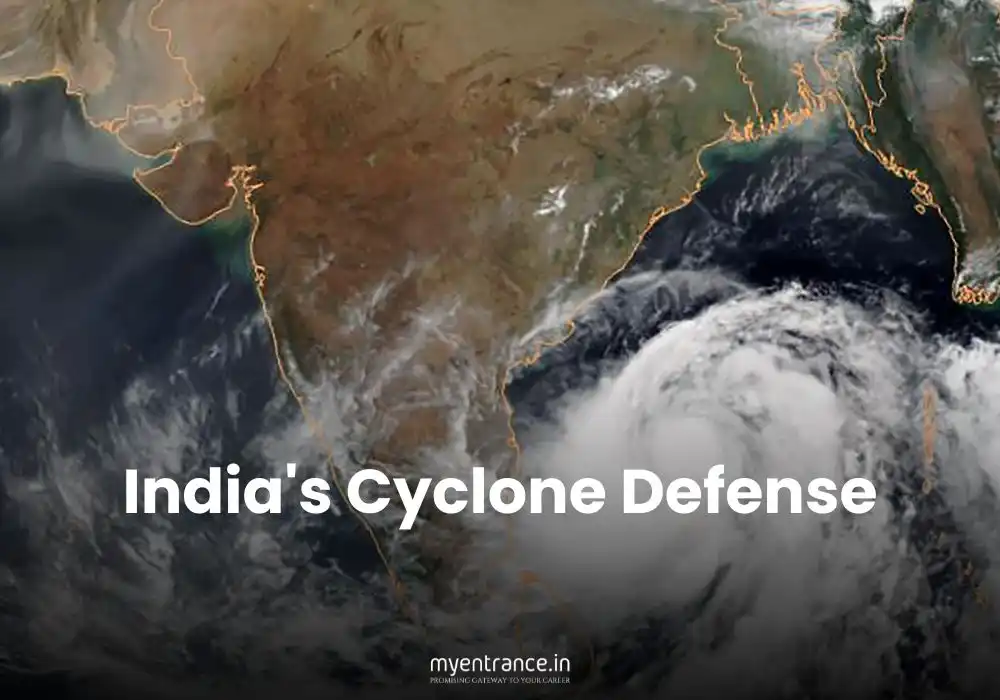
The rhythmic cycle of seasons often brings with it the looming threat of cyclones to India’s extensive coastline. While headlines focus on immediate preparedness, for ambitious individuals eyeing a career in public service through exams like UPSC, SSC, PSC, or others, these events offer a profound learning opportunity. Understanding India’s robust disaster management framework isn’t just about current affairs; it’s a critical component of geography, environment, governance, and public administration syllabi. At myentrance.in, we believe in transforming real-world challenges into structured knowledge for your competitive edge.
Why Disaster Management is Indispensable for Your Exam and India
India, with its vast and diverse geography, is particularly vulnerable to a multitude of natural disasters, with tropical cyclones being a recurrent and significant threat, especially to its eastern and western coastal states. The Bay of Bengal and the Arabian Sea frequently spawn powerful cyclonic systems that necessitate swift and coordinated governmental action. For exam aspirants, studying disaster management is crucial because it tests your understanding of:
* Geographical Vulnerability: Why certain regions are prone to specific disasters.
* Governmental Structure and Functioning: How various agencies, ministries, and committees coordinate at national, state, and local levels.
* Policy and Legislation: The legal frameworks and policies that guide disaster response.
* Environmental Impact: The long-term ecological consequences and sustainable development.
* Current Affairs: Real-time events that demonstrate these theoretical concepts in practice.
A deep dive into how India manages impending natural calamities, such as cyclones, reveals the intricate layers of governance and the dedication to public safety, all of which are pertinent for your exam preparation.
The Architecture of India’s Cyclone Preparedness: Key Players & Roles
When a cyclone threatens, a sophisticated network of institutions springs into action. Understanding each entity’s role is key to comprehending India’s preparedness strategy:
1. The National Crisis Management Committee (NCMC): The Apex Coordinator
Chaired by the Cabinet Secretary, the NCMC is India’s highest executive body for reviewing and coordinating crisis management efforts. Its primary objective is to ensure that all concerned ministries, departments, and state governments are fully prepared and synchronized to handle a disaster effectively. This committee convenes to assess the situation, review preparedness measures, and issue necessary directives, ensuring a seamless, multi-agency response to imminent threats. Its role underscores the “whole-of-government” approach to disaster management.
2. India Meteorological Department (IMD): The Sentinel of the Skies
The IMD serves as India’s primary agency for weather forecasting and cyclone warnings. Utilizing advanced satellite imagery, radar systems, and meteorological models, the IMD continuously monitors atmospheric conditions. Its precise predictions regarding a cyclone’s trajectory, intensity, and potential landfall are absolutely critical. These early warnings provide invaluable lead time for evacuation, deployment of response forces, and other pre-emptive measures, directly minimizing loss of life and property.
3. National Disaster Management Authority (NDMA) & State Disaster Management Authorities (SDMAs): Policy and Implementation
The NDMA, established under the Disaster Management Act, 2005, is the apex body for laying down policies, plans, and guidelines for disaster management. It plays a crucial role in developing a holistic and integrated approach to disaster management, encompassing mitigation, preparedness, response, and recovery. The SDMAs, at the state level, replicate this structure, adapting national guidelines to local contexts and coordinating efforts within their respective states.
4. National Disaster Response Force (NDRF): The Frontline Rescuers
The NDRF is a specialized force trained for disaster rescue and relief operations. Comprising highly skilled personnel from various paramilitary forces, the NDRF teams are strategically deployed in vulnerable areas well in advance of a predicted disaster. Their swift action in search and rescue, medical aid, and providing essential supplies is crucial during and immediately after a calamity.
5. Other Key Entities: Various other ministries like Home Affairs, Defence, Health, and local administrations, alongside the Indian Coast Guard and Navy, play specialized roles in logistics, communication, security, and evacuation, demonstrating a comprehensive national effort.
The Lifecycle of Preparedness: From Prediction to Recovery
India’s disaster management framework operates through a continuous cycle, not just as a reactive measure. This cycle involves:
* Mitigation: Long-term strategies to reduce the impact of disasters, such as building codes and infrastructure development.
* Preparedness: Activities undertaken before a disaster, including early warning systems, evacuation drills, stockpiling resources, and public awareness campaigns. This is where the NCMC, IMD, and NDRF play a prominent role in pre-positioning resources and issuing advisories.
* Response: Immediate actions taken during and immediately after a disaster, focusing on search and rescue, emergency relief, and providing temporary shelter.
* Recovery: Long-term efforts to restore affected areas to their pre-disaster conditions, including rehabilitation, reconstruction, and livelihood restoration.
Understanding this cyclical approach is vital for any exam, as questions often delve into the various phases and the specific actions undertaken in each.
Key Concepts & Policies for Aspirants
* Disaster Management Act, 2005: This landmark legislation provides the legal and institutional framework for effective disaster management in India. It defines the roles and responsibilities of various agencies at national, state, and district levels.
* National Disaster Management Policy: This policy guides the vision, mission, and strategies for disaster management, emphasizing a proactive, multi-hazard, and community-centric approach.
* Community Participation: Increasingly, there’s an emphasis on empowering local communities and involving them in preparedness and response efforts, recognizing their unique knowledge and resilience.
By dissecting complex events like cyclone preparedness into their foundational components, myentrance.in equips you with the structured knowledge required to excel in competitive examinations. These real-world applications of governance and environmental science are not just news, but vital lessons for your success.
Frequently Asked Questions (FAQs)
1. What is the primary role of the National Crisis Management Committee (NCMC) during an impending disaster like a cyclone?
The NCMC’s primary role is to serve as the apex body for reviewing the preparedness and coordinating the response of various ministries, departments, and state governments to a severe crisis or disaster. Chaired by the Cabinet Secretary, it ensures that all stakeholders are aligned and resources are effectively mobilized to mitigate the impact of the impending event.
2. Which government body is solely responsible for issuing official cyclone warnings and forecasts in India?
The India Meteorological Department (IMD) is the government body exclusively responsible for monitoring weather patterns, predicting cyclone formation, tracking their movement, and issuing timely warnings and forecasts to the public, government agencies, and disaster management authorities across India.
3. What is the significance of the Disaster Management Act, 2005, in India’s approach to natural calamities?
The Disaster Management Act, 2005, is a landmark legislation that provides the legal and institutional framework for effective disaster management in India. It mandates the creation of the National Disaster Management Authority (NDMA), State Disaster Management Authorities (SDMAs), and District Disaster Management Authorities (DDMAs), outlining their roles, powers, and responsibilities for a holistic and proactive approach to disaster mitigation, preparedness, response, and recovery.
4. Besides cyclones, what other natural disasters does India’s disaster management framework typically cover?
India’s comprehensive disaster management framework is designed to cover a wide array of natural disasters, including earthquakes, floods, droughts, tsunamis, landslides, forest fires, hailstorms, and extreme weather events. The principles of mitigation, preparedness, response, and recovery are applied across all these hazards.
5. How can aspirants best prepare for disaster management questions in competitive exams like UPSC or SSC?
Aspirants should focus on understanding the institutional framework (NDMA, NDRF, IMD, NCMC), relevant legislation (Disaster Management Act, 2005), key policies (National Disaster Management Policy), and the various phases of disaster management (mitigation, preparedness, response, recovery). Regularly following current affairs related to disaster events and analyzing case studies of successful and challenging responses will also provide valuable insights for both preliminary and main examinations.





