
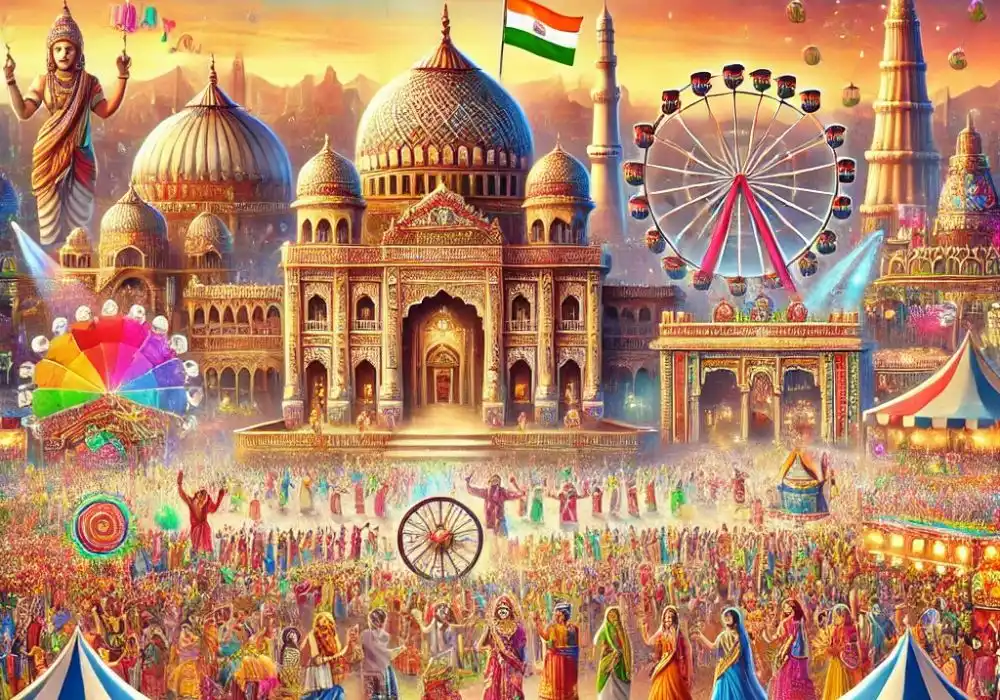
In an era where India’s economic prowess is globally acknowledged, President Droupadi Murmu has recently underscored another critical dimension of our national identity: its vibrant cultural power. Her address at the 64th National Exhibition of Art, organized by the prestigious Lalit Kala Akademi in New Delhi, emphasized that collective efforts are essential to solidify India’s standing as a cultural superpower, complementing its economic growth. For any aspirant preparing for competitive examinations such as UPSC, SSC, PSC, NID, NIFT, and various other government exams, understanding the nuances of such statements is not merely about keeping up with current affairs, but also about grasping fundamental aspects of Indian heritage and its global significance. Save time by reading our curated current events for revision that are exam-relevant.
The Deeper Dive: Why Cultural Identity Matters for India and Your Exams
So, why is this emphasis on cultural identity so important? India’s rich tapestry of art forms, traditions, languages, and philosophies is a unique asset on the global stage. As the world becomes increasingly interconnected, a nation’s soft power – its ability to influence through cultural appeal – becomes as vital as its economic or military strength. President Murmu’s call serves as a timely reminder that while economic indicators are crucial, a nation’s soul lies in its culture. For your examinations, particularly the UPSC General Studies Paper I (Indian Heritage and Culture), SSC General Awareness, and State PSCs, this theme directly correlates with topics like Indian art history, traditional crafts, cultural institutions, and the role of culture in nation-building. It highlights how India projects itself globally, a key component for essays and descriptive answers.
The Event Explained: Lalit Kala Akademi and the National Exhibition of Art
The context of President Murmu’s statement is equally significant for your examination preparation. The 64th National Exhibition of Art is a flagship event of the Lalit Kala Akademi, a premier autonomous organization established by the Government of India. It promotes and develops fine arts in the country. Understanding the “what, where, and when” of this event is crucial for current affairs. The exhibition, held in New Delhi, showcases the diverse and evolving artistic expressions across India. Knowledge about such institutions, their mandates, and key events forms the bedrock of static general knowledge questions. For aspirants targeting exams like NID and NIFT, which heavily test awareness of art, design, and cultural institutions, the Lalit Kala Akademi and its exhibitions are particularly relevant. A great strategy is to build a strong foundation in static gk early in your preparation.
Art as a Powerful Medium: Connecting History and Future
The President eloquently stated that art is a powerful medium. Indeed, art transcends language barriers, communicates complex emotions, and chronicles history. From ancient cave paintings to modern installations, Indian art has always reflected the socio-political fabric, spiritual beliefs, and technological advancements of its time. It’s through art that we understand our past, celebrate our present, and envision our future. This perspective is invaluable for answering analytical questions on Indian history, culture, and societal development in various competitive exams. Recognizing art’s role in fostering national pride and unity, as highlighted by the President, helps aspirants connect current events with broader historical and cultural trends, enabling more comprehensive and insightful answers. Our kerala psc preparation guide is your first step towards success in state exams.
Your Exam Advantage: How myentrance.in Connects the Dots
At myentrance.in, we understand that mastering such interconnected topics is key to cracking competitive exams. Our platform is meticulously designed to provide you with the educational resources and course materials necessary to excel. When President Murmu speaks on cultural identity, it immediately becomes a vital current affair, which we cover extensively in our daily news quiz and comprehensive current affairs sections. For static general knowledge, we provide in-depth modules on institutions like the Lalit Kala Akademi, Indian art forms, and cultural heritage, ensuring you grasp all historical and foundational aspects. Our interactive examinations feature questions directly derived from such significant events and their underlying themes, allowing you to test your understanding in a real-time, exam-like environment. Furthermore, our examination tips guide you on how to effectively integrate current affairs with static GK, develop strong analytical skills, and approach essay-type questions that often revolve around national identity and cultural significance. With myentrance.in, you’re not just memorizing facts; you’re building a holistic understanding that empowers you to confidently tackle any question thrown your way across SSC, UPSC, PSC, NID, NIFT, and other government examinations.
Frequently Asked Questions (FAQs)
Q1: Why did President Droupadi Murmu emphasize strengthening India’s cultural identity?
A1: President Murmu highlighted the need to strengthen India’s cultural identity to complement its growing economic power. She believes that a strong cultural presence is essential for India’s soft power and global standing, allowing the nation to influence and connect with the world through its rich heritage, art, and traditions, much like its economic might.
Q2: What is the significance of the Lalit Kala Akademi for competitive exams?
A2: The Lalit Kala Akademi is a crucial autonomous organization dedicated to promoting fine arts in India. For competitive exams, it is a key topic for static general knowledge and current affairs. Questions can relate to its establishment, mandate, important events like the National Exhibition of Art, and its role in preserving and promoting Indian art and culture, especially for exams like UPSC, SSC, NID, and NIFT.
Q3: How does the theme of “cultural identity” relate to my preparation for exams like UPSC or SSC?
A3: The theme of cultural identity is highly relevant across various competitive exams. For UPSC, it’s integral to General Studies Paper I (Indian Heritage and Culture) and essay papers. For SSC and PSCs, it forms a significant part of General Awareness and General Knowledge sections, covering topics like Indian art, architecture, traditions, and national institutions. Understanding this theme helps in analytical questions and connecting current affairs with static GK.
Q4: How can myentrance.in help me understand and prepare for topics like India’s cultural power?
A4: Myentrance.in provides comprehensive educational resources. We cover President Murmu’s speech and similar events in our daily news quiz and current affairs section. Our static general knowledge modules detail institutions like Lalit Kala Akademi and various art forms. Through interactive examinations, you can test your knowledge, and our examination tips guide you on integrating such broad themes into your overall study strategy for UPSC, SSC, PSC, NID, NIFT, and other government exams.
Q5: Beyond the economy, what does “India’s cultural power” mean in a global context?
A5: India’s cultural power, often referred to as ‘soft power’, signifies its ability to influence and attract other nations through its rich cultural heritage rather than military or economic coercion. This includes the global appeal of yoga, Bollywood, Indian cuisine, classical dance, music, spiritual traditions, and the values of pluralism and democracy. In a global context, it means India can build deeper connections, foster understanding, and promote its values worldwide through cultural exchange and appreciation.





