
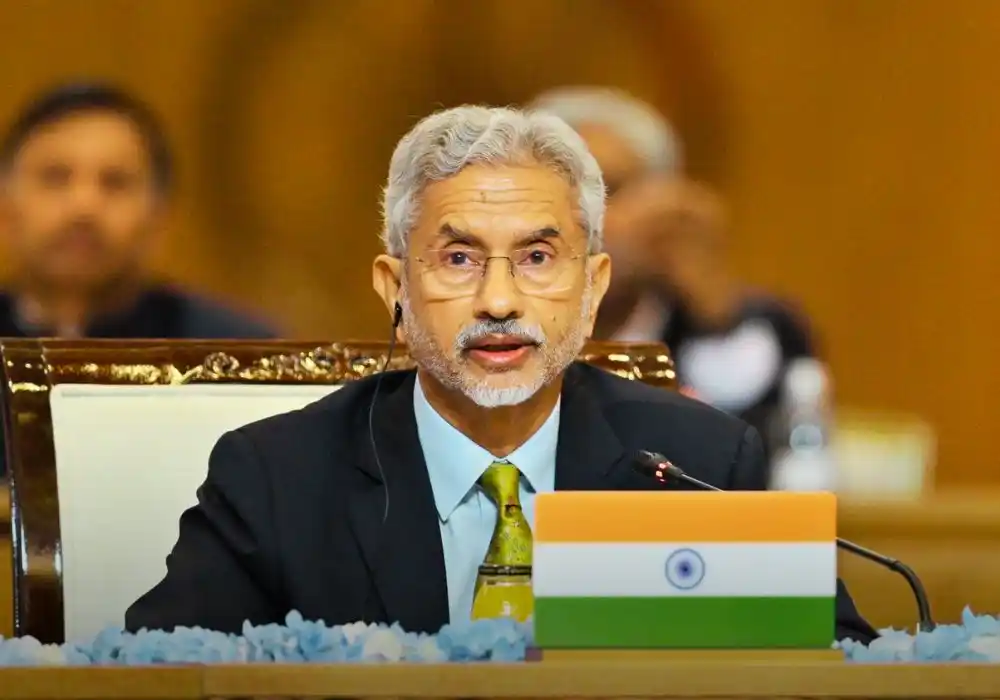
In the dynamic world of competitive examinations like UPSC, SSC, PSC, and various government exams, staying updated with current affairs is not just an advantage – it’s a necessity. Recent pronouncements by India’s External Affairs Minister, Dr. S. Jaishankar, offer invaluable insights into India’s strategic vision on the global stage. These aren’t just news headlines; they are critical data points that can shape your understanding of international relations, national security, and economic policy, making them prime material for your exam preparation. Let’s delve deep into his powerful statements and understand their profound implications. Challenge yourself with our daily news quiz for upsc and ssc to test your awareness.
Understanding India’s Economic Autonomy – A Global Blueprint
Dr. S. Jaishankar recently emphasized India’s unwavering commitment to maintaining its ‘freedom of choice’ amidst the unpredictable tides of global tariff changes and uncertain market access. This isn’t merely an economic statement; it’s a declaration of India’s strategic independence in shaping its financial and trade future. For aspirants, understanding this principle is crucial. Why is this important? Because in an interconnected yet often volatile global economy, a nation’s ability to chart its own course without external pressures defines its sovereignty and resilience. This stance reflects India’s proactive approach to safeguard its economic interests, promote self-reliance, and ensure stable growth – concepts that frequently appear in General Studies papers covering economics and international trade. This focus on economic independence is a key aspect of India’s foreign policy, directly impacting various sectors and offering rich content for examination questions.
Confronting the Menace of Terrorism – A Decades-Long Battle
Another cornerstone of Dr. Jaishankar’s address was India’s forthright confrontation of global terrorism. He unequivocally highlighted that India has faced the immense challenge of terrorism since its very independence, pointing to a neighboring country as an ‘epicentre’ of this global threat. What does this signify for your exam preparation? This statement underlines India’s consistent and firm foreign policy towards cross-border terrorism, a topic of immense importance for national security and international relations sections of competitive exams. Understanding India’s historical and ongoing struggle against terrorism, its diplomatic efforts to build global consensus on this issue, and the various dimensions of national security are absolutely vital for answering analytical questions and essay prompts in UPSC, SSC, and other administrative services examinations. This reiterates India’s unwavering commitment to combating this global scourge and its demand for accountability.
The Global Platform – UN General Assembly
These significant statements were made during his address at the general debate of the 80th session of the UN General Assembly. The ‘where’ and ‘when’ are not just factual details, but critical context. Why is the UN General Assembly such an important forum? It’s the primary deliberative, policymaking, and representative organ of the United Nations, offering a global stage for nations to articulate their positions on critical international issues. India’s strong voice at such a prominent international body showcases its growing influence and its commitment to multilateralism. Knowing the roles of international organizations like the UN, along with India’s participation and contributions, is fundamental knowledge for any serious competitive exam aspirant, often appearing in static general knowledge and current affairs quizzes.
Why These Insights are Indispensable for Your Exams
For those aiming for success in UPSC, SSC, PSC, NID, NIFT, and other competitive examinations, these pronouncements from India’s top diplomat are not just news, but rich source material. They touch upon core subjects like International Relations (IR), Indian Economy, National Security, and Polity. Questions on India’s foreign policy, its stand on global economic issues, its approach to international organizations, and its internal and external security challenges are regulars in both preliminary and main examinations. By understanding the ‘why’ and ‘how’ behind such statements, you equip yourself with the analytical depth required to tackle complex questions and write comprehensive answers, distinguishing yourself from other candidates. Integrate these insights into your daily news quiz, current affairs updates, and static general knowledge review to maximize your score. For consistent scoring in exams, these static gk notes are an invaluable tool.
Frequently Asked Questions (FAQs)
Q1: Why is EAM Jaishankar’s statement on India’s “freedom of choice” significant for economic policy?
A1: This statement signifies India’s commitment to strategic autonomy in its economic decisions, aiming to safeguard national interests against global market volatility and trade protectionism. It promotes self-reliance and diverse economic partnerships, crucial for sustained growth and resilience in a dynamic global environment.
Q2: How does India’s stance on terrorism, as articulated at the UN, relate to its foreign policy objectives?
A2: India’s firm stance on terrorism, highlighting its origins from a neighboring country, reflects a core foreign policy objective: to garner international support for combating cross-border terrorism and ensure national security. It emphasizes a zero-tolerance approach and calls for global cooperation to hold perpetrators accountable.
Q3: In which sections of competitive exams are topics like the UN General Assembly and India’s global role typically covered?
A3: These topics are primarily covered under International Relations (IR), Current Affairs, and General Knowledge sections for exams like UPSC, SSC, and PSC. Questions often relate to the functions of international organizations, India’s foreign policy initiatives, and its impact on global issues.
Q4: What is the primary purpose of India making such strong statements at the UN General Assembly?
A4: India uses the UN General Assembly as a crucial global platform to assert its sovereignty, communicate its foreign policy priorities, advocate for its national interests, and influence international discourse on critical issues like economic independence, global security, and combating terrorism. It is a key forum for showcasing India’s multilateral engagement.
Q5: Besides current affairs, how can understanding these statements benefit me in my exam preparation?
A5: Beyond direct current affairs questions, these statements help build a strong foundation for analytical essay writing, understanding complex geopolitical scenarios, and linking various static general knowledge topics with contemporary developments in subjects like polity, economy, and national security, thereby enhancing your overall comprehension and answer-writing skills.





