
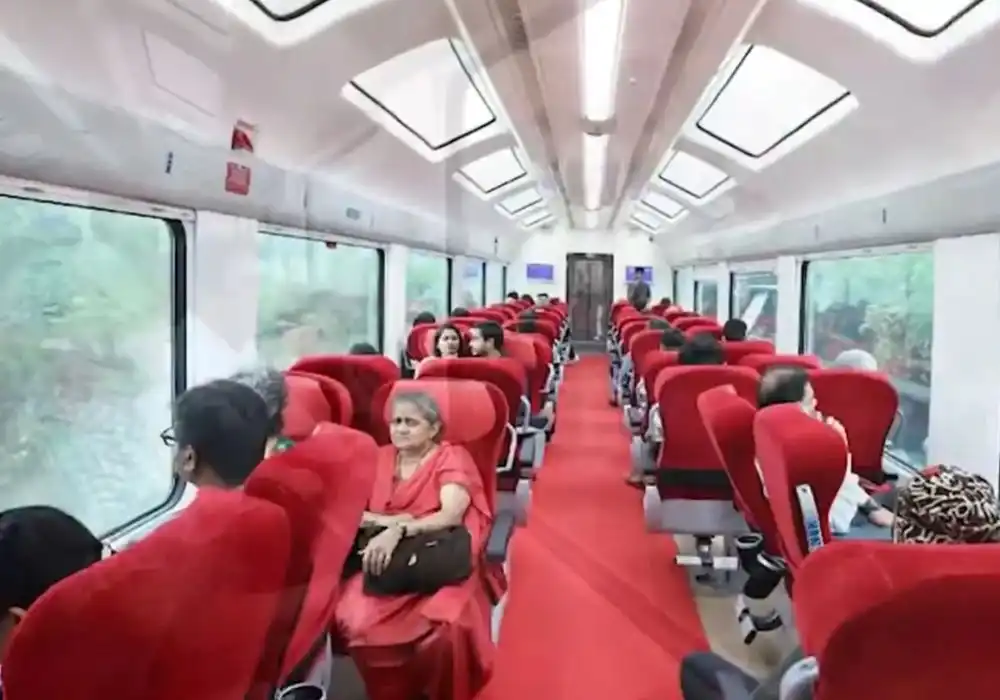
The Pulse of a Nation: Indian Railways and Transformative Growth
Indian Railways, often called the lifeline of the nation, is undergoing an unprecedented transformation. From connecting remote villages to bustling metropolises, its evolution is a testament to India’s commitment to modern infrastructure and enhanced connectivity. In this era of rapid development, understanding key government initiatives like the Amrit Bharat Express and the Amrit Bharat Station Scheme is not just about keeping up with current affairs, but also about grasping vital general knowledge crucial for competitive examinations such as UPSC, SSC, PSC, and other government recruitment tests. These projects signify a strategic leap in making rail travel more accessible, efficient, and comfortable for millions.
The Amrit Bharat Express: A New Era of Affordable Comfort
Recently, Prime Minister Narendra Modi virtually flagged off the Amrit Bharat Express, a significant step in enhancing India’s railway network. While the specific mention of Gujarat’s first Amrit Bharat Express between Berhampur in Odisha and Udhna in Surat, Gujarat, highlights regional progress, the vision behind this train extends nationwide.
What is the Amrit Bharat Express? This innovative train service is designed to offer an improved non-air-conditioned travel experience for passengers. Unlike its faster, AC-focused counterpart, Vande Bharat, the Amrit Bharat Express focuses on providing modern amenities and a superior journey for the general class, making long-distance travel more comfortable and affordable for a larger segment of the population. It primarily uses LHB (Linke Hofmann Busch) coaches, known for their safety and comfort, and operates with a “push-pull” configuration, allowing for quicker acceleration and deceleration, thereby reducing travel time. The core objective is to bridge the gap in comfortable, swift, and budget-friendly connectivity across various regions, bolstering socio-economic integration and ease of travel.
Amrit Bharat Station Scheme: Revitalizing Railway Hubs
Parallel to the introduction of modern train services, the government is also focused on transforming railway stations themselves through the ambitious Amrit Bharat Station Scheme. Union Railway Minister Ashwini Vaishnaw has emphasized that stations like Udhna in Surat are being renovated under this scheme, forming part of the world’s largest railway modernization effort.
Why is this scheme important? The Amrit Bharat Station Scheme aims to redevelop over 1300 railway stations across the country, transforming them into modern, state-of-the-art facilities. The goals are comprehensive: enhancing passenger amenities, ensuring better accessibility, integrating stations with city development, and creating a pleasant and efficient travel environment. This involves improving waiting areas, platforms, parking facilities, sanitation, lighting, and introducing modern conveniences like escalators, lifts, and integrated public transport systems. The ‘Amrit’ in its name signifies the nation’s progress during the Amrit Kaal, embodying a vision for a New India with world-class infrastructure. This initiative is not just about aesthetics; it’s about making railway stations vibrant hubs that serve as gateways to development and tourism, significantly impacting local economies and urban planning.
Broader Implications for India’s Future
These railway initiatives are more than just transport projects; they are pillars of India’s larger infrastructure development strategy. They embody the ‘Make in India’ spirit through indigenous manufacturing of coaches and components, contribute to sustainable development by promoting efficient public transport, and drive economic growth by improving logistics and connectivity. For students preparing for competitive exams, understanding these interconnections is crucial. Questions related to government schemes, infrastructure development, economic policies, and current technological advancements in transport are frequently asked, making a comprehensive grasp of these topics indispensable for success. The holistic approach towards modernizing both the rolling stock and the fixed infrastructure reflects a commitment to a robust, future-ready railway system. Your preparation is incomplete without these daily exam-centric current events updates.
Frequently Asked Questions (FAQs)
Q1: What is the primary purpose of the Amrit Bharat Express?
A1: The primary purpose of the Amrit Bharat Express is to provide a modern, comfortable, and affordable non-air-conditioned travel experience for long-distance passengers, enhancing connectivity and accessibility across various regions of India. It aims to offer a superior journey compared to conventional non-AC trains.
Q2: How does the Amrit Bharat Express differ from the Vande Bharat Express?
A2: While both are modern train services, the Amrit Bharat Express focuses on non-air-conditioned travel with LHB coaches and a push-pull locomotive configuration, targeting general class passengers seeking affordable comfort. The Vande Bharat Express, on the other hand, is a premium, high-speed, fully air-conditioned train service designed for quicker inter-city travel with executive class facilities.
Q3: What are the key features of the Amrit Bharat Station Scheme?
A3: The Amrit Bharat Station Scheme aims to redevelop over 1300 railway stations by improving passenger amenities, ensuring better accessibility (with lifts, escalators), integrating stations with urban development plans, enhancing cleanliness and aesthetics, and creating multimodal transport hubs for a superior travel experience.
Q4: How do these railway modernization projects benefit India’s economy and citizens?
A4: These projects boost India’s economy by creating jobs, promoting domestic manufacturing under ‘Make in India,’ improving logistics, and facilitating tourism. For citizens, they offer safer, more comfortable, faster, and more affordable travel options, thereby enhancing overall quality of life and regional connectivity.
Q5: Why is it important for competitive exam aspirants to study government railway initiatives like these?
A5: For competitive exam aspirants, studying these initiatives is crucial because they form a significant part of Current Affairs, General Knowledge, and Government Schemes topics. Questions on infrastructure development, economic policy, sustainable transport, and major national projects are frequently asked in exams like UPSC, SSC, PSC, and other government recruitment tests, making this knowledge directly relevant for scoring well.





