
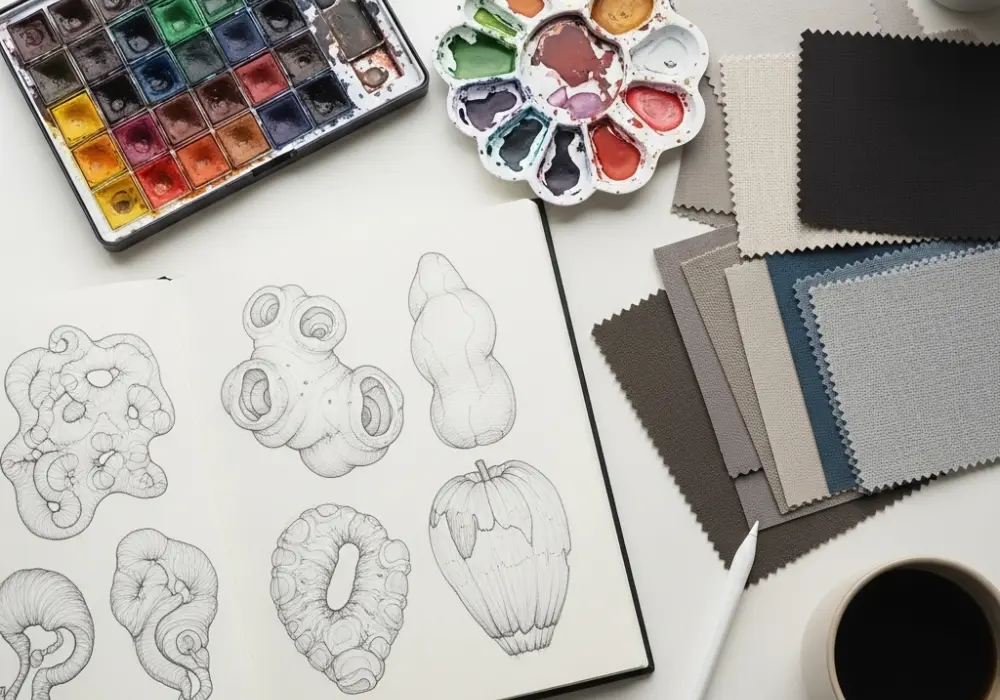
Introduction: Breaking the Myth of Prior Experience
Securing a seat in premier design institutes like the National Institute of Fashion Technology (NIFT) and the National Institute of Design (NID) is a dream for thousands of creative minds. However, many aspirants feel intimidated by the requirement of a design portfolio, mistakenly believing it requires years of professional training or prior design experience. The truth is, design schools are not looking for finished professionals; they are looking for raw talent, curiosity, and a unique perspective. Creating a standout design portfolio for NIFT and NID is entirely possible for beginners if they follow a structured approach that highlights their creative thinking process and observational skills.
What is a Design Portfolio?
A design portfolio is a curated collection of your best creative work that demonstrates your skills, personality, and potential as a designer. For NID and NIFT, the portfolio is often evaluated during the Situation Test or Personal Interview rounds. It is your visual resume. It tells the story of how you view the world, how you solve problems, and how you experiment with different materials. While NIFT focuses more on aesthetic sense and material handling, NID places a heavy emphasis on ideation and the ‘why’ behind your creation.
Key Differences in Portfolio Focus
To help you tailor your work, here is a comparison of what these top-tier institutes generally look for in a candidate’s portfolio during the admission process:
| Feature | NIFT Focus | NID Focus |
|---|---|---|
| Core Emphasis | Aesthetics, Style, and Material Skill | Conceptual Thinking and Problem Solving |
| Visual Language | Color harmony and trendy compositions | Observational drawing and storyboards |
| Technical Skills | Garment construction or accessory ideas | Product design and user interaction |
| Process Documentation | Medium Importance | Very High Importance |
Step-by-Step Guide to Building Your Portfolio from Scratch
1. Start with Observational Drawing
The foundation of any great portfolio is the ability to observe. Spend time sketching everyday objects—a crushed soda can, your grandmother’s spectacles, or the way shadows fall on your balcony. Use different mediums like charcoal, graphite, and ink. These sketches prove that you have an eye for detail, which is a non-negotiable trait for any designer. Do not worry about perfection; focus on capturing the essence of the subject.
2. Showcase the Creative Process
One of the biggest mistakes beginners make is only showing the final product. NID and NIFT panels want to see your ‘Design Journey’. For every project, include your initial brain-dump, rough doodles, failed attempts, and the final refined piece. This demonstrates your persistence and how you refine an idea from a vague concept to a tangible design. If you are preparing for the latest pattern of exams, documenting your process is essential for high scores.
3. Experiment with Material Handling
Since the Situation Test at NIFT involves working with various materials like wire, clay, and paper, your portfolio should reflect your comfort with three-dimensional forms. Create small models or sculptures using unconventional materials like eggshells, toothpicks, or recycled plastic. Photograph these from multiple angles to include in your portfolio. This shows you are not just a 2D artist but a 3D thinker.
4. Incorporate Storytelling
Design is a form of communication. Every piece in your portfolio should have a narrative. Perhaps a series of photographs you took during a local festival or a comic strip about a social issue. Storytelling makes your portfolio memorable and gives the interviewers a glimpse into your values and interests. At myentrance.in, we emphasize storytelling in our mock tests to ensure you stand out during the interview round.
Common Mistakes to Avoid
- Copying Online Designs: Never include work that is a direct copy of Pinterest or Instagram. Plagiarism is the quickest way to get rejected.
- Overcrowding: Quality over quantity is the golden rule. Ten exceptional pieces are better than thirty mediocre ones.
- Lack of Variety: Avoid showing only one type of work. If you only have sketches of dresses, it suggests a narrow vision. Include photography, typography, or digital art.
- Poor Presentation: Ensure your portfolio is clean, neatly organized, and well-lit if digital. Presentation reflects your professional discipline.
Leveraging Mock Tests for Portfolio Success
Building a portfolio is only one part of the battle. To gain the confidence needed for the interview and the creative exams, you must practice under timed conditions. Using the mock tests available on myentrance.in can help you sharpen your visualization skills. Our mock tests are designed based on the current syllabus and latest pattern, helping you understand the types of questions that might trigger your next portfolio project. Whether it is NIFT GAT or NID DAT, consistent practice is the key to unlocking your creative potential.
Structuring Your Portfolio: Digital vs. Physical
In the current academic landscape, having both a digital and a physical portfolio is advantageous. A physical portfolio (a large folder or sketchbook) is great for face-to-face interviews, allowing the panel to touch your work. A digital portfolio (a PDF or a website link) is essential for online submissions. Ensure your digital files are compressed but high-resolution so that the details of your work are clearly visible on a screen.
Frequently Asked Questions (FAQ)
How many works should be in a beginner portfolio?
For NIFT and NID, aim for 12 to 15 high-quality projects. Each project can consist of multiple sketches or process photos. It is better to have a few deep explorations than many shallow ones.
Do I need to be an expert at Photoshop or Illustrator?
No, prior digital experience is not mandatory. While digital skills are a plus, hand-drawn sketches and physical models carry immense weight. You can always learn software once you join the course.
Can I include hobby-related work like photography or craft?
Absolutely! Anything that demonstrates creativity—be it embroidery, mobile photography, or even creative writing—can be part of your portfolio if it showcases a design-oriented mindset.
Is it necessary to attend coaching for the portfolio?
While coaching can provide direction, many students succeed through self-study and online resources. Utilizing platforms like myentrance.in for mock tests and guidance can provide the competitive edge you need without expensive coaching fees.
Should I include my school art projects?
Only include them if they show significant creative merit and align with the design thinking process. Avoid generic school assignments unless you have added a unique, personal twist to them.
Ready to Ace Your NIFT & NID Exams?
Creating a portfolio is a journey of self-discovery. If you feel overwhelmed or need expert feedback on your work, we are here to help! Get access to the most comprehensive mock tests, study materials, and personalized guidance for upcoming design entrance exams.
Don’t let your doubts hold you back. Reach out to our experts for a free consultation or to get started with our latest mock test series today!
💬 Chat with our Experts on WhatsApp (+91 9526806124)




