
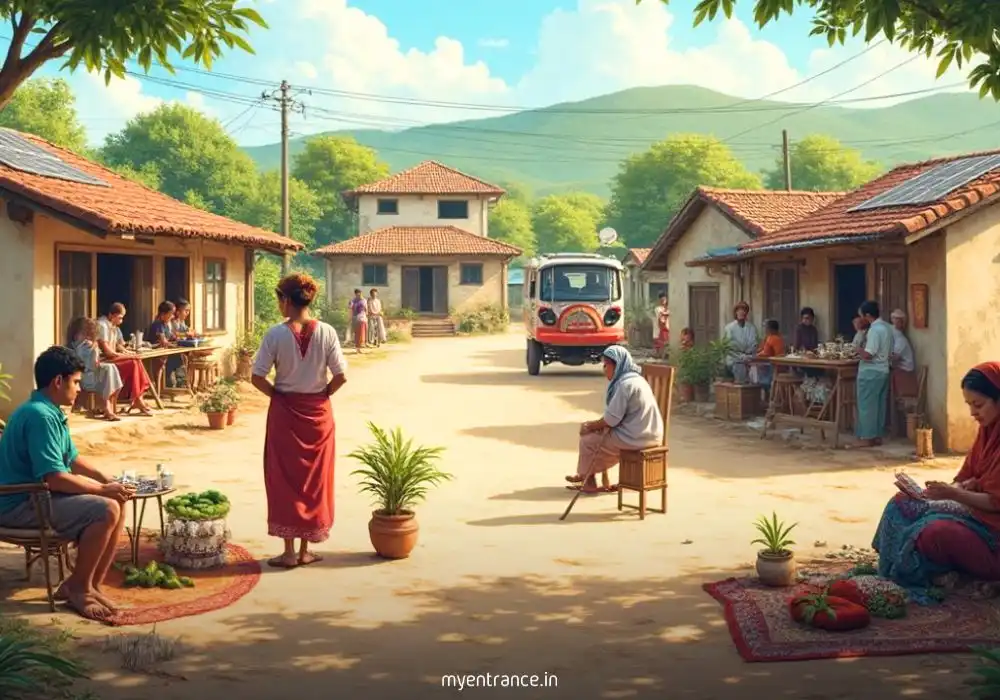
While the image of a farmer tilling fields remains iconic, a vibrant and increasingly crucial economic landscape thrives beyond traditional agriculture in rural India. This diversification into non-farm activities provides an indispensable lifeline, fostering economic resilience and offering sustainable livelihoods to millions across countless villages. Understanding this dynamic shift is paramount for aspirants preparing for competitive examinations like UPSC, SSC, PSC, NID, NIFT, and other government roles, as it forms a core component of rural economy, development, and social studies.
The Diverse Spectrum of Rural Non-Farm Pursuits
The rural non-farm sector encompasses a wide array of activities that extend far beyond crop cultivation, playing a pivotal role in absorbing surplus labour and diversifying income streams. This includes not just traditional primary sector activities like animal husbandry (dairy, poultry, goat rearing), fishing, forestry, and mining, but also a significant presence of secondary and tertiary sectors tailored to the rural context. Think of the intricate art of rural handicrafts, small-scale manufacturing units processing agricultural produce or creating consumer goods, construction activities, local repair services, transportation, retail trade, and various community and personal services. These enterprises, often small or micro in scale, form the socio-economic backbone for a substantial portion of the rural population, particularly for landless labourers, marginal farmers seeking supplemental income, and women entrepreneurs. This resource covers all important static general knowledge topics that are frequently asked.
Catalysts for Rural Resilience and Growth
The proliferation of non-farm activities acts as a powerful catalyst for rural development and poverty alleviation. Firstly, it offers vital income diversification, mitigating the inherent risks associated with rain-fed agriculture, which is often vulnerable to erratic monsoons, market price fluctuations, and climate change impacts. By engaging in multiple economic pursuits, households achieve greater financial stability. Secondly, these sectors are significant employment generators, absorbing the burgeoning rural workforce that agriculture alone cannot sustain, especially during off-seasons. This is crucial for reducing disguised unemployment and increasing overall productivity.
Furthermore, non-farm activities facilitate value addition to agricultural produce, transforming raw materials into processed goods, thereby fetching better prices and creating backward and forward linkages within the local economy. They also empower marginalized communities, including women, by providing opportunities for self-employment and skill development, leading to enhanced social status and economic independence. The growth of these sectors often correlates with improved infrastructure development, better access to education and healthcare, and a general upliftment in the quality of life, effectively slowing down distress migration to urban centres.
Navigating the Hurdles: Challenges and Roadblocks
Despite their immense potential, non-farm sectors in rural India face a myriad of challenges that impede their full realization. A significant obstacle is the limited access to formal credit and financial services, forcing many small enterprises to rely on informal, high-interest sources. Coupled with this, inadequate infrastructure, including unreliable electricity, poor road connectivity, and limited access to modern communication technologies, constrains production, market access, and operational efficiency.
Skill deficits among the rural workforce pose another major hurdle, as traditional skills may not align with the demands of modern industries or value-added services. Market access and linkages are often weak, preventing rural producers from reaching broader consumer bases and realizing fair prices for their goods. Issues such as intense competition from organized sectors, lack of technological upgradation, and sometimes restrictive policy environments further complicate their growth trajectory. Overcoming these challenges requires concerted efforts from both government and private stakeholders.
Policy Support and Future Trajectories
Recognizing the strategic importance of the non-farm sector, various government initiatives have been launched to foster its growth. Schemes like the Mahatma Gandhi National Rural Employment Guarantee Act (MGNREGA), while primarily focused on wage employment, often includes works that indirectly support rural non-farm infrastructure. More directly, the National Rural Livelihoods Mission (NRLM) promotes self-help groups (SHGs) and provides financial assistance, skill training, and market linkages for diverse non-farm activities. Schemes for promoting Micro, Small, and Medium Enterprises (MSMEs), credit facilities through NABARD, and specific programs for handicraft promotion aim to bolster this crucial economic segment.
The future of rural India’s development is intricately linked to the robust expansion and formalization of its non-farm sectors. A holistic approach focusing on enhancing financial inclusion, investing in skill development aligned with market demands, building resilient infrastructure, fostering entrepreneurship, and creating robust market linkages will be vital. By empowering these diverse economic activities, India can not only sustain rural livelihoods but also unlock unprecedented potential for inclusive and equitable growth across its vast rural landscape.
Sample Questions and Answers for Competitive Exams
Here are five questions designed to test your understanding of non-farm activities in rural India, reflecting the type of questions found in competitive examinations:
1. Question: Which of the following is most accurately categorized as a non-farm activity aimed at sustaining rural livelihoods, while also being part of the primary economic sector?
* A) Small-scale textile manufacturing in a village
* B) Rural tourism operations (homestays, guided tours)
* C) Dairy farming and milk processing at a village cooperative
* D) Construction of rural roads under a government scheme
* Answer: C
* Why it’s important for exams: This question tests your precise understanding of economic sector classifications (primary, secondary, tertiary) and how they apply to specific non-farm activities in a rural context. Many competitive exams, especially UPSC and state PSCs, often include such nuanced definitional questions. Explore all exam updates, quizzes, and study materials on Myentrance – Your Complete Exam Preparation Portal
2. Question: A primary benefit of promoting non-farm activities in rural India, particularly for marginal farmers, is:
* A) Increasing their landholding size
* B) Reducing their dependency on monsoon-dependent agriculture
* C) Encouraging large-scale industrial migration to rural areas
* D) Decreasing the overall food production capacity of the nation
* Answer: B
* Why it’s important for exams: This question assesses your comprehension of the core economic advantages of diversification. Understanding risk mitigation and income stability is crucial for topics related to rural development and agrarian distress in exams like SSC and UPSC.
3. Question: The ‘National Rural Livelihoods Mission’ (NRLM) primarily aims to empower rural households by:
* A) Providing direct cash transfers for agricultural inputs
* B) Promoting self-help groups (SHGs) for financial inclusion and skill development in both farm and non-farm sectors
* C) Mandating their participation in public works programs only
* D) Subsidizing large-scale industrial units in rural areas
* Answer: B
* Why it’s important for exams: This question tests your knowledge of specific government schemes and their objectives. Knowing the mandate and impact of key social and economic programs is essential for General Awareness and Public Administration sections of various exams.
4. Question: Consider the following statements regarding challenges faced by the rural non-farm sector in India:
1. Limited access to formal credit and financial services.
2. Inadequate infrastructure, including reliable electricity and road connectivity.
3. Surplus of highly skilled labour aligned with modern industrial demands.
* Which of the statements given above are correct?
* A) 1 and 2 only
* B) 2 and 3 only
* C) 1, 2 and 3
* D) 1 only
* Answer: A
* Why it’s important for exams: This multiple-statement question format is common in UPSC and PSC exams, requiring critical evaluation of various aspects. It checks your comprehensive understanding of the obstacles to rural development.
5. Question: Which of the following non-farm activities typically plays a significant role in empowering rural women and preserving traditional cultural heritage?
* A) Mining and quarrying
* B) Transportation and logistics
* C) Handicrafts, handlooms, and allied cottage industries
* D) Large-scale food processing factories
* Answer: C
* Why it’s important for exams: This question focuses on the social and cultural dimensions of economic activities. Understanding the role of specific sectors in women’s empowerment, cultural preservation, and sustainable livelihoods is relevant for both Mains descriptive answers and objective questions.





