
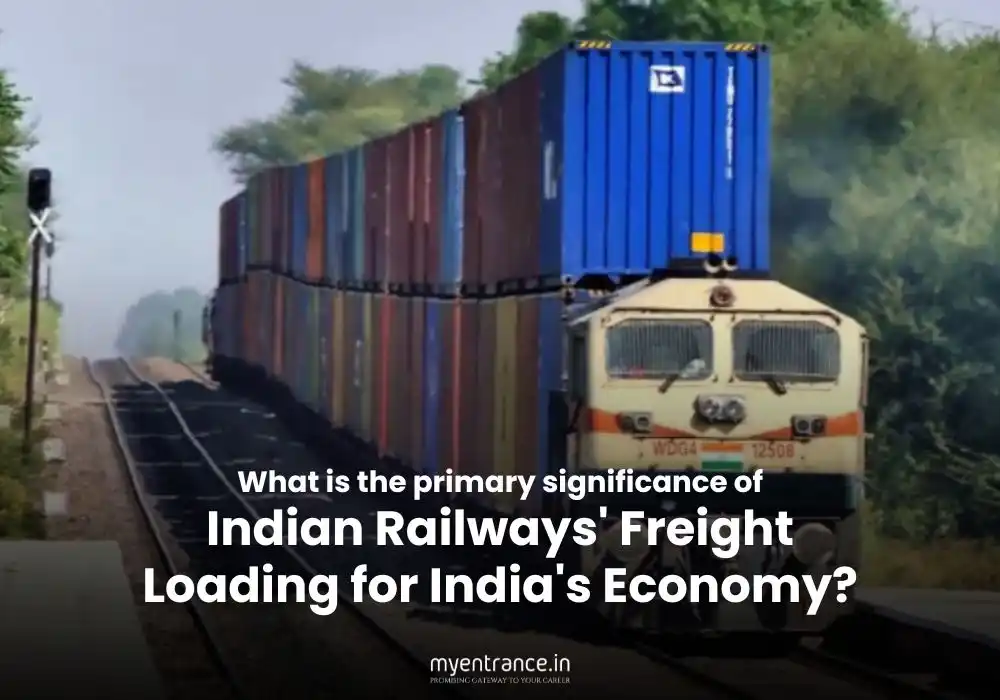
Indian Railways, often considered the backbone of the nation, plays an indispensable role in India’s economic progress, far beyond merely ferrying passengers. Its extensive freight operations are a critical indicator of industrial activity and overall economic health, subtly shaping supply chains and powering key sectors. This year’s impressive achievement of 1020 million tonnes in freight loading highlights the sheer scale and strategic importance of these operations, with a few crucial commodities consistently leading the charge. Understanding this intricate network is vital for anyone keen on comprehending India’s economic landscape, especially for aspirants preparing for competitive examinations.
Understanding Freight Loading: A Pillar of India’s Economy
What is Freight Loading?
Freight loading refers to the transportation of goods, raw materials, and finished products by rail. It’s distinct from passenger services and is primarily focused on bulk movement across long distances. This colossal task involves a complex interplay of infrastructure, rolling stock, operational efficiency, and strategic planning by the Ministry of Railways. The reported figure of 1020 million tonnes signifies the cumulative weight of all commodities transported by Indian Railways within a specific period, reflecting intense industrial activity.
Why is Freight Loading Crucial for India?
The significance of freight loading extends deeply into the nation’s economic fabric. Firstly, it acts as a primary artery for industrial supply chains, ensuring that raw materials reach factories and finished goods reach markets efficiently. This directly impacts production costs and the competitiveness of Indian industries. Secondly, rail transport is significantly more cost-effective and environmentally friendly for bulk goods compared to road transport, reducing logistics costs for businesses and contributing to lower carbon emissions. Thirdly, robust freight movement is a direct reflection of economic growth and demand. High freight volumes suggest a booming manufacturing sector, increased consumption, and significant infrastructure development, making it a key economic indicator. Finally, it supports the government’s ambitious initiatives like ‘Make in India’ and ‘Gati Shakti’ by providing essential logistical support.
The Titans of Transport: Coal, Iron Ore, and Cement
The consistently strong daily loading figures, averaging around 4.4 million tonnes, are predominantly driven by a triumvirate of commodities: coal, iron ore, and cement. These materials are not just goods; they are fundamental building blocks of India’s energy, manufacturing, and infrastructure sectors.
Coal’s Dominance: Powering the Nation
Coal stands as the undisputed leader in freight loading, accounting for over 500 million tonnes of the total. This overwhelming contribution underscores India’s heavy reliance on thermal power plants for its energy needs. Coal is transported from mining regions to power generation units across the country, ensuring a steady supply of electricity that fuels homes, industries, and agricultural operations. The sheer volume moved highlights the immense energy demands of a growing economy and the critical role Indian Railways plays in meeting these demands, especially for remote power stations far from coalfields.
Iron Ore: Fueling India’s Steel Industry
Following coal, iron ore contributes significantly, with 115 million tonnes transported. Iron ore is the primary raw material for steel production, a foundational industry crucial for infrastructure development, manufacturing, and automotive sectors. Indian Railways facilitates the movement of iron ore from mines, primarily in states like Odisha, Chhattisgarh, and Karnataka, to steel plants located often hundreds or thousands of kilometers away. The efficient transport of iron ore is thus directly linked to the health and expansion of India’s vital steel industry, a key driver of economic development.
Cement: The Backbone of Infrastructure
Cement, with 92 million tonnes loaded, occupies the third spot, signifying the robust pace of infrastructure development in India. From highways and bridges to housing projects and commercial buildings, cement is an indispensable component in construction. Indian Railways transports cement from manufacturing plants to distribution hubs and construction sites nationwide. The high volume of cement freight indicates substantial ongoing and planned infrastructure projects, reflecting government investment in national development and a thriving real estate sector.
Indian Railways: The Engine of Growth and Future Prospects
The consistent performance of Indian Railways in freight loading is a testament to its operational resilience and strategic importance. The Ministry of Railways continually invests in upgrading its network, increasing wagon capacity, and implementing modern signaling systems to enhance efficiency and speed. Initiatives like the Dedicated Freight Corridors (DFCs) are specifically designed to separate freight and passenger traffic, leading to faster transit times, higher load capacities, and reduced congestion, which will further boost freight volumes and efficiency in the coming years. These strategic developments are crucial for India to maintain its economic momentum and integrate seamlessly into global supply chains.
Broader Implications for India’s Economy and Competitive Exams
For students preparing for competitive exams like UPSC, SSC, or PSC, understanding Indian Railways’ freight operations goes beyond mere facts and figures. It offers crucial insights into:
* Economic Indicators: How freight volumes serve as a proxy for industrial output, energy consumption, and infrastructure growth.
* Government Policy: The impact of initiatives like ‘Make in India’ and ‘National Infrastructure Pipeline’ on logistics and transportation.
* Sectoral Linkages: The interconnectedness of the energy, steel, and construction sectors, and their reliance on efficient transport.
* Infrastructure Development: The role of projects like DFCs in enhancing national capacity and competitiveness.
* Environmental Considerations: The shift towards more sustainable modes of transport for bulk goods.
This holistic perspective helps aspirants connect current affairs with broader economic and geographical concepts, providing a richer understanding essential for success in competitive examinations.
Frequently Asked Questions (FAQs)
Q1: What is the primary significance of Indian Railways’ freight loading for India’s economy?
A1: Indian Railways’ freight loading is crucial as it underpins industrial supply chains, ensuring raw materials reach factories and finished goods reach markets efficiently. It serves as a key economic indicator, reflecting industrial output, infrastructure development, and overall economic health, while also offering a cost-effective and environmentally friendlier mode of transport for bulk goods.
Q2: Why does coal dominate Indian Railways’ freight loading, contributing over 500 million tonnes?
A2: Coal dominates freight loading primarily because India heavily relies on thermal power plants for its electricity generation. Indian Railways is responsible for transporting vast quantities of coal from mining regions to power plants across the country, ensuring a continuous supply of energy for industries, homes, and agriculture.
Q3: How do iron ore and cement freight volumes reflect India’s industrial and infrastructure growth?
A3: High volumes of iron ore freight indicate a robust and expanding steel industry, which is fundamental for manufacturing and infrastructure. Similarly, significant cement loading signifies substantial ongoing construction and infrastructure development projects, such as roads, buildings, and bridges, directly reflecting national growth and investment.
Q4: What are Dedicated Freight Corridors (DFCs), and how will they impact Indian Railways’ freight operations?
A4: Dedicated Freight Corridors (DFCs) are a network of high-speed, high-capacity railway lines built exclusively for freight trains. They are designed to segregate freight traffic from passenger traffic, which will lead to faster transit times, increased carrying capacity, reduced congestion, and overall enhanced efficiency and reliability of freight operations, boosting economic activity.
Q5: How can understanding Indian Railways’ freight data be beneficial for competitive exam aspirants?
A5: For competitive exam aspirants, understanding freight data provides valuable insights into current economic trends, government policies related to infrastructure and industry, and the interconnectedness of various sectors. It helps in analyzing India’s energy landscape, industrial growth, and logistical challenges, enabling a more comprehensive and informed approach to questions on economics, geography, and current affairs.





