Translate Language
How Does Part VI of the Indian Constitution Define State Governance?
Part VI of the Indian Constitution forms the bedrock of state governance, defining the executive, legislative, and judicial machinery. It establishes a parliamentary system mirroring the Centre while safeguarding federal principles. Mastering these articles is non-negotiable for aspirants targeting UPSC, SSC, PSC, NID, or NIFT exams.
The Foundation of State Governance
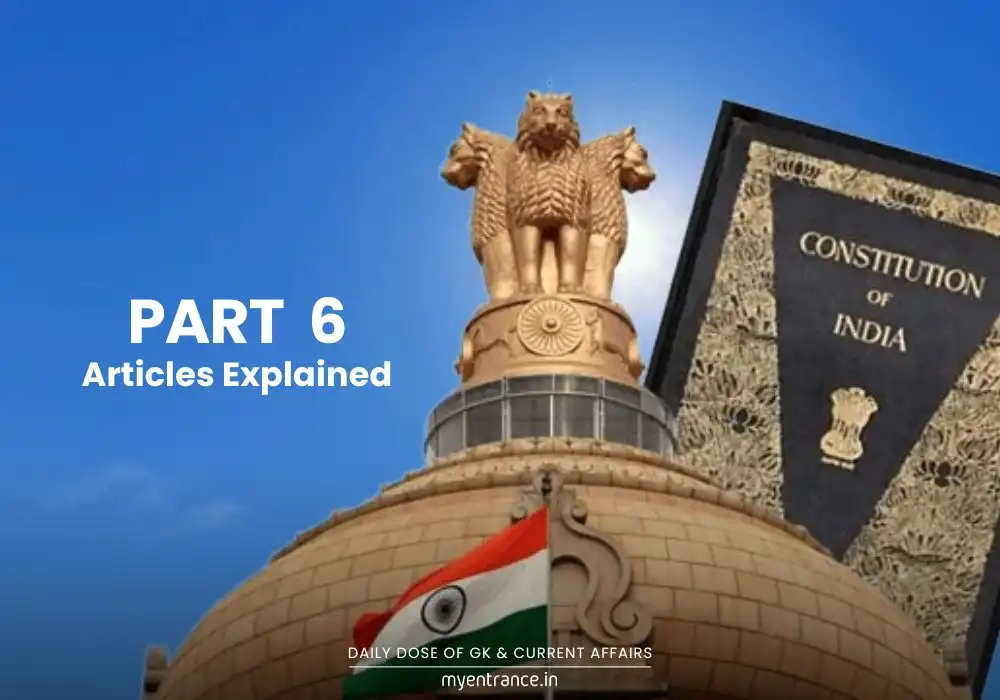
Part VI (Articles 152–237) structures India’s state administration, ensuring alignment with the Constitution’s federal spirit. It delineates three pillars—the Executive, State Legislature, and Judiciary—creating checks and balances. This section is pivotal for exams like the SSC and Kerala PSC, where questions on state autonomy frequently surface./
Part VI of the Indian Constitution: The Executive Machinery
Articles 153–167 establish the Governor as the state’s constitutional head, appointed by the President (Article 155). The Governor operates on the aid and advice of the Council of Ministers (Article 163), mirroring the Centre’s cabinet system. Key powers include ordinance promulgation (Article 213), pardoning sentences (Article 161), and overseeing state executive functions (Article 166). Understanding these nuances aids in tackling interview questions for exams like the NIFT GAT or NID DAT.
State Legislature: Composition and Functions
Chapters III (Articles 168–212) detail the bicameral/unicameral legislature framework. The Legislative Assembly (Vidhan Sabha) and Council (Vidhan Parishad) handle lawmaking, financial oversight (Articles 202–207), and enforce accountability via sessions and privileges (Articles 174, 194). Notably, Money Bills originate solely in the Assembly (Article 198). For daily reinforcement, integrate our Daily News Quiz into your study routine.
Judicial Hierarchy in States
Articles 214–231 establish High Courts as guardians of justice, wielding writ jurisdiction (Article 226) and supervisory control over subordinate courts (Article 227). Judges are appointed by the President (Article 217), ensuring independence. Subordinate courts (Articles 233–237) handle district-level disputes, forming the judiciary’s backbone. Aspirants should cross-reference this with Static GK resources on judicial structures.
Why Part VI Matters in Competitive Exams
Questions on the Governor’s discretionary powers, High Court jurisdiction, or legislative procedures frequently feature in SSC/UPSC prelims and mains. For instance, Article 200 (gubernatorial assent to bills) and Article 226 (writ powers) are hot topics. Supplement your prep with Daily Current Affairs to track recent constitutional debates.
Key Takeaways for Aspirants
Governor’s Role: Focus on discretionary powers (e.g., Article 163) and ordinance-making authority.
Legislative Procedures: Prioritize Money Bills (Articles 198–199) and gubernatorial assent (Article 200).
High Courts: Emphasize writ jurisdiction (Article 226) and judicial appointments.
Subordinate Courts: Note district judge recruitment (Article 233) and state control mechanisms (Article 235).
For last-minute revisions, leverage our structured Exam Preparation Guide. Part VI isn’t just rote learning—it’s a dynamic blueprint for India’s governance. Stay curious, and connect concepts to contemporary issues!
Read More Topics