
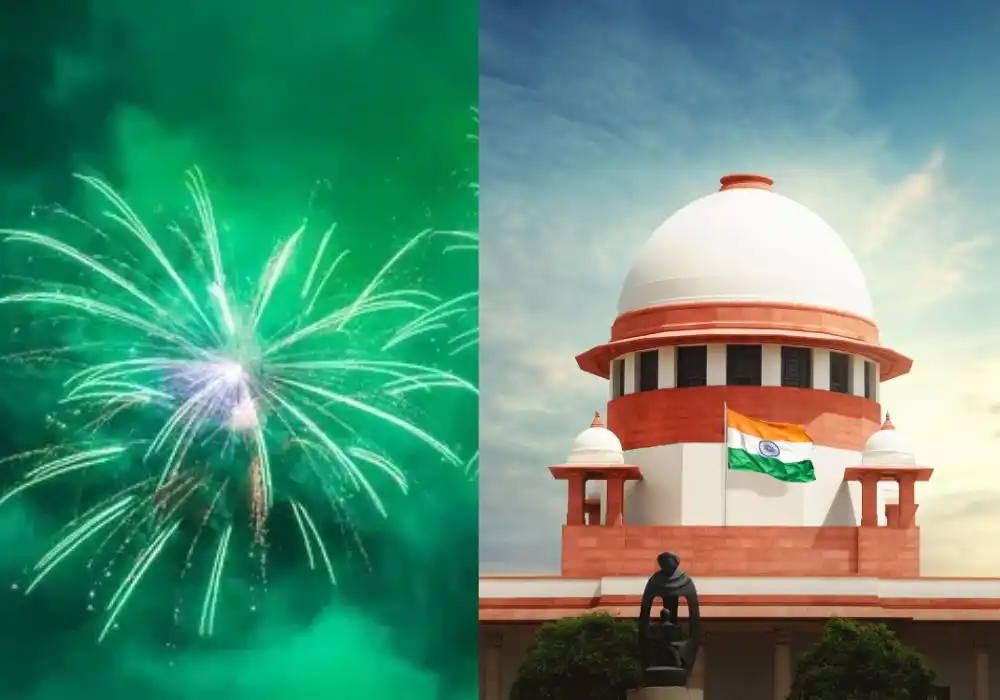
Recently, a significant development emerged from the nation’s capital that perfectly blends environmental concerns, legal interpretations, and public sentiment: the Supreme Court’s decision regarding green firecrackers in Delhi. Understanding the nuances of such rulings is crucial for various sections of your general knowledge and current events papers.
The Verdict Unpacked: What Exactly Happened?
The Supreme Court of India recently issued a pivotal ruling, granting permission for the controlled use of ‘green firecrackers’ within the National Capital Region. This decision was met with immediate approval from the Delhi Government, whose Chief Minister, Rekha Gupta, publicly acknowledged the balanced approach it represents. The government views this as a respectful nod to the cultural traditions and festive spirit associated with celebrations like Diwali, while simultaneously upholding a commitment to environmental protection. This move seeks to navigate the complex challenge of allowing festivities without exacerbating pollution levels, particularly the dangerously high air quality indices often experienced during these periods in Delhi. This development highlights the ongoing judicial oversight in matters of public health and environment, a critical area for your polity and governance studies.
Why “Green” Matters: Understanding the Environmental Aspect
The term ‘green firecrackers’ isn’t just a label; it signifies a category of pyrotechnics designed to produce significantly less air and noise pollution compared to traditional ones. These crackers typically achieve this by using less harmful raw materials and reducing the emission of harmful particulates, sulfur dioxide, and nitrogen oxides. For competitive exams, understanding the science behind these reduced emissions – what chemicals are minimized or substituted – can be a relevant point for your environment and ecology sections. The context here is Delhi’s persistent struggle with air pollution, a topic frequently featured in environmental studies and current affairs sections of exams. The Supreme Court’s continuous intervention in environmental matters underscores the judiciary’s proactive role in enforcing environmental protection, a key concept for polity and governance sections.
Balancing Tradition and Ecology: A Policy Challenge
This Supreme Court decision exemplifies the delicate balance governments and legal bodies often strive to achieve between preserving cultural practices and addressing urgent environmental crises. The Delhi Government’s welcoming stance highlights its effort to find a middle ground, ensuring that public sentiments and festive enthusiasm are respected without completely abandoning environmental safeguards. Such policy decisions often involve trade-offs and are excellent case studies for UPSC Mains papers, especially in ethics, governance, and environmental policy. Aspirants should think critically about the ‘why’ behind such compromises and the long-term implications for public health and environmental sustainability. It showcases how policy is often a blend of legal directives, public opinion, and scientific evidence.
Frequently Asked Questions
Q1: What exactly are ‘green firecrackers’ and how do they differ from traditional ones?
A: Green firecrackers are an innovation designed to significantly reduce air and noise pollution. They differ from traditional ones by using less harmful raw materials, which results in a marked decrease in the emission of particulate matter, sulfur dioxide, and nitrogen oxides, making them a more environmentally conscious choice for celebrations.
Q2: Why did the Supreme Court intervene in regulating firecrackers, and what is its role?
A: The Supreme Court primarily intervened due to severe air pollution concerns, especially in regions like the National Capital Region, during festive seasons. Its involvement reflects the judiciary’s crucial role in upholding citizens’ fundamental right to a clean environment, acting as a guardian of constitutional principles when executive actions might be deemed insufficient.
Q3: How does this decision impact public celebrations and traditional festivals like Diwali?
A: This decision aims to strike a balance, allowing for the continuation of cherished festive traditions like Diwali celebrations while actively mitigating their environmental impact. By permitting green firecrackers, the court seeks to enable people to express their joy and uphold cultural practices, while simultaneously pushing for more sustainable and less polluting alternatives.
Q4: What has been the Delhi Government’s official response to this Supreme Court ruling?
A: The Delhi Government has publicly welcomed the Supreme Court’s decision. They have articulated that they view it as a balanced approach that respects both the public’s sentiments and the critical, pressing need for environmental protection, particularly in addressing the city’s notorious and challenging air pollution issues.
Q5: How is understanding this topic relevant for competitive exams such as UPSC, SSC, or PSC?
A: This topic is highly relevant for competitive exams as it encompasses multiple critical areas. It covers essential current affairs, intricate environmental policy, judicial activism (a key part of Polity), sustainable development (relevant for Economy and Environment sections), and can serve as strong foundational material for essay writing. Comprehending the ‘why’ and ‘how’ of such decisions provides comprehensive general knowledge crucial for scoring well across various examination segments.





