
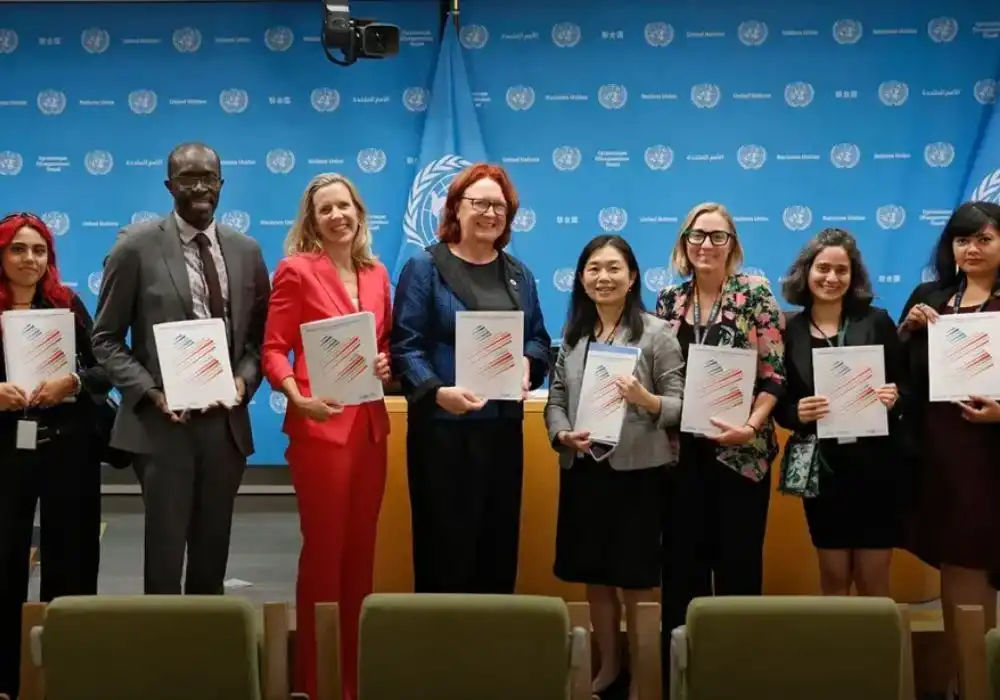
The landscape of competitive examinations, from the rigorous UPSC civil services to SSC and various state PSCs, demands more than rote memorization. It requires a deep understanding of current affairs, social issues, and global trends. Among the most vital documents for any serious aspirant is the annual “Gender Snapshot” report, with its 2025 edition serving as a critical benchmark. This comprehensive analysis provides an essential lens through which to view progress, challenges, and future directions in achieving global gender equality – a topic omnipresent in essay papers, general studies, and interviews. Streamline your IAS preparation with our intelligent UPSC smart preparation strategies.
What is the Gender Snapshot 2025 Report and Why Does it Matter?
The Gender Snapshot 2025 Report is a pivotal publication, jointly produced by UN Women and the United Nations Department of Economic and Social Affairs (UNDESA). Its primary objective is to meticulously track the world’s progress, or lack thereof, towards achieving gender equality, specifically focusing on Sustainable Development Goal 5 (SDG 5) and its interconnectedness with all other SDGs. Released annually, this report offers a comprehensive overview of how women and girls are faring across various crucial indicators worldwide.
For aspiring civil servants and government employees, understanding this report is paramount. It doesn’t just present data; it provides the *context* and *implications* of global gender disparities. Questions on social justice, economic development, human rights, and international relations frequently draw upon the themes and statistics highlighted in such reports. Knowing the key findings helps you articulate informed opinions, support arguments with credible data, and demonstrate a nuanced understanding of pressing global issues during your examinations.
Key Dimensions Explored in the Report
The Gender Snapshot 2025 dives deep into several critical areas, revealing both encouraging advancements and persistent gaps. These dimensions are not isolated; they represent a complex web of challenges and opportunities for gender equality.
Addressing Persistent Poverty and Economic Disparities: The report extensively examines how gender inequality fuels poverty, especially among women and girls. It highlights that progress in eradicating extreme poverty is significantly slower for women, and in many regions, the gap is widening. Factors like limited access to education, financial resources, land ownership, and decent work opportunities are rigorously analyzed. For your exams, this section is vital for understanding economic vulnerability and the need for gender-responsive economic policies.
The Unseen Burden of Unpaid Care Work: A significant focus of the report is on the disproportionate burden of unpaid care and domestic work shouldered by women globally. This work, from childcare to household chores, often goes unrecognized and unvalued in economic terms, yet it profoundly limits women’s participation in formal employment, education, and public life. Understanding this ‘invisible economy’ is crucial for questions on labor force participation, women’s empowerment, and social structures.
Confronting Gender-Based Violence: The Gender Snapshot 2025 provides stark data on the pervasive nature of gender-based violence (GBV), including domestic violence, sexual harassment, and harmful practices. It underscores the urgent need for robust legal frameworks, support services, and cultural shifts to ensure the safety and bodily autonomy of women and girls. This topic frequently appears in ethics papers, essay questions, and general awareness sections, demanding an understanding of its societal impact and proposed solutions.
Bridging the Leadership and Decision-Making Gap: The report scrutinizes women’s representation in positions of power, from political leadership in parliaments and local governments to executive roles in corporations and international organizations. Despite some gains, significant barriers remain, indicating that parity in leadership is still a distant goal. This aspect is crucial for questions on governance, democracy, and inclusive development, urging aspirants to analyze the factors hindering women’s advancement in public and private spheres.
Navigating the Digital Divide: In an increasingly digitized world, access to technology is a gateway to information, education, and economic opportunities. The Gender Snapshot 2025 sheds light on the ‘digital gender divide,’ showing how women and girls often have less access to the internet, mobile phones, and digital literacy skills compared to men. This disparity can exacerbate existing inequalities, and understanding its implications is key for discussing digital inclusion, skill development, and future-ready policies.
How to Leverage This Report for Your Exams
Understanding the Gender Snapshot 2025 Report is not merely about memorizing facts; it’s about developing an analytical framework. For Current Affairs, you can expect direct questions on the report’s findings or related government schemes. In Essay writing, the report provides concrete data and arguments to support your stand on social issues, women’s empowerment, or sustainable development. For Mains examinations in UPSC and PSC, this information is invaluable for answering questions in General Studies Papers I, II, and III, particularly on topics like social justice, governance, economy, and international relations. Furthermore, demonstrating knowledge of such global reports during an interview reflects a well-rounded and socially conscious candidate.
The insights from the Gender Snapshot 2025 offer a powerful foundation for understanding complex societal challenges and crafting well-reasoned responses. By focusing on its objectives, methodologies, and key findings, you equip yourself with the knowledge to excel in your competitive examinations and contribute meaningfully to a more equitable future. Master critical thinking and memory techniques with this cognitive exam preparation guide.
Frequently Asked Questions (FAQs)
Q1: What is the main purpose of the Gender Snapshot 2025 Report?
A1: The main purpose of the Gender Snapshot 2025 Report is to provide a comprehensive, data-driven analysis of global progress towards achieving gender equality, specifically tracking the implementation of Sustainable Development Goal 5 (SDG 5) and its links to other SDGs. It aims to highlight achievements, identify persistent gaps, and inform policy interventions worldwide.
Q2: Which UN bodies are primarily responsible for publishing this report?
A2: The Gender Snapshot 2025 Report is jointly produced and published by UN Women and the United Nations Department of Economic and Social Affairs (UNDESA). Their collaboration ensures a holistic and authoritative assessment of gender equality indicators.
Q3: How does the report relate to the Sustainable Development Goals (SDGs)?
A3: The report is fundamentally designed to track progress on SDG 5 (Gender Equality), which aims to achieve gender equality and empower all women and girls. However, it also extensively explores the interlinkages between gender equality and other SDGs, such as poverty eradication (SDG 1), quality education (SDG 4), decent work and economic growth (SDG 8), and reducing inequalities (SDG 10), demonstrating how gender equality is central to achieving the entire 2030 Agenda for Sustainable Development.
Q4: What are some of the key challenges highlighted in the Gender Snapshot 2025 Report concerning gender equality?
A4: The report consistently highlights several critical challenges, including persistent gender-based poverty and economic disparities, the heavy and often unrecognized burden of unpaid care and domestic work on women, the pervasive issue of gender-based violence, significant gaps in women’s leadership and decision-making roles, and the growing digital divide that limits women’s access to technology and opportunities.
Q5: Why is understanding the Gender Snapshot 2025 Report crucial for competitive exam aspirants?
A5: Understanding this report is crucial for aspirants because it provides vital data and insights for various exam sections. It directly informs current affairs, general knowledge, essay writing, and General Studies papers for exams like UPSC, SSC, and PSC, particularly on topics related to social justice, women’s empowerment, economic development, and international relations. It equips candidates with credible information to analyze complex issues and present well-informed answers.
Excerpt
Unlock critical insights into global gender equality with the Gender Snapshot 2025 Report, a vital resource for UPSC, SSC, and government exam aspirants. This comprehensive analysis from UN Women and UNDESA tracks progress on SDG 5, highlighting persistent challenges in poverty, unpaid care work, violence, leadership, and digital access. Master key findings to ace current affairs, essays, and general studies by understanding why this report is indispensable for your competitive exam preparation.





