
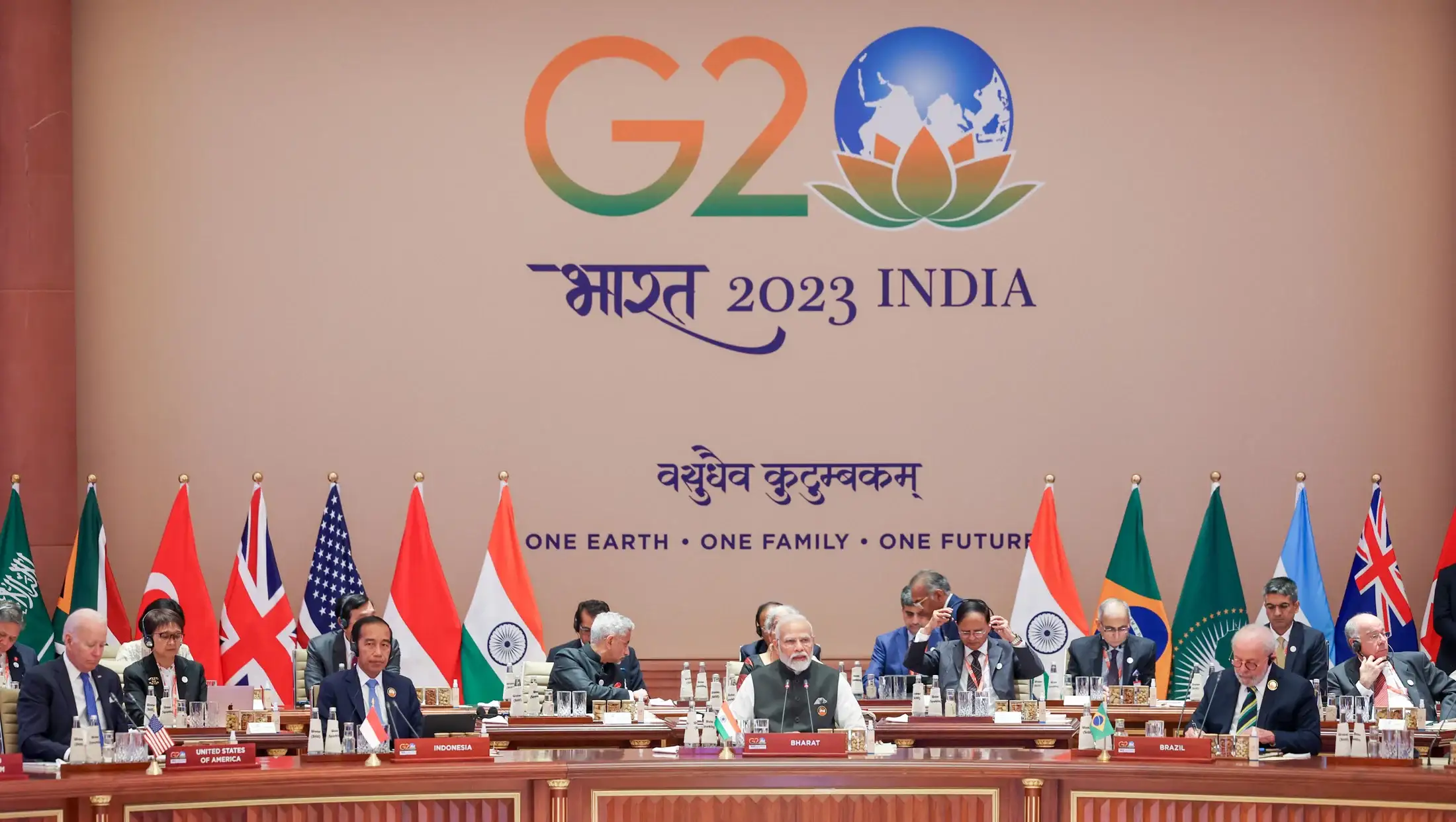
Understanding the G20’s Pivotal Role in Global Climate Action
For every ambitious student preparing for challenging competitive exams like UPSC, SSC, PSC, NID, NIFT, and various other government examinations, staying abreast of current affairs isn’t just a recommendation – it’s a critical component of success. Events and statements from global forums like the G20 frequently become direct questions in your general awareness and current affairs sections. Recently, the Union Minister for Environment, Forest and Climate Change, Bhupender Yadav, underscored a crucial perspective at the G20 Climate and Environmental Sustainability Working Group Ministerial Meeting. He articulated that the G20 must serve as a vital link, a “bridge,” between our global aspirations for a sustainable future and the concrete actions needed to achieve them. This perspective is not merely diplomatic rhetoric; it holds profound implications for how nations collaborate and, importantly, how you should approach your exam preparation.
Why the G20 Acts as a Bridge: Ambition Meets Implementation
When Minister Yadav emphasizes the G20 as a bridge, he’s highlighting a fundamental challenge in global governance: translating grand environmental goals into tangible, measurable progress on the ground. The G20, representing the world’s major economies, wields significant influence over global policies, resource allocation, and technological advancements. Its members are responsible for a substantial portion of global greenhouse gas emissions and possess the economic power and innovative capacity to drive solutions. The call for the G20 to act as a bridge means fostering an environment where every nation’s specific contributions to climate action are acknowledged and valued. Simultaneously, it means actively enhancing each nation’s capacity – whether through financial support, technology transfer, or knowledge sharing – to meet their environmental commitments. This ensures that climate policies are not just decided at a high level, but are practically implementable by all members, irrespective of their economic size or developmental stage. For your examinations, understanding this nuance – the gap between policy intent and ground-level execution – is key to answering analytical questions on international relations and environmental governance.
Frequently Asked Questions (FAQs)
1. What is the G20 and why is its role important in the context of competitive exams?
The G20, or Group of Twenty, is an intergovernmental forum comprising 19 countries and the European Union, representing the world’s major economies. It plays a crucial role in addressing global economic and financial issues, including climate change. For competitive exams, understanding the G20’s structure, member nations, and key initiatives is vital for current affairs, static GK, international relations, and environmental policy questions, as its decisions significantly impact global affairs and often reflect India’s diplomatic engagements.
2. Who is Bhupender Yadav, and what specific portfolio does he hold in the Indian government?
Bhupender Yadav is a prominent Union Minister in the Indian government. He currently holds the portfolio of Minister for Environment, Forest and Climate Change. His statements and actions in this capacity, especially concerning international climate forums like the G20, are frequently featured in news and are important for current affairs and general awareness sections of competitive exams, where questions about key ministerial roles are common.
3. What does Minister Yadav mean by the G20 acting as a “bridge between ambition and implementation” regarding climate action?
This statement emphasizes the G20’s responsibility to connect high-level climate goals and aspirations with practical, on-the-ground actions. It means ensuring that nations not only set ambitious targets but also collaborate to overcome hurdles in achieving them, by respecting each other’s contributions and enhancing every nation’s capacity through support, technology, and knowledge sharing. This concept is crucial for analytical questions in exams focusing on international cooperation, environmental policy challenges, and sustainable development.
4. How does myentrance.in specifically help students prepare for questions related to international events like the G20?
Myentrance.in provides a multi-faceted approach to master such topics. We offer daily news quizzes and dedicated current affairs sections that break down complex global events into exam-relevant facts and concepts. Our interactive examinations include questions on such topics, allowing you to test your recall and analytical skills in a simulated exam environment. Additionally, our static general knowledge resources cover the foundational aspects of international organizations like the G20, ensuring a comprehensive understanding from all angles.
5. Besides the G20, what other key areas of environmental sustainability should competitive exam aspirants focus on for their preparation?
Beyond the G20, aspirants should meticulously focus on major international environmental agreements (like the Paris Agreement, Kyoto Protocol, Montreal Protocol), national environmental policies and schemes (e.g., National Action Plan on Climate Change, Swachh Bharat Abhiyan, Project Tiger), key concepts like Sustainable Development Goals (SDGs), biodiversity conservation, pollution control measures, renewable energy initiatives, and the role of international bodies like UNEP. These topics frequently appear in various competitive exams, especially in general studies and environmental sections, demanding both factual recall and conceptual understanding.





