
Table of Contents
- Introduction to NIFT Entrance Exam Tools
- Fundamental Sketching and Drawing Tools
- Coloring and Rendering Media for CAT
- Precision and Measurement Instruments
- The GAT Toolkit: Beyond the Pencil
- Tool Comparison: Choosing the Right Brand
- Leveraging Mock Tests for Exam Success
- Frequently Asked Questions (FAQs)
- Quick Knowledge Check: Mini-Quiz
Introduction to NIFT Entrance Exam Tools
Cracking the National Institute of Fashion Technology (NIFT) entrance exam is not just about having artistic flair; it is about the precision, speed, and quality of your execution. The exam is divided into two primary segments: the Creative Ability Test (CAT) and the General Ability Test (GAT). While the GAT tests your logic, English, and general knowledge, the CAT is where your imagination meets the paper. To translate your ideas into a visual masterpiece, you need the right set of tools. Using professional-grade stationery can significantly enhance the texture, shading, and overall presentation of your designs, giving you a competitive edge.
Preparing for the latest pattern of the NIFT exam requires a strategic approach to your toolkit. You cannot afford to fumble with a blunt pencil or a low-quality eraser in the middle of a high-pressure situation. At myentrance.in, we believe that preparation begins with the right resources. Whether you are practicing for the current syllabus or gearing up for upcoming exams, this guide provides a curated list of essential stationery that every aspirant must possess.
💡 Pro-Tip: Quality Matters
Investing in high-quality graphite pencils and artist-grade erasers prevents paper tearing and smudging, which are common reasons for losing marks in the CAT section.
Fundamental Sketching and Drawing Tools
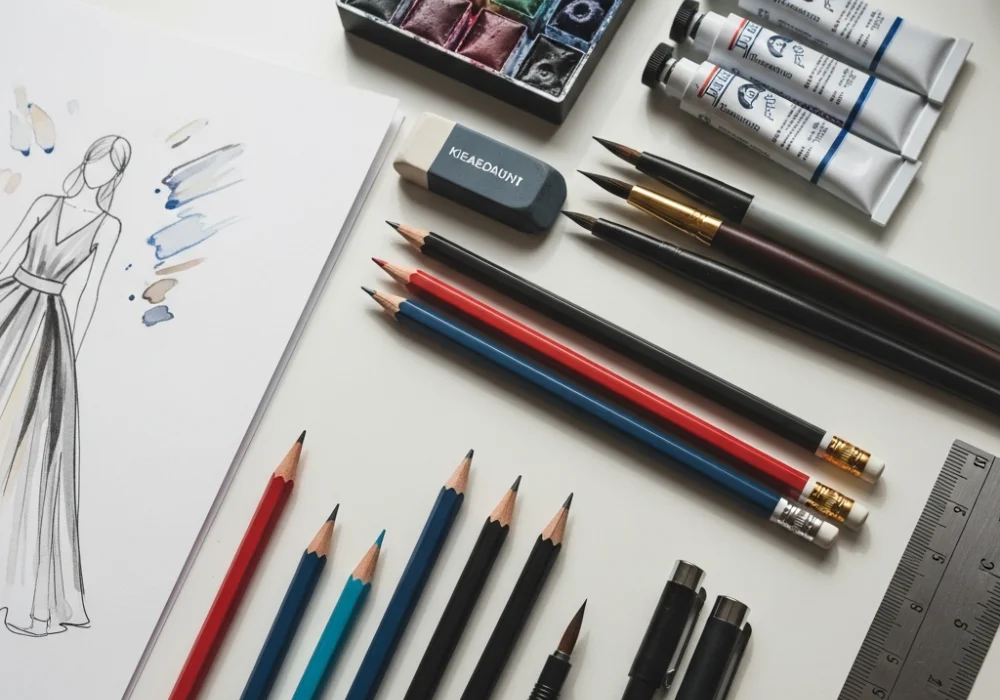
The Creative Ability Test demands exceptional sketching skills. Your choice of pencils determines the depth and realism of your drawings. For NIFT, a standard school pencil is rarely enough. You need a range of graphite grades to handle different tasks, from light outlining to deep, dark shadows.
The Graphite Pencil Hierarchy
- H to 2H Pencils: These are hard pencils used for light initial sketches and guidelines. They are easy to erase and don’t leave deep marks.
- HB and B Pencils: These are your workhorses. Ideal for general drawing and writing.
- 2B, 4B, 6B, and 8B Pencils: These are soft and dark. They are essential for shading, creating textures like hair or cloth, and adding contrast.
Apart from graphite, charcoal pencils (soft and medium) are excellent for quick, high-contrast sketching, though they require more skill to avoid smudging. Always keep a high-quality sharpener that doesn’t break the lead and a collection of erasers. A kneadable eraser is particularly important for NIFT aspirants as it can be molded into various shapes to lift pigment from tight corners or create highlights without damaging the paper surface.
Coloring and Rendering Media for CAT
Once your sketch is ready, rendering brings it to life. NIFT often asks questions involving poster design, comic strips, or character illustration. Choosing the right medium depends on your comfort level and the speed at which you can work.
Top Recommended Media
- Watercolors: Perfect for broad washes and atmospheric effects. However, they require time to dry, which can be a disadvantage during the exam.
- Poster Colors: These offer flat, opaque finishes which are great for graphic design and poster-making tasks.
- Pencil Colors (Water-soluble): These are highly recommended for NIFT because they offer the precision of a pencil with the blending capabilities of paint.
- Markers and Fineliners: Use these for bold outlines and professional rendering. Brands like Copic or Ohuhu are favorites, but even standard brush pens work well for beginners.
Remember that the paper quality provided in the exam may vary. Practicing on different GSM papers (from 100 GSM to 200 GSM) will help you understand how different colors react to different surfaces. This adaptability is key to mastering the NIFT drawing section.
Precision and Measurement Instruments
Fashion and product design questions often require technical accuracy. Drawing a straight line or a perfect circle manually is impressive, but using tools ensures you don’t lose time. Your kit should include more than just a 15cm ruler.
- Steel Ruler: A 30cm steel ruler is sturdier and provides a better edge for cutting or long lines than plastic ones.
- Set Squares and Protractors: Essential for perspective drawing and architectural elements.
- Circle Master or Geometric Stencils: These save precious minutes when you need to draw repeating geometric patterns or perfectly proportioned circles.
- Masking Tape: Useful for securing your paper to the desk or creating clean borders for your artwork.
💡 Design Tip: The Power of White Ink
A white gel pen or white poster color can be used at the very end to add ‘glints’ or highlights to eyes, jewelry, or metallic surfaces, making your design pop instantly.
The GAT Toolkit: Beyond the Pencil
The General Ability Test (GAT) is a time-bound objective test. While it doesn’t require artistic tools, your stationery efficiency still matters. You will need high-quality black or blue ballpoint pens for marking the OMR sheet. Gel pens are generally discouraged as they can smudge and cause errors in optical reading.
For the rough work in the quantitative and reasoning sections, a mechanical pencil (0.5mm) is excellent because it maintains a sharp point and saves time on sharpening. Since the GAT involves significant calculation and logical deduction, having a neat workspace and reliable pens helps maintain focus and prevents fatigue during the 120 to 180-minute session.
Tool Comparison: Choosing the Right Brand
Choosing between professional and student-grade tools can be confusing. Here is a comparison to help you decide which tools to pick for your practice and the final exam.
| Tool Category | Best for Practice | Best for Final Exam | Primary Use Case |
|---|---|---|---|
| Graphite Pencils | Faber-Castell (Gold) | Staedtler Mars Lumograph | Shading & Detailing |
| Color Pencils | Camel Art Pencils | Prismacolor / Faber-Castell Polychromos | Rich Color Rendering |
| Erasers | Standard Vinyl Eraser | Kneadable Eraser (Sakura/Staedtler) | Highlights & Clean-up |
| Fineliners | Luxor Fine Writers | Sakura Pigma Micron | Outline & Comic Art |
| Drawing Paper | Local Cartridge Paper | Brustro 200 GSM Drawing Sheets | Mixed Media Practice |
Leveraging Mock Tests for Exam Success
Having the best tools in the world won’t help if you don’t know how to use them under pressure. This is where mock tests become your greatest asset. Simulating the exam environment allows you to test your stationery—how fast your pencils dull, how quickly your paints dry, and how efficiently you can switch between tools.
At myentrance.in, we provide a wide array of NIFT mock tests and sample papers that reflect the current exam pattern. Practicing these tests helps you build the muscle memory required for the CAT and the speed needed for the GAT. By integrating the tools mentioned above into your daily practice with our mock tests, you will walk into the exam center with absolute confidence.
Frequently Asked Questions (FAQs)
Can I use oil pastels in the NIFT CAT exam?
While not explicitly banned, oil pastels are generally discouraged because they are prone to smudging and can ruin other parts of your drawing. Wax crayons or pencil colors are better alternatives.
How many shades of pencils should I carry?
A set of 6 pencils (HB, 2B, 4B, 6B, 8B, and 10B) is usually sufficient for all types of shading and rendering requirements in the NIFT entrance exam.
Are calculators allowed in the NIFT GAT exam?
No, calculators are strictly prohibited in the NIFT entrance exam. You must rely on manual calculations, which is why practicing with mock tests from myentrance.in is vital to increase your speed.
Quick Knowledge Check: Mini-Quiz
Test your knowledge about NIFT tools and prep!
1. Which eraser is best for creating highlights in a dark pencil sketch?
Check Answer
The Kneadable Eraser is the best for this task as it lifts pigment without smudging.
2. True or False: You should use a gel pen to fill out the NIFT OMR sheet.
Check Answer
False. You should use a ballpoint pen to prevent smudging and ensure the OMR scanner reads your answers correctly.
3. Which pencil grade is hardest and leaves the lightest mark?
Check Answer
The H (Hard) series, specifically higher numbers like 4H or 6H, are the hardest and lightest.
Ready to Ace your NIFT Exam?
Get access to the most comprehensive NIFT mock tests and study materials designed by experts at MyEntrance.
💬 Chat with our Experts on WhatsApp (+91 9526806124)




