
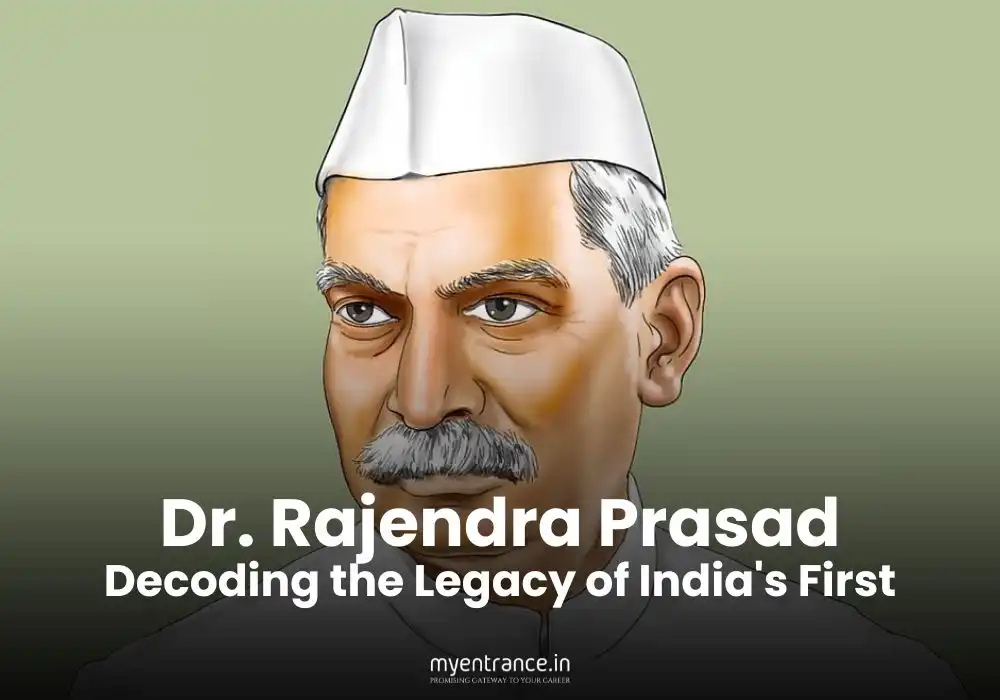
The recent homage paid by Vice President C. P. Radhakrishnan to Dr. Rajendra Prasad on his birth anniversary serves as a poignant reminder of a figure whose life and contributions are inextricably linked with the very foundations of modern India. This act of remembrance, highlighted through a social media post, underscores not just a formal tribute but also the enduring relevance of Dr. Prasad’s ideals and monumental work, particularly for students preparing for competitive examinations who seek to understand the intricate tapestry of Indian history and polity. Understanding his journey is crucial for comprehending the spirit of the nation and the principles upon which it was built.
The Man Behind the Homage: Who Was Dr. Rajendra Prasad?
Born on December 3, 1884, in Ziradei, Bihar, Dr. Rajendra Prasad emerged from humble beginnings to become one of the most revered leaders of his time. His academic brilliance was evident from an early age, excelling in his studies and pursuing law, a path that would later equip him with the analytical prowess essential for nation-building. His initial foray into public life began with legal practice, but the burgeoning nationalist movement soon drew him towards a larger purpose. His deep-rooted commitment to social justice and national independence became the guiding force of his life, shaping his decisions and ultimately his legacy as a statesman of unparalleled integrity and wisdom.
A Towering Pillar of the Freedom Struggle
Dr. Rajendra Prasad’s involvement in India’s struggle for independence was not merely peripheral; he was a central figure, a trusted lieutenant of Mahatma Gandhi. His dedication to non-violence and सत्याग्रह (Satyagraha) resonated deeply with Gandhi’s philosophy, leading him to play a significant role in key movements like the Non-Cooperation Movement, the Salt Satyagraha, and the Quit India Movement. His quiet strength, organizational skills, and unwavering resolve made him an indispensable asset to the Indian National Congress. He endured imprisonment multiple times, demonstrating his profound commitment to the cause of freedom, and his ability to unite diverse factions within the movement showcased his exceptional leadership qualities. His sacrifices and contributions during this tumultuous period laid the groundwork for his future role in independent India.
Architect of the Constitution: President of the Constituent Assembly
Perhaps one of Dr. Rajendra Prasad’s most significant contributions, and one of critical importance for competitive exam aspirants, was his role as the President of the Constituent Assembly. This august body, formed in 1946, was tasked with the monumental responsibility of drafting the Constitution of free India. His selection for this pivotal role was a testament to his universally acknowledged wisdom, impartiality, and ability to steer complex deliberations. He presided over the assembly with grace and firm resolve, ensuring that every voice was heard and that the diverse opinions were synthesized into a coherent and comprehensive legal framework. His guidance was instrumental in navigating the debates and discussions, ensuring that the final document truly reflected the aspirations and values of the Indian people. He facilitated consensus-building among members with differing ideologies, ultimately contributing to a robust and democratic constitution.
India’s First President: A Legacy of Leadership and Stability
Following India’s independence and the adoption of its Constitution, Dr. Rajendra Prasad was unanimously elected as the first President of the Republic of India on January 26, 1950. He served two full terms, from 1950 to 1962, a period that saw the fledgling nation navigate numerous challenges and establish its democratic institutions. As President, he upheld the dignity of the office, acting as the constitutional head of state with utmost prudence and adherence to democratic principles. He played a crucial role in setting precedents for the functioning of the Indian presidency, emphasizing constitutional propriety and working harmoniously with the executive and judiciary. His presidency provided stability and moral leadership during India’s formative years, earning him the affectionate title of “Desh Ratna” (Jewel of the Country) from Mahatma Gandhi himself. His tenure was marked by a commitment to social reform, education, and the consolidation of democratic values across the vast and diverse nation.
Celebrating His Ideals: The Enduring Relevance Today
The homage paid by Vice President C. P. Radhakrishnan on Dr. Rajendra Prasad’s birth anniversary is more than just a ceremonial observance; it is an acknowledgment of a legacy that continues to inspire. His life exemplifies dedication to public service, intellectual rigor, and unwavering moral conviction. For students aspiring to serve the nation through competitive exams, understanding Dr. Prasad’s journey provides invaluable insights into the ethical framework of governance, the arduous process of constitution-making, and the foundational principles of Indian democracy. His contributions as a freedom fighter, the President of the Constituent Assembly, and the first President of India offer a profound lesson in leadership, resilience, and the power of collective wisdom in building a nation. His memory serves as a reminder of the responsibilities that come with freedom and the continuous effort required to uphold the democratic ideals he so meticulously helped to enshrine.
Frequently Asked Questions (FAQs)
1. Who was Dr. Rajendra Prasad and what is his primary significance in Indian history?
Dr. Rajendra Prasad was a prominent Indian independence activist, a lawyer, scholar, and the first President of the Republic of India. His primary significance lies in his pivotal role as the President of the Constituent Assembly, which drafted the Indian Constitution, and subsequently as the nation’s inaugural head of state, providing crucial leadership during India’s formative years after independence.
2. What was Dr. Rajendra Prasad’s role in the Indian freedom struggle alongside Mahatma Gandhi?
Dr. Rajendra Prasad was a close associate and staunch follower of Mahatma Gandhi. He actively participated in major non-violent movements such as the Non-Cooperation Movement, the Salt Satyagraha, and the Quit India Movement, often enduring imprisonment. His commitment to Gandhi’s principles of Satyagraha and non-violence made him a trusted leader within the Indian National Congress.
3. When was Dr. Rajendra Prasad born, and when did he serve as the President of India?
Dr. Rajendra Prasad was born on December 3, 1884. He served as the first President of India from January 26, 1950, when the Constitution of India came into effect, until May 13, 1962, making him the only President to serve two full terms.
4. What key contributions did Dr. Rajendra Prasad make to the drafting of the Indian Constitution?
As the President of the Constituent Assembly, Dr. Rajendra Prasad guided the entire process of drafting the Indian Constitution. His impartial leadership, wisdom, and ability to foster consensus among diverse opinions were crucial in shaping the fundamental law of the land. He ensured extensive debates and discussions, culminating in a comprehensive and democratic constitutional framework.
5. What major national recognition did Dr. Rajendra Prasad receive for his services to the nation?
For his extraordinary service to the nation, Dr. Rajendra Prasad was awarded India’s highest civilian honor, the Bharat Ratna, in 1962, shortly after he demitted the office of President. This award recognized his immense contributions as a freedom fighter, constitutional architect, and the first President of independent India.





