Translate Language
Did the British Raj Secretly Include the Middle East?
The British Raj’s reach extended far beyond South Asia, embedding Gulf states like Oman and Kuwait into its imperial framework. These territories were governed by India’s administration yet deliberately erased from official maps. This hidden history reveals how strategic diplomacy reshaped colonial cartography.
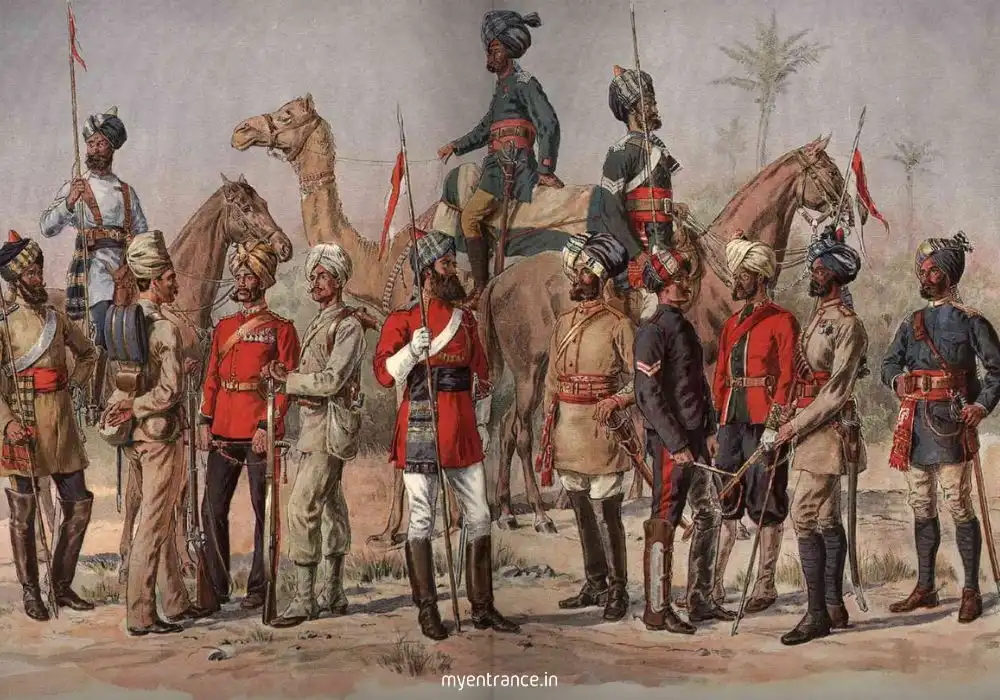
The Invisible Empire: Gulf States as Unofficial Extensions of British India
Modern maps of the British Raj show only India, Pakistan, and Bangladesh. Yet historian Sam Dalrymple reveals that until 1928, the “Indian Empire” legally included Yemen, Oman, UAE, Qatar, Bahrain, and Kuwait. These territories answered to the Viceroy of India, were defended by the Indian Army, and managed by the Indian Political Service. Astonishingly, princely state lists began with Abu Dhabi, and Viceroy Curzon classified Oman as integral to India as Kathiawar.
Strategic Chessboard: Why Britain Claimed the Gulf
Britain’s grip on the Gulf stemmed from three threats:
Pirate Coast Raiders (1797-1819): Arab naval attacks on British ships near present-day UAE forced military expeditions, revealing the need for regional stability.
French Expansion: Napoleon’s 1798 invasion of Egypt and alliance with Persia threatened India’s western flank, turning Oman into a buffer state.
Russian Ambitions: In the 1860s, Russia’s push toward Persian warm-water ports ignited the “Great Game,” making the Gulf critical for India’s defense.
The 1869 Suez Canal opening amplified the region’s value, slashing travel time between London and Bombay.
The Illusion of Independence: Indirect Rule via Treaties
Rather than direct colonization, Britain imposed a “system of protection” through treaties with Gulf sheikhdoms. Legally binding under the 1889 Interpretation Act, these agreements granted autonomy in name only. As historian James Onley notes, Britain maintained this façade to avoid provoking the Ottoman Empire. Maps excluded these territories, with one Royal Asian Society lecturer quipping: “As a jealous sheikh veils his wife, Britain shrouds the Arab states in mystery.”
Birth of the “Middle East” – A Geopolitical Construct
The term “Middle East” emerged only in the 1900s, defined by its relationship to India. Journalist Valentine Chirol coined it to describe regions “commanding approaches to India.” Archaeologists, cartographers, and speculators then reshaped the area’s identity—excavating ancient sites while redirecting its economy toward imperial interests.
1947: The Silent Severance from India
Until March 1947, Gulf territories were administered from Delhi. Post-independence, Britain abruptly transferred control to its Foreign Office. Gulf Resident William Hay argued it would be “inappropriate” for Indians or Pakistanis to manage Arab sheikhdoms. Had this not occurred, these states might have joined India or Pakistan during Partition.
5 Key Q&As for Competitive Exams:
Q1: How did the British justify excluding Gulf states from official maps?
A1: To avoid antagonizing the Ottoman Empire and maintain the illusion that these territories were “protected states” rather than colonial possessions.
Q2: Name two strategic threats driving British involvement in the Gulf.
*A2: French expansion after Napoleon’s Egypt invasion (1798) and Russian attempts to secure Persian warm-water ports (1860s).*
Q3: Which British legislation formalized Gulf territories as part of India?
A3: The Interpretation Act of 1889 legally incorporated them into the Indian Empire.
Q4: Who coined the term “Middle East,” and how was it defined?
A4: Journalist Valentine Chirol defined it as regions “commanding approaches to India” for military and economic defense.
Q5: Why were Gulf territories transferred from Indian administration in 1947?
A5: Britain deemed it diplomatically unsuitable for newly independent India or Pakistan to oversee Arab sheikhdoms, handing control to the Foreign Office.
Boost Your Exam Prep:
Master daily current affairs on Gulf geopolitics here.
Explore static GK guides to colonial history here.
Test knowledge with our daily news quiz here.
Ace SSC/PSC history sections: SSC Resources | Kerala PSC
Design exams like NIFT GAT and NID DAT require geopolitical awareness: NIFT | NID
Last-minute revision? Use our exam preparation guide here.
Get 3 Months Free Access for SSC, PSC, NIFT & NID
Boost your exam prep!
Use offer code WELCOME28 to get 3 months free subscription. Start preparing today!
Read More Topics