
Introduction to Design Thinking in NID DAT
The National Institute of Design (NID) Entrance Exam, commonly known as the Design Aptitude Test (DAT), is not merely a test of your sketching abilities. It is a comprehensive assessment of your cognitive skills, creativity, and, most importantly, your problem-solving approach. At the heart of this evaluation lies the concept of Design Thinking. To excel in the NID DAT, candidates must go beyond aesthetics and demonstrate a deep understanding of user-centric design frameworks. This guide explores the essential Design Thinking frameworks that can transform your approach to the latest pattern of the NID entrance exam.
The Essence of Design Thinking for Aspiring Designers
Design Thinking is a non-linear, iterative process that teams use to understand users, challenge assumptions, redefine problems, and create innovative solutions to prototype and test. For an NID DAT aspirant, adopting this mindset is crucial because the exam frequently presents open-ended problems that require empathy and logical reasoning. Whether you are appearing for the Prelims or the Mains, applying a structured framework helps in organizing your thoughts and presenting a coherent solution to the examiners. To refine these skills, practicing with high-quality study material and mock tests from myentrance.in is highly recommended.
1. The Stanford d.school Five-Stage Framework
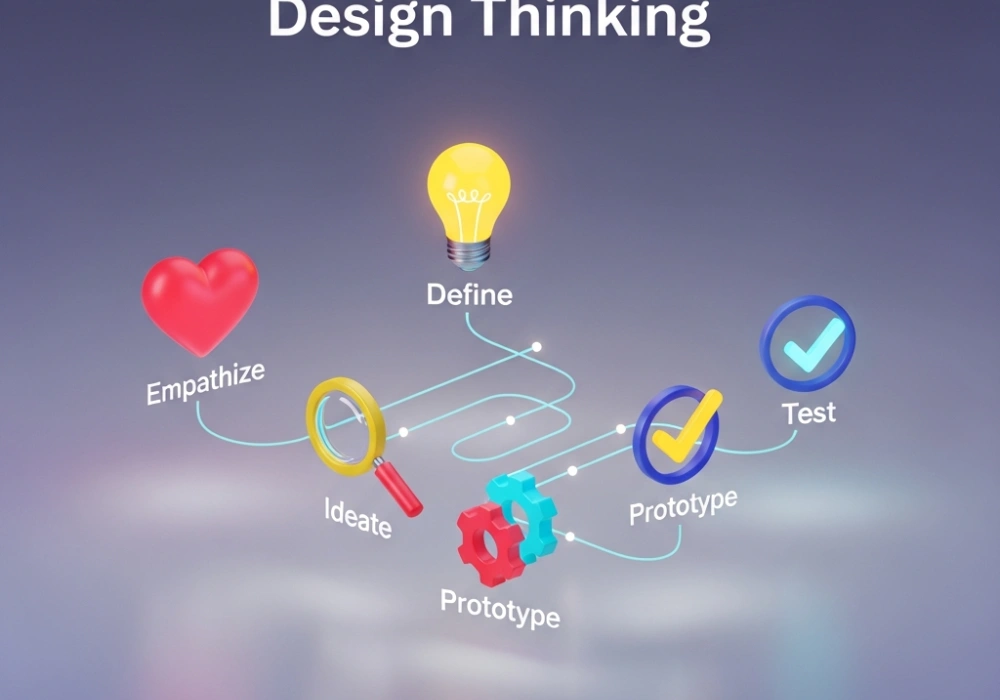
The most widely recognized Design Thinking model is the five-stage framework proposed by the Hasso Plattner Institute of Design at Stanford (d.school). This framework is particularly effective for NID DAT questions that ask you to design a product or a service for a specific demographic.
- Empathize: This stage involves gathering a deep understanding of the people you are designing for. In the context of NID DAT, if a question asks you to design a tool for the elderly, you must first list the physical and emotional challenges they face.
- Define: After gathering insights, you must define the core problem. A well-defined problem statement, often called a Point of View (POV), keeps your solution focused.
- Ideate: This is where your creativity takes flight. Generate a wide range of ideas without self-censorship. Use techniques like mind mapping or sketching various thumbnails.
- Prototype: In the exam, your prototype is usually a detailed sketch or a 3D representation on paper. It should show how the solution works in a real-world scenario.
- Test: While you cannot physically test your idea during the exam, you can demonstrate the testing phase by illustrating a user interacting with your design and highlighting potential feedback loops.
2. The Double Diamond Framework
Developed by the British Design Council, the Double Diamond framework emphasizes two distinct types of thinking: Divergent and Convergent. This is exceptionally useful for the NID DAT Mains and Studio Tests.
The First Diamond: Finding the Right Problem
- Discover (Divergent): Open your mind to all possibilities. Research the context of the problem given in the exam paper.
- Define (Convergent): Narrow down the findings from the discovery phase to identify the specific challenge you will solve.
The Second Diamond: Finding the Right Solution
- Develop (Divergent): Brainstorm multiple ways to solve the defined problem. This is where you showcase your unique creative flair.
- Deliver (Convergent): Select the most viable solution and refine it into a final design that answers the question effectively.
3. The 5W1H Framework for Quick Analysis
When time is limited during the NID DAT Prelims, the 5W1H framework is a lifesaver. It helps in quickly deconstructing a problem statement. By asking Who, What, Where, When, Why, and How, you can uncover the nuances of a design brief within minutes. For instance, ‘Who’ is the user? ‘Where’ will the product be used? ‘Why’ is there a need for this solution? Answering these questions ensures that your design is grounded in reality.
Comparing Design Thinking Frameworks for NID DAT
The following table summarizes the key frameworks and their specific utility in the NID entrance exam environment:
| Framework Name | Core Focus | Best Application in NID DAT |
|---|---|---|
| Stanford d.school | User-Centricity | Product Design and Service Design questions. |
| Double Diamond | Process Structure | Long-form creative problem solving and Studio Tests. |
| 5W1H | Contextual Analysis | Rapid ideation and situational awareness questions. |
| Empathy Mapping | User Psychology | Character design and user journey mapping. |
How to Practice Design Thinking for Upcoming Exams
Understanding these frameworks is only the first step. Mastery comes through consistent application. Here are some tips to integrate Design Thinking into your NID DAT preparation:
- Analyze Everyday Problems: Look at common objects around you and ask how they could be redesigned using the Stanford model.
- Solve Previous Papers: Take questions from previous years and apply the Double Diamond method to solve them.
- Utilize Online Resources: Platforms like myentrance.in offer specialized mock tests designed to challenge your design thinking capabilities under timed conditions.
- Sketching with Purpose: Do not just draw; explain the ‘why’ behind your design choices using the vocabulary of design thinking.
The Role of Mock Tests in Mastering Design Frameworks
The pressure of the actual exam can make it difficult to think clearly. This is why simulated practice is essential. By taking the NID DAT mock tests on myentrance.in, you expose yourself to the latest pattern of questions that demand the application of these frameworks. These tests help you improve your speed, refine your problem-identification skills, and ensure that your final sketches are both creative and functional.
Conclusion
Success in the NID DAT is a blend of artistic skill and strategic thinking. By mastering Design Thinking frameworks like the Stanford d.school model and the Double Diamond, you equip yourself with the tools needed to tackle any challenge the exam throws at you. Remember, the examiners are looking for your ability to empathize with users and provide logical, innovative solutions. Start your journey toward design excellence today by practicing these frameworks and leveraging the expert resources available at myentrance.in.
Frequently Asked Questions (FAQ)
Is drawing more important than design thinking in NID DAT?
Both are equally important. While drawing helps you communicate your ideas, Design Thinking ensures that the ideas you are communicating are relevant, user-centric, and innovative. A well-drawn but poorly thought-out solution may score lower than a simple sketch with a brilliant design concept.
Can I use the Double Diamond framework for short questions?
The Double Diamond is better suited for long-form questions where you have more time to explore and refine. For short questions, the 5W1H framework is more efficient for quick analysis and ideation.
How do I improve my empathy for the ‘Empathize’ stage?
Practice observing people in different environments. Imagine the difficulties a child, an elderly person, or someone with a disability might face while performing daily tasks. This ‘personification’ exercise is vital for the NID DAT.
Are the mock tests on myentrance.in based on the latest pattern?
Yes, the mock tests on myentrance.in are updated regularly to reflect the latest pattern and difficulty levels of the NID entrance exams, including questions specifically designed to test your design thinking frameworks.
How much time should I spend on ideation during the exam?
Typically, you should spend about 20-30% of the allotted time for a question on understanding the problem and ideating (the first diamond or the first three stages of the Stanford model) before you start your final sketch.





