
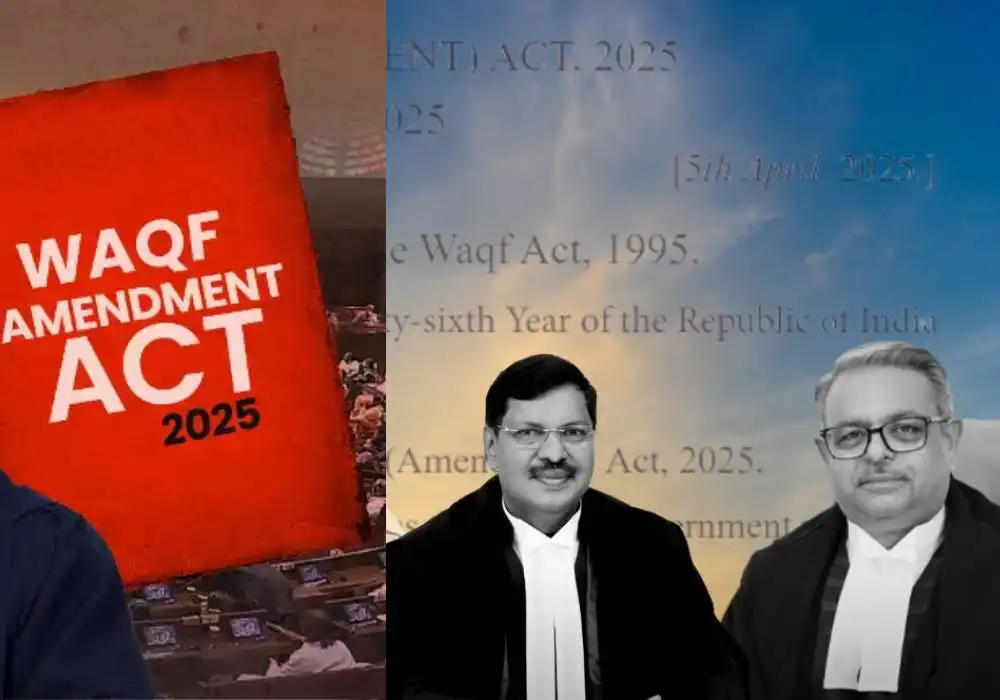
For every aspiring candidate eyeing success in examinations like UPSC, SSC, PSC, NID, NIFT, and other government recruitment drives, staying updated with significant legal and constitutional developments is paramount. Recently, the Supreme Court of India took a pivotal step concerning the Waqf (Amendment) Act 2025, a development that carries profound implications for legal understanding, current affairs, and general knowledge. Let’s break down this crucial event, understanding its ‘what’, ‘why’, ‘how’, and its direct relevance to your exam preparation.
Unraveling the Core: The Waqf (Amendment) Act 2025 and its Controversial Provision
A Waqf, in simple terms, refers to a permanent dedication of movable or immovable properties by a person professing Islam for any purpose recognized by Islamic law as pious, religious, or charitable. These endowments play a significant role in community welfare and cultural heritage. The Parliament enacted the Waqf (Amendment) Act 2025, introducing several changes to the existing legal framework governing these institutions. Among these amendments, one particular provision sparked considerable debate and legal challenge. This contentious clause stipulated that an individual must be a practitioner of Islam for a minimum of five years to be eligible to create a Waqf.
The ‘why’ behind the controversy of this specific provision lies in its perceived restrictiveness and potential overreach. Critics argued that such a stringent condition could impede the traditional and voluntary nature of Waqf creation, potentially infringing upon individual rights concerning religious practice and property dedication. This legislative move opened the doors for scrutiny regarding the balance between state regulation and religious freedom, making it a critical subject for legal and constitutional studies.
The Supreme Court’s Intervention: A Testament to Judicial Review
In a significant move, a bench of the Supreme Court, comprising Chief Justice of India BR Gavai and Justice AG Masih, decided to stay certain provisions of the Waqf (Amendment) Act 2025. Specifically, the provision mandating a five-year practice of Islam for Waqf creation was put on hold. A ‘stay’ order by the Supreme Court effectively means that the implementation of this particular provision is temporarily suspended until further directions or a final decision is reached.
The ‘how’ of this judicial intervention highlights the crucial role of the Supreme Court as the guardian of the Constitution and the ultimate interpreter of laws. The court’s decision to issue a stay was primarily based on the understanding that State Governments had not yet framed the necessary rules for determining the five-year practice requirement. This lack of clear procedural guidelines from the states rendered the provision impractical and potentially arbitrary in its application, necessitating judicial oversight. This action underscores the principle of judicial review, where the judiciary examines the constitutionality and legality of legislative and executive actions, ensuring that they conform to the spirit and letter of the Constitution. For aspirants, this demonstrates the intricate checks and balances within India’s democratic framework.
Broader Implications and Why This Matters for Your Exams
This Supreme Court stay isn’t just a legal headline; it’s a dynamic current affair with profound implications across various domains relevant to your competitive exams. It reflects the ongoing dialogue between the legislature and the judiciary, the complexities of religious personal laws, and the state’s role in regulating religious institutions. Understanding such developments is vital for your General Knowledge, Current Affairs, Indian Polity, and Constitutional Law sections.
For UPSC and PSC aspirants, this case touches upon fundamental rights (Articles 25-28 concerning religious freedom), the scope of legislative competence, the power of judicial review (Article 13, 32, 226), and the process of law-making and implementation. For SSC and other government exams, it forms a crucial part of current events and offers insights into legal terminology and the functions of the Supreme Court. Preparing for examinations like NID and NIFT also requires a broad understanding of societal developments and legal frameworks, even if less direct. This incident reinforces the necessity of understanding the multi-faceted nature of governance and law in India.
Frequently Asked Questions on Waqf (Amendment) Act 2025 (FAQs)
1. What exactly is a Waqf?
A Waqf is an endowment made by an individual professing Islam for pious, religious, or charitable purposes, recognized by Islamic law. Once created, a Waqf is generally permanent and inalienable, meaning its ownership cannot be transferred.
2. What was the specific controversial provision in the Waqf (Amendment) Act 2025 that the Supreme Court stayed?
The Supreme Court stayed the provision in the Waqf (Amendment) Act 2025 that mandated an individual to be a practitioner of Islam for a minimum of five years to be eligible to create a Waqf.
3. Why did the Supreme Court issue a stay on this particular provision?
The Supreme Court issued a stay because State Governments had not yet framed the necessary rules for determining how this five-year practice requirement would be assessed. Without these clear procedural guidelines, the provision was deemed impractical and potentially open to arbitrary application.
4. What is the significance of a Supreme Court ‘stay’ order in the Indian legal system?
A ‘stay’ order by the Supreme Court temporarily halts the operation or implementation of a particular law, judgment, or executive action. It means the provision cannot be enforced until the court gives further directions or delivers a final verdict on its legality or constitutionality. It signifies the court’s preliminary view that the provision needs deeper examination.
5. How is this Supreme Court ruling on the Waqf (Amendment) Act 2025 relevant for competitive exams like UPSC, SSC, and PSC?
This ruling is highly relevant as it falls under Current Affairs, Indian Polity, and Constitutional Law. It helps candidates understand judicial review, the balance of power between the judiciary and legislature, fundamental rights (especially religious freedom), and the process of law enforcement. For GK, it familiarizes candidates with legal terms and institutions.





