Translate Language
Critical Mineral Recycling Scheme Approved: Why Is This Important
In a significant move towards self-reliance, the Union Cabinet has approved a major incentive scheme to promote the recycling of critical minerals. This initiative is a key part of India’s National Critical Mineral Mission, designed to strengthen the domestic supply chain for essential resources and boost the circular economy.
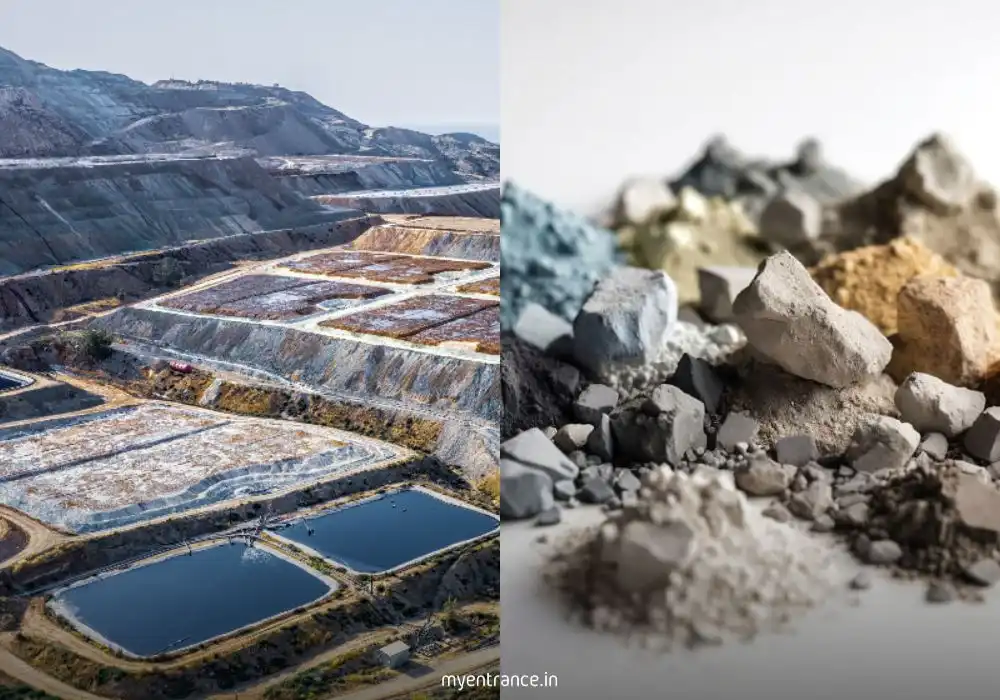
Decoding the Cabinet’s Critical Mineral Recycling Scheme
If you’re preparing for competitive exams like UPSC, SSC, or Kerala PSC, the recent approval of a ₹1,500 crore incentive scheme for critical mineral recycling is a current affairs topic you can’t afford to miss. This isn’t just another government policy; it’s a strategic step with far-reaching implications for India’s economy and security. Let’s break down its core objectives in a way that’s easy to understand and remember.
The primary goal of this scheme is to build a domestic ecosystem for extracting valuable minerals from secondary sources like electronic waste (e-waste) and Lithium-ion battery (LIB) scrap. Why is this so important? Critical minerals like Lithium, Cobalt, and Rare Earth Elements are the building blocks of modern technology, powering everything from smartphones and electric vehicles to defence equipment. Currently, India is heavily dependent on imports for these minerals, which poses a strategic risk.
The scheme, which will run for six years from FY 2025-26 to 2030-31, is designed to achieve several key objectives:
Boost Domestic Supply & Ensure Security: By creating a robust recycling infrastructure, India aims to reduce its reliance on foreign imports for critical minerals. This enhances supply chain resilience and national security.
Promote a Circular Economy: It incentivizes turning waste into wealth. Instead of letting old electronics and batteries end up in landfills, they become a valuable national resource.
Attract Investment and Generate Employment: The scheme is expected to attract significant private investment (around ₹8,000 crore) and create approximately 70,000 direct and indirect jobs, boosting the manufacturing sector.
Study more about critical minerals here:
Why India’s Critical Minerals Future Ties to Argentina?
Why is Quad Launching a Critical Minerals Initiative Against China?
Why Are Critical Minerals the Hidden Key to India’s Future?
Focus on End-to-End Processing: The incentives are specifically targeted at units that go beyond initial processing. To qualify for benefits, a unit must be involved in the actual extraction and production of purified critical minerals, not just the initial stage of producing ‘black mass’ (a preliminary mixture of materials).
Offer Financial Support: The government will provide two types of subsidies:
A 20% capital expenditure (Capex) subsidy on plant and machinery to set up or modernize facilities.
An operational expenditure (Opex) subsidy based on incremental sales, offered over a period of years to ensure sustained production.
Questions and Answers for Your Exam Preparation
1. The recently approved Incentive Scheme for promoting Critical Mineral Recycling has a total outlay of how much?
Answer: ₹1,500 crore.
2. Under which national mission does the Critical Mineral Recycling Scheme fall?
Answer: The National Critical Mineral Mission (NCMM).
3. What are the primary sources of waste targeted by this recycling scheme?
Answer: Electronic waste (e-waste) and Lithium-ion Battery (LIB) scrap.
4. The incentives under the scheme are applicable to units involved in what specific activity?
Answer: The actual extraction and production of critical minerals, not just the production of black mass.
5. What is one major expected outcome of this scheme in terms of job creation?
Answer: It is expected to create close to 70,000 direct and indirect jobs.
Why is this Important for Exams?
This topic is a high-value addition to your current affairs preparation for several reasons:
Multidisciplinary Relevance: It touches upon key segments of the syllabus like Environment & Ecology (circular economy, e-waste management), Indian Economy (government schemes, investment, employment), Science & Technology (critical minerals, recycling tech), and Internal Security (reducing import dependency for strategic resources).
High Probability in Prelims: Schemes, their outlays, tenure, and objectives are frequently asked in the preliminary examination stage of UPSC, SSC, and various PSCs.
Rich Content for Mains: For UPSC Mains and state PSC mains exams, this provides excellent fodder for GS Paper III (Economy, Environment, and Security). You can use it as a case study to discuss India’s mineral policy, sustainable development, and Atmanirbhar Bharat.
Potential for Interview: If you reach the interview stage, understanding such strategic government policies shows you are well-informed about national priorities and can think critically about resource management and economic planning.
Make sure to note the key figures, the mission’s name, and the dual nature of the subsidies (Capex and Opex), as these are the details that often make the difference in scoring high marks.
Read More Topics