
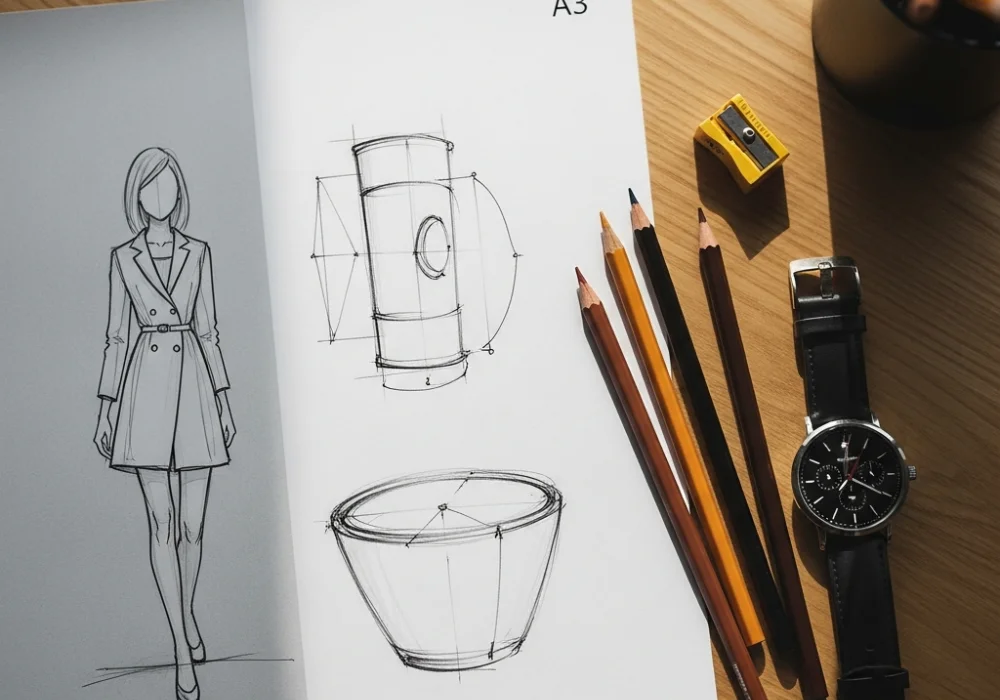
Mastering the Clock: A Guide to NIFT CAT Success
The National Institute of Fashion Technology (NIFT) Creative Ability Test (CAT) is a unique examination that assesses a candidate’s intuition, power of observation, and design ability. Unlike traditional competitive exams where speed is primarily about calculations, the CAT requires a delicate balance between high-level creativity and technical execution. Aspiring designers often find themselves struggling to finish their drawings within the stipulated three hours. This comprehensive guide delves into the nuances of time management, providing actionable strategies to ensure your creative vision is fully realized on paper. By leveraging mock tests and structured practice, such as those provided by myentrance.in, you can transform your approach and secure a top rank in the upcoming exams.
Table of Contents
- Understanding the CAT Framework
- The Strategic Time Allocation Table
- Phase 1: The Power of Ideation
- #sketching-techniques”>Phase 2: Efficient Sketching and Linework
- Phase 3: Mastering Rendering and Finish
- The Role of Simulated Practice
- Frequently Asked Questions
- Quick Knowledge Check
Understanding the CAT Framework
The Creative Ability Test (CAT) accounts for a significant 50% of the total weightage for the B.Des program. This high stakes environment demands more than just artistic talent; it requires a systematic approach to problem-solving. Examiners look for three main components: Concept (how original is your idea?), Composition (how well is the drawing placed?), and Execution (how clean and professional is the final output?).
To excel, one must view the 180 minutes of the exam not as a single block of time, but as a series of strategic phases. Without a plan, students often spend too much time on the first question, leaving the last one—which might carry equal marks—unfinished. A design aspirant must cultivate the ability to think fast and draw even faster without compromising on quality.
💡 Pro-Tip: The 5-Minute Scan
Spend the first 5 minutes reading all questions. Your brain will start processing the second and third problems subconsciously while you work on the first, leading to more organic ideas later on.
Strategic Time Allocation Table
Properly dividing your time is the cornerstone of passing the NIFT entrance. Below is a comparison between how an average student manages time versus an expert-led strategy optimized for success.
| Task Phase | Average Time Spend | Optimized Strategy |
|---|---|---|
| Reading & Ideation | 5 Minutes | 20 Minutes |
| Rough Thumbnails | None | 10 Minutes |
| Final Linework | 90 Minutes | 60 Minutes |
| Shading & Color | 80 Minutes | 75 Minutes |
| Written Explanation | 5 Minutes | 15 Minutes |
As seen in the table, experts prioritize Ideation and Explanation. In NIFT, a unique idea explained well often scores higher than a generic drawing with perfect shading.
Phase 1: The Power of Ideation (The First 30 Minutes)
Many students jump into drawing the first thought that comes to mind. This is a mistake. The first thought is usually the most cliché. Spend time brainstorming. Use techniques like Mind Mapping or the SCAMPER method (Substitute, Combine, Adapt, Modify, Put to another use, Eliminate, Reverse) to generate innovative solutions.
Creating Thumbnail Sketches
Before committing to a full-page drawing, create 2-3 tiny ‘thumbnail’ sketches in the margin or on rough sheets. These take 2 minutes each but help you decide on the best perspective, lighting, and composition. This prevents the nightmare of realizing halfway through that your main subject doesn’t fit on the page.
💡 How to Ideate Faster?
Practice 10-minute brainstorming sessions every day. Pick a random word (e.g., ‘Transparency’) and draw 5 different concepts it evokes. Speed comes from mental agility.
Phase 2: Efficient Sketching and Linework
Speed in sketching is not about moving your hand faster; it is about drawing fewer, more accurate lines. Use light strokes initially with an H or HB pencil. Avoid using the eraser frequently, as it damages the paper texture and consumes precious seconds. Once the structure is ready, darken the confident lines with a 2B pencil.
Perspective and Proportions
In the CAT exam, maintaining correct perspective (one-point, two-point, or three-point) is crucial. Instead of using a ruler for everything, which looks rigid and takes time, practice drawing straight lines and ellipses freehand. This ‘designers touch’ is highly valued by NIFT evaluators. Focus on the human figure’s proportions—remember the 7.5 heads rule to ensure your fashion illustrations look professional and balanced.
- Keep it Clean: Use a paper napkin under your hand to prevent graphite smudging.
- Focal Point: Ensure the most important part of your drawing has the highest contrast.
- Layering: Start with basic geometric shapes (circles, cylinders, boxes) before adding details.
Phase 3: Mastering Rendering and Finish
Coloring should not be an afterthought. Whether you use color pencils, pastels, or markers, the goal is to show material, texture, and light. To save time, do not color every single inch of the background unless required. Use ‘selective rendering’—color the main object fully and let the background fade out with light gradients.
The Written Description
Often overlooked, the 50-100 word description of your design is a goldmine for marks. Explain your inspiration, the color palette choice, and the user for whom you designed the product or garment. Use design terminology like ‘ergonomics’, ‘sustainability’, ‘minimalism’, and ‘avant-garde’ to show your depth of knowledge.
💡 Quick Rendering Tip
Always decide your light source first (e.g., top-left). Consistent shadows across all objects in your drawing create a realistic sense of depth in seconds.
The Role of Simulated Practice
Knowledge of techniques is useless without the pressure of a ticking clock. This is where myentrance.in becomes your best ally. By taking the latest pattern mock tests, you simulate the actual exam environment. This helps you identify which section you are slowest in. Is it the product design question? Or the poster making? Once identified, you can dedicate focused practice hours to that specific area.
Regularly attempting mock papers on myentrance.in allows you to build ‘muscle memory’. You learn how to handle the large A3 sheets provided in the exam, how to manage your stationery efficiently, and how to stay calm when a difficult question appears. Design is an endurance sport, and mock tests are your training ground.
Frequently Asked Questions
Should I use watercolors in NIFT CAT?
Watercolors are generally not recommended because the paper quality varies and they take a long time to dry. Color pencils or dry pastels are faster and safer for the latest pattern exams.
What if I run out of time?
If time is short, focus on completing the linework for all questions. An uncolored but complete drawing is better than a half-colored, half-missing sketch. Add a strong written description to explain your vision.
How many questions are usually in the CAT?
Usually, there are 3 main questions covering different aspects like product design, visual communication (posters/logos), and creative thinking (storyboarding or scene drawing).
Quick Knowledge Check
Test your understanding of CAT time management with these quick questions!
1. What is the recommended time for the initial ideation and thumbnail phase?
💡 Click to Reveal Answer
20 to 30 minutes. This ensures a strong, unique concept before you start the final drawing.
2. Why should you avoid excessive use of the eraser?
💡 Click to Reveal Answer
It wastes time, smudges the graphite, and ruins the paper texture for coloring later.
3. Which platform is recommended for practicing the latest pattern CAT mock tests?
💡 Click to Reveal Answer
myentrance.in provides comprehensive mock tests designed for NIFT aspirants.
Ready to Ace Your Design Entrance?
Don’t leave your dreams to chance. Get access to the best study material, expert guidance, and realistic mock tests today.
💬 Chat with our Experts on WhatsApp (+91 9526806124)




