
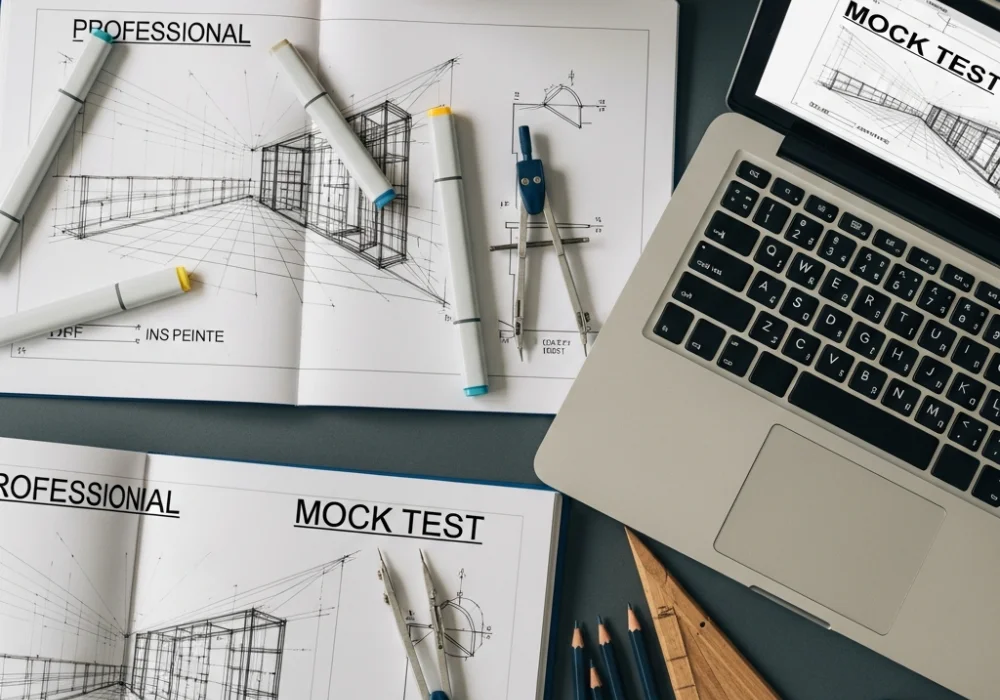
Understanding NID DAT: The First Step to Success
The National Institute of Design – Design Aptitude Test (NID DAT) is one of the most prestigious entrance examinations in India for aspiring designers. It evaluates a candidate’s creative thinking, visual perception, and problem-solving abilities. Many students believe that cracking this exam requires expensive professional coaching. However, with the right mindset, consistent practice, and high-quality resources like those available on myentrance.in, you can secure a top rank through self-study.
NID DAT is divided into two primary stages: the Prelims (a written test evaluating aptitude and sketching) and the Mains (which includes the Studio Test and sometimes an interview). To succeed without coaching, you must become your own mentor, analyzing your work critically and refining your skills daily.
💡 Pro-Tip: The ‘Designer Mindset’
Start looking at everyday objects and wondering how they could be improved. Design isn’t just about drawing pretty pictures; it’s about solving problems through visual and functional innovation.
Decoding the Latest Exam Pattern
Before diving into your preparation, you must understand the structure of the exam. The NID DAT Prelims typically consists of two sections. Part A focuses on objective questions (General Knowledge, English, and Mental Ability), while Part B is subjective, focusing on creative drawing and visualization tasks.
| Component | Focus Area | Weightage Type |
|---|---|---|
| Part A (Objective) | Analytical Reasoning, GK, English | Moderate |
| Part B (Subjective) | Sketching, Perspective, Creativity | High |
| DAT Mains | Studio Test (Model Making, Doodling) | Critical for Final Rank |
Coaching vs. Self-Study: Why You Can Win Alone
While coaching institutes provide a structured schedule, self-study allows for a personalized pace and the freedom to explore unique creative styles. In the world of design, originality is valued more than ‘standardized’ techniques taught in coaching centers.
- Authentic Voice: Self-taught students often develop a more authentic and diverse portfolio.
- Cost-Efficiency: You save significant amounts of money which can be invested in high-quality art supplies and specialized mock tests from myentrance.in.
- Critical Analysis: When you study alone, you learn to critique your own work, a vital skill for any professional designer.
Mastering Core Design Skills
1. Sketching and Visualization
Sketching is the language of design. You don’t need to be a fine artist, but you must communicate ideas effectively. Focus on human anatomy, object drawing, and 1-point, 2-point, and 3-point perspectives. Practice drawing everyday scenes from different angles—like an ant’s view or a bird’s eye view.
2. Observation and Empathy
A designer’s best tool is observation. Carry a pocket sketchbook and doodle people in public spaces, different types of leaves, or the way shadows fall at different times of the day. Empathy involves understanding the user’s pain points. If asked to design a ‘tea stall for a blind person,’ you must think about tactile feedback and safety.
3. Color Theory and Composition
Understand the psychology of colors. Why is red used for warnings? Why is blue considered professional? Practice creating balanced compositions using principles like the Rule of Thirds and the Golden Ratio.
💡 Exercise: The Object Transformation
Take a common object, like a stapler, and try to sketch it as a futuristic vehicle. This improves your ability to see shapes within shapes and boosts lateral thinking.
The Ultimate Self-Study Roadmap
Consistency is the secret ingredient. Follow this phase-based approach to ensure you cover every aspect of the current syllabus:
- Phase 1: Foundation (3 Months): Master the basics of line drawing, geometric shapes, and basic human proportions. Read about design history and famous Indian designers.
- Phase 2: Advanced Visualization (2 Months): Solve complex creative questions. Practice storytelling through storyboards. Work on your English and logical reasoning daily.
- Phase 3: Simulation (1 Month): This is the most crucial phase. Solve past years’ papers and take full-length mock tests on myentrance.in to build speed and accuracy under pressure.
Essential Resources and the Role of Mock Tests
You don’t need expensive books. Utilize free online resources like Pinterest for visual inspiration, Behance for understanding portfolio standards, and YouTube for sketching tutorials. However, the one thing you cannot skip is testing your knowledge.
Myentrance.in offers specifically curated mock tests for NID DAT that simulate the actual exam environment. These tests help you identify your weak areas, whether it’s time management in the sketching section or lack of clarity in analytical reasoning.
Quick Knowledge Check
Test your design awareness with these quick questions!
1. What does the term ‘Negative Space’ refer to in design?
It is the empty space around and between the subjects of an image. It is often used to create clever double-meanings in logos.
2. Why is ‘Empathy Mapping’ important for a designer?
It helps designers understand the user’s needs, behaviors, and emotions to create more effective and human-centric solutions.
3. How many vanishing points are used in a ‘Bird’s Eye View’ of a city street?
Typically three vanishing points are used to show the depth, width, and height of the buildings accurately.
Frequently Asked Questions (FAQs)
Is self-study enough to clear NID DAT?
Yes, many students clear NID DAT every year without coaching. Success depends on your discipline, ability to self-critique, and practicing with quality mock tests.
How much time should I devote to sketching daily?
At least 1-2 hours of focused sketching is recommended. Focus on different themes like nature, machines, and human gestures.
What materials should I use for NID DAT Prelims?
Use high-quality H, HB, and 2B pencils, a good eraser, a sharpener, and basic coloring materials like pencil colors or oil pastels as specified in the exam guidelines.
Ready to Start Your Design Journey?
Don’t let the lack of coaching hold you back. Get access to the best mock tests and study materials tailored for the latest NID DAT pattern today!
💬 Chat with our Experts on WhatsApp (+91 9526806124)




