
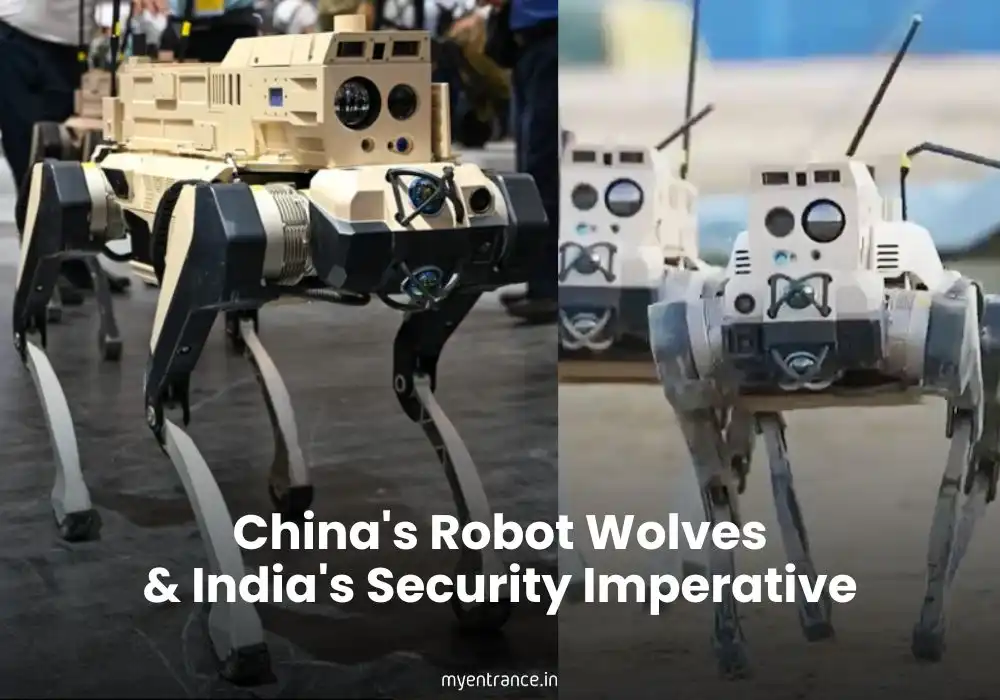
The global defense landscape is undergoing a profound transformation, spearheaded by rapid advancements in Artificial Intelligence (AI) and robotics. A significant moment underscoring this shift was China’s unveiling of weaponized “robot wolves” at its 2025 military parade. This event was not merely a display of advanced technology but a clear signal of the growing emphasis on autonomous systems in modern warfare, marking a critical leap in the domain of man-machine combat. These “robot wolves” represent a new generation of intelligent, often autonomous, ground vehicles or drones designed for various military tasks, from reconnaissance and surveillance to combat support and potentially direct engagement, fundamentally altering the calculus of future conflicts. Ensure you have the most up-to-date gk news for your exam from a trusted source.
Understanding the Dawn of Autonomous Warfare
The emergence of such “robot wolves” signifies a paradigm shift towards what is known as autonomous warfare. But what precisely does this entail, and why is it a game-changer? At its core, autonomous warfare involves the use of machines that can operate independently, or with minimal human intervention, making decisions and executing actions based on pre-programmed parameters and real-time data analysis. The “how” here involves sophisticated AI algorithms that enable these machines to perceive their environment, identify targets, and make tactical choices at speeds far exceeding human capabilities. This technology promises enhanced precision, reduced human casualties for the deploying force, and the ability to operate in environments too dangerous or challenging for human soldiers. However, it also raises profound ethical questions about lethal autonomous weapon systems (LAWS) and the potential for unintended escalation or loss of control, making it a critical topic for global discourse and strategic planning.
Implications for India’s Security Preparedness
For India, a nation with a complex geopolitical environment and a long, contested border with China, these developments carry significant weight. The “why” for India’s concern is multifaceted. Firstly, the introduction of advanced AI-powered weaponry by a major neighbor necessitates a thorough reassessment of India’s current defense doctrines and capabilities. It presents a clear challenge to maintain a credible deterrent and ensure the security of its borders and interests. “Where” these technologies could be deployed – in mountainous terrains, dense forests, or urban combat zones – further complicates strategic planning, demanding versatile and adaptive responses.
India’s strategic imperative now involves a concerted effort to adapt and innovate across several fronts. This includes not only acquiring and developing similar advanced technologies but also building a robust ecosystem for indigenous research and development in AI, robotics, and cybersecurity specifically for defense applications. Furthermore, the Indian armed forces must prioritize training personnel to effectively operate alongside and counter such autonomous systems, integrating AI into their command and control structures. This calls for substantial investment in cutting-edge defense technology, fostering collaborations with leading global partners, and strengthening its own defense manufacturing base to reduce reliance on external suppliers. Ultimately, it is about developing a comprehensive, forward-looking strategy that leverages technological advancements to enhance national security, ensuring that India remains well-prepared for the evolving challenges of the 21st-century battlefield.
Relevance for Competitive Examinations
For aspirants preparing for prestigious competitive examinations like UPSC, SSC, PSC, NID, NIFT, and other government roles, understanding these developments is absolutely crucial. This topic seamlessly integrates into multiple sections of your syllabus. As “current affairs,” China’s advancements in military AI are a prime example of global events with significant geopolitical implications. For the UPSC Civil Services Exam, this falls under General Studies Paper 3, covering Science and Technology (developments in AI, robotics, defense technology) and Internal Security (challenges to border management, defense infrastructure, and strategic preparedness). It also touches upon General Studies Paper 2, concerning International Relations and India’s foreign policy challenges. Explore our dedicated ssc exam preparation resources for the cgl, chsl, and more.
Beyond factual recall, examinations often test your analytical abilities. You might encounter questions on the ethical considerations of autonomous weapons, India’s policy responses, the economic implications of defense modernization, or the role of international cooperation in regulating AI in warfare. For other government exams, general knowledge questions on military technology, India’s defense capabilities, and international strategic developments are common. Therefore, a comprehensive understanding of topics like China’s “robot wolves” is not just about staying informed but about developing a critical perspective essential for success in these demanding examinations. Keeping abreast of such global technological and strategic shifts is an indispensable part of your preparation journey.





