Translate Language
Can Solar Power Transform Gujarat’s Economy? About The 125 MW DREBP Initiative
Gujarat’s renewable energy landscape achieves a milestone with Sunora Solar securing a 125 MW solar order under the DREBP scheme. This project exemplifies India’s stride toward 500 GW non-fossil capacity by 2030 while boosting regional employment and economic vitality. Understanding such initiatives is crucial for aspirants tackling environment-focused questions in government exams.
Project Overview & National Significance
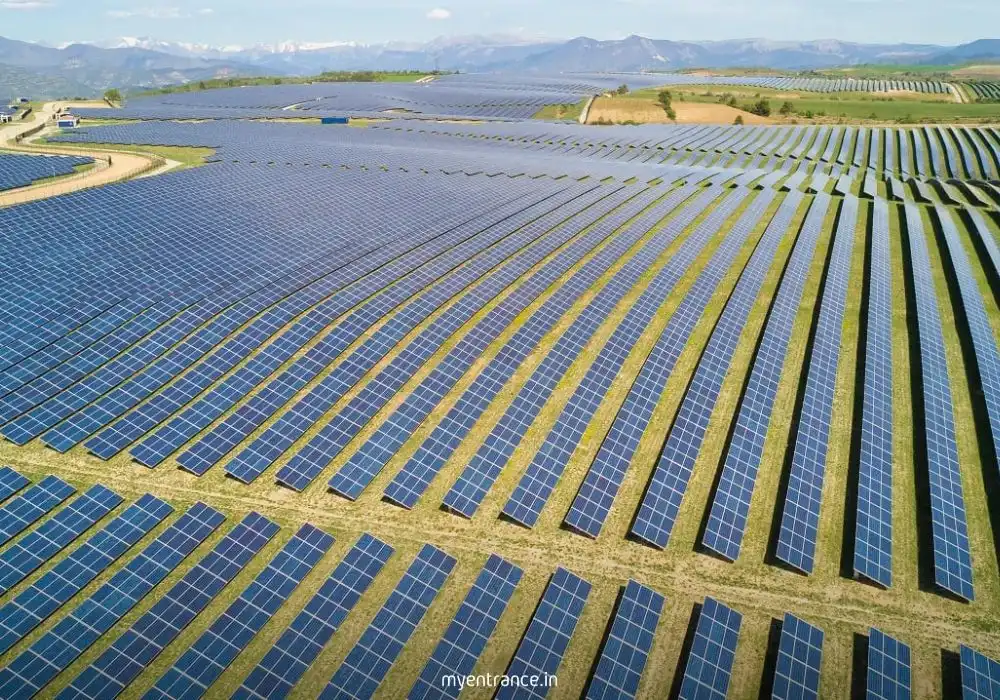
Sunora Solar’s 125 MW plant in Gujarat, developed under the Distributed Renewable Energy Business Policy (DREBP), marks a strategic leap in India’s green transition. The project directly supports New Delhi’s ambitious target of 500 GW non-fossil energy capacity by 2030. Beyond clean power generation, it will catalyze local job creation and elevate socio-economic conditions across the region – a win-win for sustainable development.
Execution Scope & Economic Impact
The end-to-end implementation covers site analysis, solar panel installation, electrical storage setup, and long-term maintenance. This holistic approach ensures operational efficiency while maximizing employment opportunities. As emphasized in the company’s statement, the initiative will significantly uplift the regional economy – a key point for aspirants studying infrastructure-driven growth models in exams like UPSC or Kerala PSC.
DREBP Policy Framework
Gujarat’s DREBP, nested within the Renewable Energy Policy 2023, offers unique flexibility:
DISCOMs claim generated power to meet Renewable Purchase Obligations (RPO).
No Domestic Content Requirement (DCR), easing international collaboration.
Projects can relocate post-PPA signing under fixed Security-Cum-Submission Deposit (SCSD) terms, though interconnection points remain locked.
Critical Note: Producers forfeit carbon credits/CDM benefits, prioritizing state-level RPO compliance over global incentives.
Gujarat’s Solar Momentum
This project follows KPI Green Energy subsidiary Sun Drops Energia securing 62.20 MW orders earlier this year. Cumulatively, Gujarat’s Captive Power Producer (CPP) segment now spans 152.34 MW under GERC Tariff Orders 5/6 of 2024. Such rapid scaling makes Gujarat a case study for renewable policies – vital for Static GK sections.
Q&A for Exam Readiness:
Q: How does the DREBP scheme align with India’s renewable targets?
A: It accelerates progress toward 500 GW non-fossil capacity by 2030 through decentralized solar projects.
Q: What economic benefits does Sunora Solar’s 125 MW plant offer Gujarat?
A: It generates local employment, enhances quality of life, and stimulates regional economic growth.
Q: Can developers relocate DREBP projects after signing PPAs?
A: Yes, subject to unchanged SCSD deposits and new Solar PPA agreements, but interconnection points can’t shift.
Q: Who benefits from the renewable energy produced under DREBP?
A: DISCOMs utilize it to fulfill their Renewable Purchase Obligations (RPOs).
Q: Why are carbon credits unavailable for DREBP producers?
A: Policy design directs all RPO credits to DISCOMs, waiving producer claims on carbon/CDM benefits.
Key Resources for Aspirants:
Master renewable energy policies via Daily Current Affairs.
Test your knowledge with our Daily News Quiz.
Design exam aspirants: Explore NIFT GAT & NID DAT strategies.
Optimize revisions using our Last-Minute Preparation Guide.
Get 3 Months Free Access for SSC, PSC, NIFT & NID
Boost your exam prep!
Use offer code WELCOME28 to get 3 months free subscription. Start preparing today!
Read More Topics