
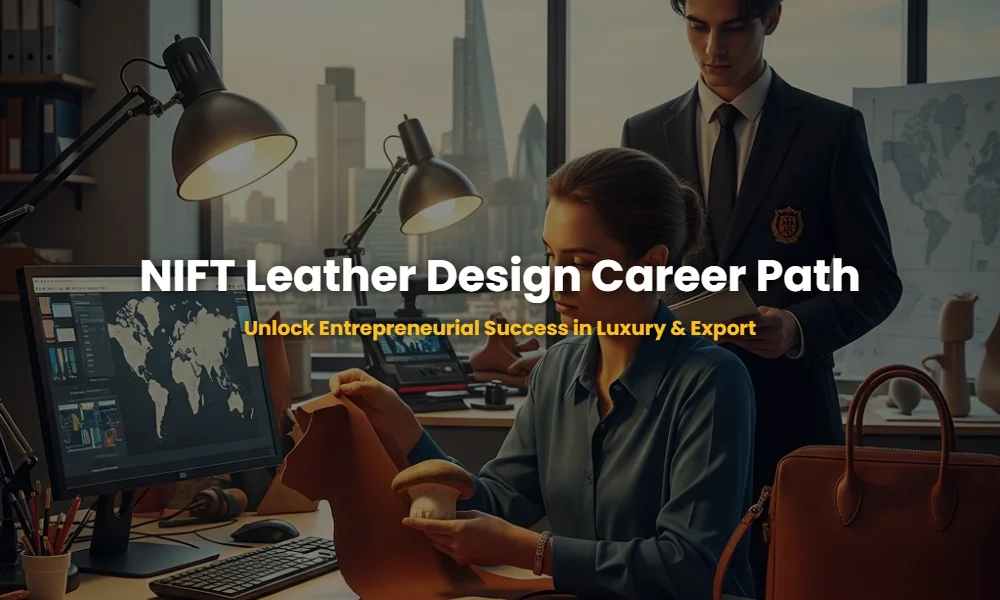
Is the NIFT Leather Design stream the best-kept secret of the fashion industry? While most aspirants flock to Fashion Design, the visionary few are eyeing the multibillion-dollar luxury leather and export market. With India positioned as the global hub for premium craftsmanship and the second-largest exporter of leather garments worldwide, the opportunities for entrepreneurs are exploding. This isn’t just about “working with skin”; it is about mastering the supply chain of global giants like Louis Vuitton, Hermès, and Gucci, or building your own bespoke luxury house from scratch.
🚀 Key Takeaways
- Unmatched Export Potential: India holds 13% of the world’s total leather production, offering a massive launchpad for export entrepreneurs.
- Luxury Growth: The luxury leather goods market is projected to reach $59.3 billion by 2035, driven by premiumization.
- Sustainable Innovation: 7% of the market has already shifted to vegan and bio-materials (mushroom, pineapple leather), a key startup niche.
- NIFT Advantage: The NIFT Leather Design curriculum now integrates AI-driven design and luxury branding.
- Trade Benefits: New FTAs with the EU and Australia are set to eliminate 17% import tariffs, making Indian exports hyper-competitive.
The Secret Goldmine: Is Leather Design the Most Underrated NIFT Stream?
Leather Design at NIFT is lucrative because it combines technical material mastery with high-end luxury branding, catering to a global market where leather goods represent the largest segment of personal luxury. Graduates don’t just design; they manage high-value supply chains and lead innovation in sustainable, new-age materials.
For years, the Leather Design (LD) department at NIFT has been overshadowed by mainstream fashion, yet its alumni are the ones heading multi-crore export houses and boutique artisanal brands. The core reason? Scarcity of specialized talent. While thousands graduate in general design, very few understand the complexities of tanning, material structural integrity, and the high-precision manufacturing required for luxury accessories. In 2025, the demand for “Quiet Luxury”—where quality of material speaks louder than logos—has made LD graduates the most sought-after professionals in the luxury brand management sector.
💡 Click to Reveal: The “Hidden” Earnings of LD Graduates
While starting salaries are competitive, the real wealth in Leather Design lies in merchandising commissions and entrepreneurial ventures. A mid-sized leather export startup in Chennai or Kanpur can see profit margins of 25-40% per unit in the European market, significantly higher than mass-market apparel.
Luxury Goods Manufacturing: The High-Margin Blueprint You Aren’t Taught
Luxury manufacturing involves transforming raw craftsmanship into high-value assets through precision engineering and brand storytelling. NIFT’s focus on material science and artisanal techniques allows graduates to create products that command premium prices in the U.S., EU, and Middle Eastern markets.
Manufacturing in the leather sector has evolved from sweatshops to high-tech ateliers. Modern NIFT LD students are trained in Digital Design (AI modes) and 3D prototyping, which reduces material waste—a critical factor when dealing with expensive full-grain leathers. The entrepreneurial opportunity here lies in Private Label Manufacturing. Global influencers and boutique brands in New York or London are constantly looking for Indian partners who can deliver “Italian quality” at Indian production costs. By mastering the NIFT curriculum’s focus on “Product Design for Fancy Goods,” you can build a B2B empire that services the world’s elite.
Consider the growth of Inclusive Design. There is a massive, untapped market for adaptive leather footwear and accessories for people with disabilities, a niche that NIFT now specifically encourages through its graduation projects.
🎯 Don’t Leave Your NIFT Rank to Chance!
Join thousands of toppers who used our premium mock tests to secure their spot in NIFT’s elite Leather Design campuses.
🚀 Take Premium Mock Test NowGlobal Export Management: Why Indian Designers Rule the World Market
Global export management in leather focuses on navigating international trade laws, quality standards like REACH, and leveraging Free Trade Agreements (FTAs). With India’s leather exports growing at a 10% CAGR, NIFT-trained managers are the bridge between Indian tanneries and global retail giants.
The strategic advantage for an Indian leather entrepreneur in 2025 is the shifting geopolitical landscape. Many European buyers are moving their sourcing away from high-cost regions to India, provided the quality meets “Lexus” standards. As a NIFT LD graduate, you are trained to handle the “Craft Cluster” initiatives, which help you integrate traditional Indian hand-stitching with the ISO-certified processes required by international buyers.
Key Leather Export Hubs & Opportunities
| Export Hub | Primary Specialty | Key Export Markets |
|---|---|---|
| Chennai / Ambur | Luxury Footwear & Uppers | Italy, Germany, USA |
| Kanpur / Agra | Saddlery, Harness & Belts | UK, Australia, UAE |
| Kolkata | Small Leather Goods & Handbags | France, Spain, Japan |
| Delhi / NCR | Leather Garments & Fashion Wear | Russia, Canada, EU |
Entrepreneurial Riches: Are You Missing Out on These Startup Trends?
Entrepreneurial success in leather design currently lies in three high-growth niches: Sustainable Vegan alternatives, Bespoke Handcrafted accessories, and B2B Private Labeling. These areas allow startups to bypass mass-market competition and target high-net-worth individuals and premium global retailers.
If you are planning to launch a startup after your NIFT entrance exam success, consider these five trending paths:
- The Sustainable Bio-Material Label: Use the 7% market shift toward non-animal leather to create products from mushroom (Mycelium) or Pineapple (Piñatex) waste.
- Bespoke Footwear Ateliers: Direct-to-consumer (DTC) brands that offer custom-fit, handmade leather shoes using digital foot-scanning technology.
- Fetish and Niche Lifestyle Gear: NIFT alumni have already made a mark in high-end fetish clothing and equestrian gear, where profit margins are astronomical.
- Eco-Friendly Tanning Consultancy: Start a firm that helps traditional tanneries transition to chrome-free, vegetable-tanning processes to meet new EU environmental laws.
- Corporate Luxury Gifting: Managing the high-volume, high-quality production of leather corporate assets for Fortune 500 companies.
💡 Pro-Tip: The “Micro-MOQ” Strategy
The biggest pain point for global boutique brands is high Minimum Order Quantities (MOQs). An entrepreneur who offers high-quality manufacturing with low MOQs (e.g., 50 units) can capture a massive share of the international startup market.
The Hidden NIFT Curriculum That Breeds Million-Dollar Founders
To enter the Leather Design stream, you must clear the NIFT GAT (General Ability Test) and CAT (Creative Ability Test). While CAT tests your aesthetics, for Leather Design, examiners look for an innate understanding of structure, 3D form, and material durability, which are critical for future luxury manufacturers.
The revised 2025 NIFT curriculum is a powerhouse for entrepreneurs. It includes Inter-Disciplinary Minors (IDMs) like Marketing & Merchandising and Design Communication. This means a Leather Design student can spend their electives learning how to sell their products globally before they even graduate. The graduation project (GP) is essentially your “Shark Tank” moment—most students partner with industry giants like ABC Leathers or Bhartiya International to create collections that often lead to immediate business partnerships or high-level job offers.
Expert Tip: When preparing your portfolio for the Situation Test, focus on demonstrating how you handle different textures. Leather Design is tactile; show that you understand how a material bends, folds, and holds weight.
Frequently Asked Questions
❓ Is NIFT Leather Design only about working with animal skins?
No. The modern NIFT curriculum heavily emphasizes new-age materials including synthetic leathers, vegan alternatives (like mushroom and apple leather), and sustainable textiles to cater to the eco-conscious global market.
❓ Which NIFT campus is best for Leather Design?
NIFT New Delhi and Chennai are considered the top hubs due to their proximity to major leather manufacturing clusters and export houses, offering superior industry exposure and internships.
❓ What are the typical profit margins in a leather export startup?
For luxury finished goods, gross profit margins can range from 30% to 50%. The high value-to-weight ratio of leather makes it one of the most profitable sectors for international air-freight exports.





