
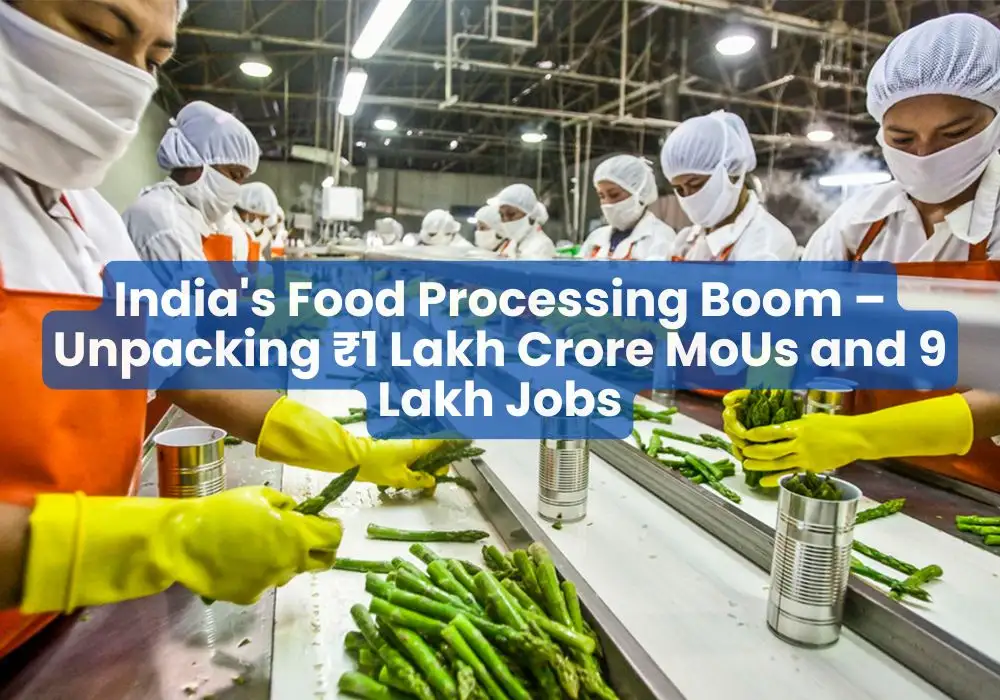
The recent World Food India summit in New Delhi wasn’t just another event; it was a powerful declaration of India’s ambition in the global food processing arena. Union Minister for Food Processing Industries, Chirag Paswan, highlighted a landmark achievement: the signing of Memoranda of Understanding (MoUs) valued at an astonishing one lakh crore rupees. This monumental investment is projected to unlock an impressive nine lakh job opportunities across the nation, signaling a transformative phase for India’s economy and workforce. For aspirants preparing for competitive examinations like UPSC, SSC, PSC, NID, NIFT, and other government exams, understanding the nuances and implications of this development is not just about current affairs; it’s about grasping the core of India’s growth narrative.
World Food India: A Catalyst for Economic Advancement
The World Food India summit serves as a crucial platform, bringing together global investors, policymakers, and industry leaders to showcase India’s vast potential in the food sector. When a Union Minister announces MoUs worth a staggering ₹1 Lakh Crore, it underscores a robust confidence in the sector’s future. This significant capital influx is not merely a number; it represents a commitment to innovation, infrastructure development, and an enhanced supply chain, all of which are vital for a thriving economy. Such events offer valuable insights into government priorities and economic policy, making them indispensable for anyone tracking current affairs for their exam preparation. Understanding *what* transpired (major investments), *who* was involved (Union Minister, global stakeholders), and *where* it happened (New Delhi) provides a foundational layer for your general knowledge and daily news quiz.
The Strategic Importance of the Food Processing Sector
The food processing sector holds immense strategic importance for India. It acts as a vital link between agriculture and industry, transforming raw produce into value-added products, thereby reducing post-harvest losses and enhancing the shelf life of food items. This sector is instrumental in improving farmer incomes by creating a greater demand for agricultural produce and offering better price realization. Furthermore, a robust food processing industry significantly contributes to food security, ensures quality standards, and boosts India’s export potential, positioning the nation as a global food hub. It is a critical driver for rural development and poverty alleviation. Candidates for competitive exams should focus on *why* this sector is considered a priority, its multifaceted benefits for the economy, and how it aligns with broader national development goals like ‘Make in India’ and ‘Atmanirbhar Bharat’.
Unleashing Employment Potential and Economic Growth
The projection of nine lakh new job opportunities stemming from these MoUs is a game-changer for India’s employment landscape. These jobs will span across the entire food processing value chain, from direct employment in manufacturing and processing units to indirect roles in logistics, packaging, marketing, research and development, and retail. Such large-scale job creation has a significant multiplier effect on the economy, stimulating demand, fostering skill development, and improving livelihoods. For aspirants, this highlights the government’s focus on employment generation and economic diversification. When analyzing such news, consider *how* these investments translate into tangible benefits for the population and *how* different government ministries collaborate to achieve these economic milestones. These are often areas from which questions on economic policy, employment trends, and government schemes are framed in various examinations.
Frequently Asked Questions
1. What was the main outcome of the recent World Food India summit regarding investments?
Answer: The primary outcome was the signing of Memoranda of Understanding (MoUs) worth over ₹1 Lakh Crore, signaling substantial investment interest in India’s rapidly growing food processing sector.
2. How many new job opportunities are projected to be created as a result of these investments?
Answer: Union Minister Chirag Paswan announced that these significant MoUs are anticipated to generate approximately nine lakh (900,000) new job opportunities across the country.
3. Why is the food processing sector considered vital for India’s economic growth and development?
Answer: The food processing sector is crucial because it adds value to agricultural produce, significantly reduces post-harvest waste, boosts farmer incomes, enhances food security, contributes to India’s export revenues, and creates extensive employment opportunities across the value chain.
4. For competitive exams like UPSC and SSC, how should I approach studying news related to events like World Food India?
Answer: For exam preparation, focus on key facts such as the event’s name, the Union Minister involved, the total investment figure, and the number of jobs projected. Additionally, understand the broader economic and policy implications, its connection to government initiatives, and its impact on various sectors and employment trends.
5. Where can I find reliable information, quizzes, and study materials on current affairs topics like this for my exam preparation?
Answer: Platforms such as MyEntrance.in offer comprehensive and up-to-date daily news quizzes, detailed current affairs analyses, static general knowledge resources, and expert examination tips specifically tailored to help you excel in competitive examinations like UPSC, SSC, PSC, and other government exams.





