
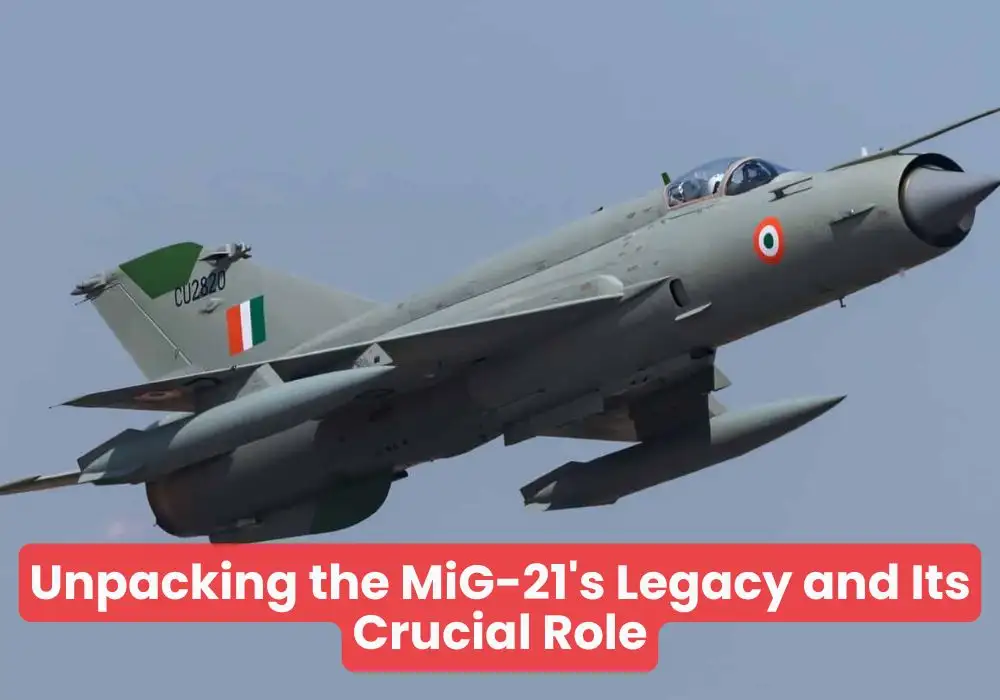
The recent farewell to the iconic MiG-21 fighter aircraft marks a significant moment in India’s aviation history, transitioning from six decades of unparalleled service into the annals of memory. For every aspiring candidate aiming for competitive examinations like UPSC, SSC, PSC, NID, NIFT, and various other government posts, this event isn’t just news; it’s a goldmine of current affairs, static general knowledge, and insights into national defense that can frequently appear in your exam papers. At myentrance.in, we understand the importance of connecting such pivotal events to your study material, offering comprehensive resources to ensure you’re always exam-ready.
The End of an Iconic Era: MiG-21 Decommissioning
The Indian Air Force (IAF) recently conducted a poignant ceremony in Chandigarh, formally decommissioning the legendary MiG-21 fighter jet after an extraordinary six decades of dedicated service to the nation. This momentous occasion saw the venerable aircraft, often referred to as the “backbone” of the IAF, make its final squadron sortie. The last flight, under the call sign ‘Badal,’ was piloted by Air Chief Marshal AP Singh, underscoring the deep respect and honor accorded to this machine. Defence Minister Rajnath Singh, alongside other senior officials, was present to witness this historic farewell, acknowledging the immense contributions of the MiG-21 to India’s air superiority and national security. For those following daily news quizzes and current affairs updates on myentrance.in, this event is a prime example of a topic requiring detailed understanding.
The MiG-21: A Pillar of Indian Air Power
To truly grasp the significance of the MiG-21’s retirement, it’s essential to understand its profound impact on Indian air power. Why did this Soviet-origin aircraft serve for so long, and what made it so indispensable? The MiG-21 was India’s first supersonic jet fighter and quickly became the mainstay of the IAF’s combat fleet. Introduced in the 1960s, it provided India with a formidable aerial capability during a critical period. It played a pivotal role in numerous conflicts, most notably the 1971 Indo-Pak War, where its agility and speed proved decisive in air-to-air combat. Its presence deterred adversaries and ensured India’s dominance in the subcontinent’s skies for decades. Over the years, the aircraft underwent several upgrades, with the ‘Bison’ variant being the most advanced, extending its operational life. While it earned the nickname “Flying Coffin” due to a challenging safety record in later years, its strategic importance and contribution to shaping the modern IAF remain undeniable. This historical context is invaluable for static general knowledge sections of your exams.
Why This Matters for Your Competitive Exams
Understanding the decommissioning of the MiG-21 goes beyond mere news; it’s a multi-faceted topic that touches upon various segments of competitive exams.
* Current Affairs: The decommissioning event itself is a direct question waiting to happen. Details like the location (Chandigarh), the duration of service (six decades), the key personnel involved (Defence Minister Rajnath Singh, Air Chief Marshal AP Singh), and the aircraft’s name are all potential points for multiple-choice questions. Our daily news quizzes on myentrance.in will certainly feature such questions to test your immediate recall.
* Static General Knowledge: This topic opens doors to questions about the Indian Air Force’s history, the types of aircraft it operates, significant wars involving the IAF, India’s defense procurement history, and the evolution of its strategic capabilities. You might be asked about the MiG-21’s country of origin, its notable features, or its role in specific conflicts. Our comprehensive static general knowledge resources delve into these historical and factual aspects.
* National Security and Defense: For UPSC and PSC aspirants, understanding the implications of retiring older aircraft and introducing newer, more advanced ones like the Rafale and Tejas is crucial. It reflects India’s ongoing defense modernization efforts and its strategic vision for future air combat. This broader context helps in answering analytical questions in mains examinations.
* Examination Tips: To excel, don’t just memorize facts. Connect them. Understand the “why” behind the “what.” Why was the MiG-21 so important? Why is it being decommissioned now? What are its replacements? Our examination tips on myentrance.in emphasize this holistic approach to learning, encouraging you to engage with interactive examinations and comprehensive course materials that link current events to foundational knowledge.
Looking Ahead: The IAF’s Modernization Path
The retirement of the MiG-21 symbolizes a shift towards a more modern and technologically advanced Indian Air Force. While the MiG-21 was a reliable workhorse, its capabilities are now being surpassed by fourth- and fifth-generation fighter jets. The IAF is steadily integrating aircraft like the Dassault Rafale and the indigenous Tejas Light Combat Aircraft, which boast superior avionics, weapon systems, and operational capabilities. This ongoing modernization ensures that India’s aerial defense remains robust and capable of meeting future security challenges. Understanding this transition is key to grasping India’s evolving geopolitical and defense strategies, a topic often explored in depth in competitive exams.
The legacy of the MiG-21 will continue to inspire, reminding us of a pivotal chapter in India’s journey towards self-reliance in defense. As you prepare for your exams, leverage myentrance.in’s interactive examinations & answers, current affairs sections, daily news quiz, and static general knowledge guides to master such vital topics comprehensively.
Frequently Asked Questions (FAQs)
1. What was the recent significant event concerning the MiG-21 aircraft?
The Indian Air Force recently held a formal ceremony in Chandigarh to decommission the iconic MiG-21 fighter jet after six decades of service, marking its official farewell from active operations.
2. Why is the MiG-21 considered so important in Indian aviation history?
The MiG-21 was India’s first supersonic jet fighter and served as the backbone of the Indian Air Force for over 60 years. It played a crucial role in safeguarding national security and achieving air superiority in major conflicts, particularly the 1971 Indo-Pak War.
3. Which Indian conflicts did the MiG-21 play a crucial role in?
The MiG-21 played a decisive role in the 1971 Indo-Pak War, demonstrating its combat effectiveness. It also saw action in the Kargil conflict, contributing significantly to India’s military operations.
4. What are the implications of the MiG-21’s decommissioning for the Indian Air Force?
The decommissioning of the MiG-21 signifies the Indian Air Force’s ongoing modernization efforts. It paves the way for the greater induction and operationalization of more advanced aircraft like the Dassault Rafale and the indigenous Tejas Light Combat Aircraft, enhancing India’s overall air defense capabilities.
5. How can this topic be relevant for upcoming competitive exams like UPSC or SSC?
This event is highly relevant for competitive exams as it covers current affairs (the decommissioning itself), static general knowledge (history of IAF, aircraft types, conflicts), and national security (defense modernization, strategic capabilities). Questions may pertain to key dates, locations, personnel involved, or the aircraft’s historical significance.





